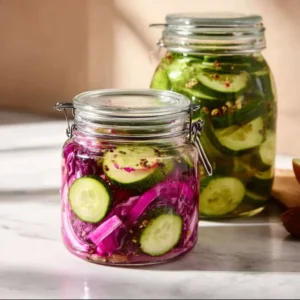
Fermented Vegetable Recipes
Discover delicious fermented vegetable recipes that are beginner-friendly, emphasizing the delightful tangy flavors and probiotic benefits of seasonal produce such as cabbage, carrots, cucumbers, and more.
Ingredients
Common Ingredients for Fermentation
- 1 head Cabbage (green or red) Use firm, fresh produce.
- 2 large Carrots
- 5 medium Cucumbers (kirby or pickling cucumbers)
- 1 bunch Radishes
- 2 large Beets Roasting gives a mellower flavor.
- 1 cup Green beans
- 2 large Bell peppers
- 5 cloves Garlic
- 1 inch Fresh ginger root
- 1 bunch Green onions or chives
- 1 tablespoon Non-iodized salt (sea salt or kosher salt) Avoid using iodized salt as it may inhibit fermentation.
- 1 cup Filtered water (for brine)
- 1 tablespoon Spices (black peppercorns, mustard seeds, coriander seeds, dill seeds, whole cloves, bay leaf, turmeric, red pepper flakes) Adjust heat to taste.
- 1 teaspoon Sugar or grated apple (optional for sweeter ferments)
Instructions
Preparation and Brining
- Clean your workspace and jars; sterilizing is preferred for optimal fermentation.
- For vegetable ferments, the recommended salt ratio is 1–2 tablespoons of salt per quart of vegetables.
- Mix shredded or chopped vegetables with measured salt in a large bowl, massaging cabbage to release juices.
Packing and Weighing
- Pack vegetables tightly into jars, pressing down to allow liquid to rise above the solids.
- Use fermentation weights to keep vegetables submerged under brine.
- Cover jars with breathable cloth or loosely closed lids to allow gas escape.
Fermentation Process
- Store jars at an ideal fermentation temperature of 65–75°F (18–24°C).
- Taste-test after a few days; fermentation can take 1–4 weeks for sauerkraut, and 3–7 days for quick pickles or kimchi.
Storing Ferments
- Once desired tanginess is achieved, move jars to refrigerator.
- Label jars with the start date to track flavor progress.
Notes
These fermented vegetables make great additions to meals like grain or rice bowls, sandwiches, or as standalone snacks. Use them creatively in salads or dips.
Nutrition
Serving: 1gCalories: 50kcalCarbohydrates: 10gProtein: 2gSodium: 500mgFiber: 2gSugar: 2g
Tried this recipe?Let us know how it was!