
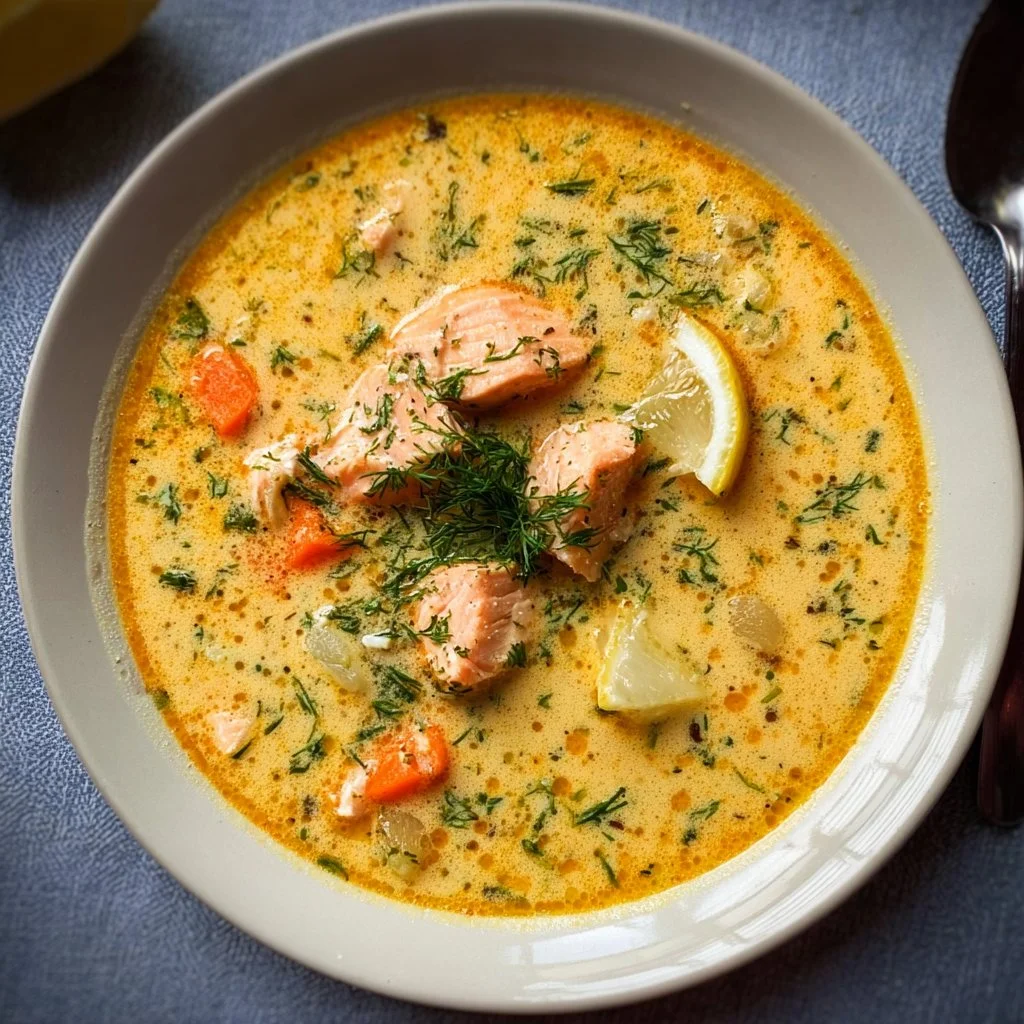
There’s something deeply soothing about a steaming bowl of Finnish Salmon Soup — known in Finland as lohikeitto — especially when the air is crisp and seasonal produce is at its best. This soup celebrates one main ingredient (salmon) while letting simple, comforting flavors like potatoes, leeks, and fresh dill shine. If you love cozy from-scratch meals that come together quickly and feel like a warm hug in a bowl, this recipe will become a go-to. For cooks who enjoy exploring different soup styles, it’s a lovely complement to other hearty bowls like aromatic ginger-garlic chicken noodle soup, and it’s especially rewarding in season when salmon is at its freshest.
Ingredients & Equipment
Ingredients:
- 2 tablespoons butter
- 1 onion, chopped
- 2 carrots, sliced
- 1 leek, sliced (white and light green parts only)
- 2 potatoes, diced (Yukon Gold or other waxy potato)
- 4 cups fish stock or vegetable broth
- 1 pound salmon, cut into chunks (skin removed if you prefer)
- 1 cup creme fraiche
- 1/4 cup fresh dill, chopped
- Salt and pepper to taste
Notes on ingredients:
- Fish stock adds a subtle seafood depth; a good-quality vegetable broth works well if you prefer a milder base.
- Creme fraiche gives the soup its characteristic silky tang; full-fat sour cream or a mixture of heavy cream + a teaspoon of lemon juice can substitute in a pinch.
- Fresh dill is traditional and bright — avoid dried dill unless you have no alternative (use 1 tablespoon dried if needed).
Equipment:
- Large, heavy-bottomed pot (4–6 quarts) or Dutch oven
- Sharp chef’s knife and cutting board
- Vegetable peeler (for carrots and potatoes if needed)
- Wooden spoon or heatproof spatula
- Ladle and soup bowls for serving
Helpful tools:
- Fine-mesh sieve (if you want a very clear broth)
- Slotted spoon (for removing any foam or skimming)
- Instant-read thermometer (optional; salmon is done at around 125–135°F / 51–57°C depending on your preference)
- Blender (optional, if you prefer a smoother base before adding salmon)
Step-by-Step Instructions (with tips)
- In a large pot, melt the butter over medium heat. Add the chopped onion, sliced carrots, and sliced leek, and sauté until softened, about 5 minutes. Tip: Keep the heat moderate so the vegetables sweat rather than brown — this builds a sweet, mellow base.
- Add the diced potatoes and fish stock, bringing to a boil. Reduce heat and simmer until the potatoes are tender, about 10 minutes. Tip: If you like a creamier, slightly thicker broth, mash a few potato cubes against the side of the pot with your spoon while they’re cooking, or pulse about a cup of the soup in a blender and return it to the pot.
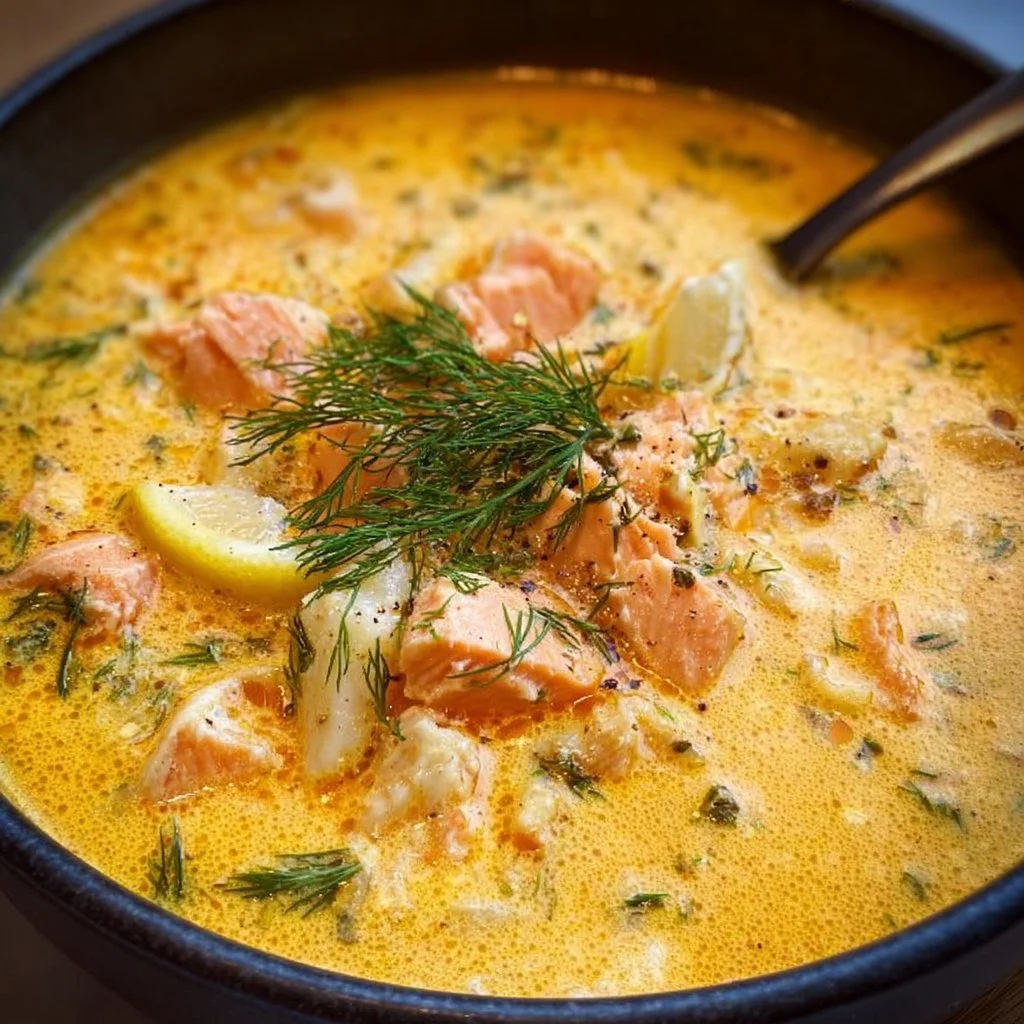
- Stir in the salmon and cook until just done, about 5 minutes. Tip: Cut the salmon into uniform pieces so they cook evenly; watch carefully so you remove the pot from heat when the fish turns opaque and flakes easily. Overcooked salmon becomes dry. Using an instant-read thermometer, aim for 125–135°F (51–57°C) for tender, slightly flaky pieces.
- Lower the heat and stir in the creme fraiche and fresh dill. Season with salt and pepper to taste. Tip: Add the creme fraiche over lower heat to keep it from splitting; if the soup is boiling, remove it from the heat first. Taste before seasoning — fish stock can be quite salty. If you want a brighter finish, add a small squeeze of lemon juice or a touch of grated lemon zest right before serving.
- Serve hot. Tip: Garnish with extra dill and a swirl of creme fraiche or a few chives for color and freshness.
Variations and kitchen tips:
- Roasting vs boiling vegetables: For a deeper, caramelized flavor, you can roast the carrots, leeks, and onion at 400°F for 20–25 minutes before adding them to the pot. This adds a richer, slightly sweet base to the soup.
- Smoky twist: If you like smoke, use smoked salmon for half the fish called for, or add a small diced smoked potato (or stir in a teaspoon of liquid smoke very sparingly).
- Make it lighter: Swap creme fraiche for Greek yogurt (stir in off heat to prevent curdling) or a smaller amount of light cream.
- Add greens: Stir in a handful of baby spinach or chopped kale at the very end and let it wilt for a minute for extra color and nutrients.
- Vegan/vegetarian option: Omit salmon and use firm tofu chunks or chickpeas plus seaweed (a strip of kombu simmered in the broth and removed before serving) to impart briny, ocean-like flavor.
Storage, Freezing & Make-Ahead Tips
Storing leftovers:
- Refrigerate leftover soup in an airtight container within two hours of cooking. It will stay fresh for 2–3 days. Note that fish-based soups are best eaten sooner rather than later for both flavor and safety.
Freezing:
- Freezing is possible but comes with caveats. Creamy, dairy-rich soups can sometimes separate after thawing. If you plan to freeze, consider leaving out the creme fraiche — freeze the soup base and cooked salmon in freezer-safe containers for up to 2 months. Thaw overnight in the refrigerator and stir in fresh creme fraiche just before reheating.
- Alternatively, portion the soup into individual servings for quicker thawing and reheating.
Make-ahead:
- You can make the broth and cook the potatoes and vegetables up to 2 days ahead (without salmon or creme fraiche). When ready to serve, gently reheat the base, add the salmon and cook for 5 minutes, then finish with creme fraiche and dill. This keeps the salmon texture fresher and prevents dairy separation.
Portioning advice:
- For meal prep, portion by protein and carbs: a good serving is about 1.5–2 cups per person (roughly 10–12 oz), which balances the salmon and vegetables. Store individual portions in microwave- and freezer-safe containers if you intend to reheat quickly for lunches.
How to Use / Serve This Dish
Serving ideas:
- Classic pairing: Serve with dark rye bread or buttered Finnish bread (ruisleipä) to soak up the broth. A crisp, cold cucumber salad on the side adds a refreshing counterpoint.
- Garnishes: Fresh dill, chopped chives, or a lemon wedge brighten the flavors. A sprinkle of cracked black pepper or a few whole-grain mustard seeds can add a subtle bite.
- Wine and drink pairings: Try a dry white wine like a Sauvignon Blanc or an unoaked Chardonnay. For non-alcoholic pairings, a tart lingonberry drink or sparkling water with lemon works nicely.
- Serve as part of a meal: Start with a simple green salad and finish with a light dessert like baked apples or a small serving of cardamom-spiced Finnish pastries to round out the Nordic theme.
Creative variations:
- Make it a chowder: Add a cup of sweet corn and swap creme fraiche for heavy cream for a richer chowder-like consistency.
- Add grains: Stir in cooked barley or pearl couscous at the end for a heartier bowl that stretches the leftovers into multiple meals.
- Spiced version: Add a pinch of white pepper and a bay leaf while simmering for subtle aromatic complexity.
FAQ
Can I use frozen salmon?
Yes. Thaw frozen salmon in the refrigerator overnight or under cold running water in its packaging. Pat dry before cutting into chunks to avoid adding excess water to the soup. If using frozen salmon cubes directly, add a minute or two to the cooking time, but be careful not to overcook.
What can I use instead of creme fraiche?
Good substitutes include full-fat sour cream (stir in off heat to prevent splitting), a mix of heavy cream with a teaspoon of lemon juice for tang, or Greek yogurt (also stirred in off heat). If you want a dairy-free option, try full-fat coconut milk for creaminess, though it will change the flavor profile.
How long does leftover salmon soup last in the fridge?
Because this is a fish-based soup, it’s best eaten within 2–3 days when refrigerated properly in an airtight container. Reheat gently until warm but avoid boiling to keep the salmon tender.
Can I make this soup in a slow cooker or Instant Pot?
Yes. In a slow cooker, sauté the vegetables first for depth of flavor, then add potatoes and stock and cook on low for 4–6 hours before adding salmon for the last 30 minutes. In an Instant Pot, use the sauté function for veggies, pressure cook potatoes and stock for 5 minutes, quick release, then add the salmon and finish on the sauté setting until cooked.
Conclusion
Finnish Salmon Soup, or lohikeitto, is a beautiful example of how a few humble, seasonal ingredients can create deep comfort and satisfying flavor. It’s forgiving, adaptable, and quick enough for weeknights while cozy enough for special gatherings. If you enjoy experimenting with regional comfort foods, you might like comparing this recipe to other takes on the classic — for an authentic perspective, check out this Finnish Salmon Soup (Lohikeitto) • authentic recipe!, or try a slightly different home cook’s version on Lohikeitto (Finnish Salmon Soup) for tips on texture and seasoning. For another traditional approach and variations, see this helpful roundup at Traditional Finnish Salmon Soup – Lohikeitto. Give it a try this season, and if it becomes a new favorite, please share the recipe with friends — soups like this are made better when enjoyed together.

Finnish Salmon Soup
Ingredients
Base Ingredients
- 2 tablespoons butter For sautéing vegetables.
- 1 medium onion, chopped
- 2 medium carrots, sliced
- 1 medium leek, sliced (white and light green parts only)
- 2 medium potatoes, diced (Yukon Gold or other waxy potato)
- 4 cups fish stock or vegetable broth Fish stock adds depth; vegetable broth can be used for a milder flavor.
Main Ingredients
- 1 pound salmon, cut into chunks (skin removed if you prefer) Aim for uniform pieces for even cooking.
- 1 cup creme fraiche Can substitute with full-fat sour cream or a mix of heavy cream + lemon juice.
- ¼ cup fresh dill, chopped Traditional garnish; avoid dried dill if possible.
- to taste Salt and pepper Adjust according to your preference.
Instructions
Preparation
- In a large pot, melt the butter over medium heat.
- Add the chopped onion, sliced carrots, and sliced leek, and sauté until softened, about 5 minutes.
- Add the diced potatoes and fish stock, bringing to a boil.
- Reduce heat and simmer until the potatoes are tender, about 10 minutes.
- Stir in the salmon and cook until just done, about 5 minutes.
- Lower the heat and stir in the creme fraiche and fresh dill. Season with salt and pepper to taste.
Serving
- Serve hot, garnished with extra dill and a swirl of creme fraiche or chives.







1 thought on “Finnish Salmon Soup”