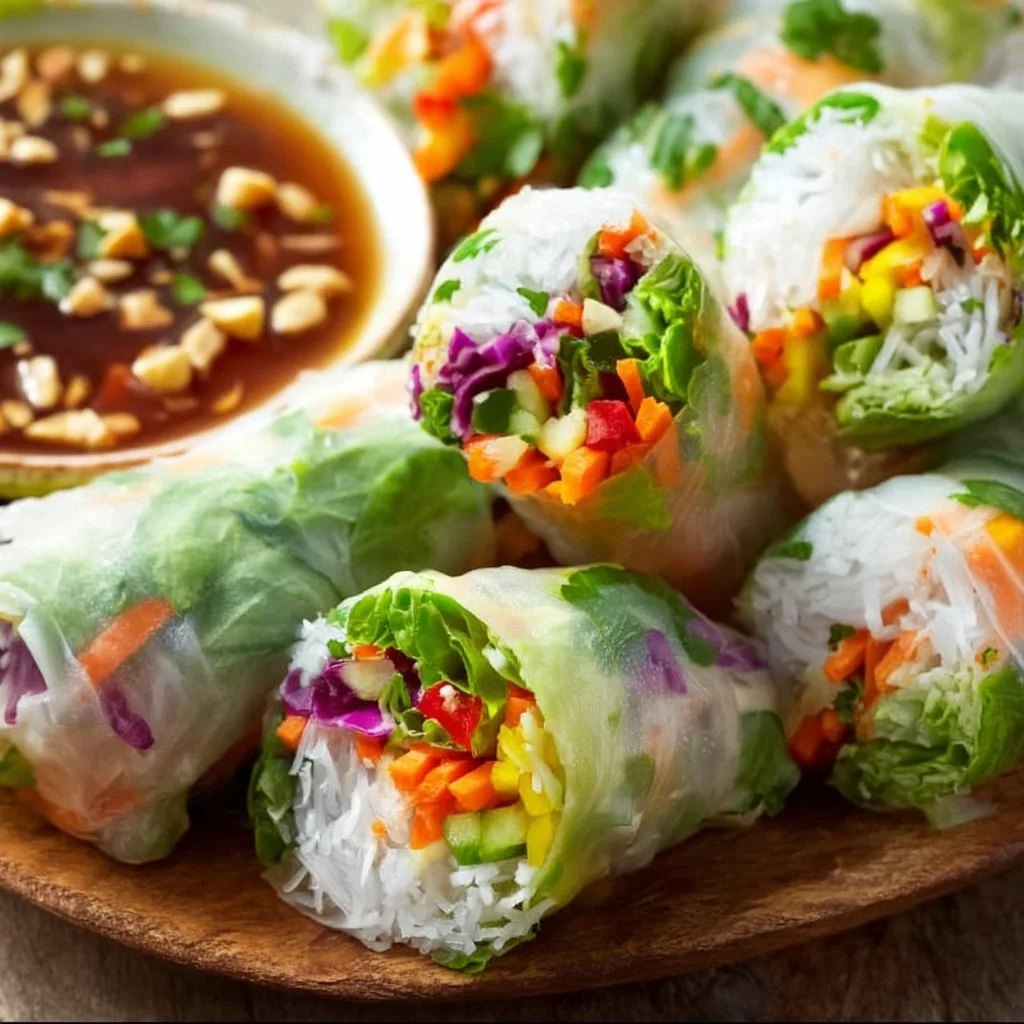
These fresh spring rolls are a light and healthy appetizer or main dish — perfect for welcoming spring into your kitchen. Crunchy veggies, green onions, silky rice noodles, and fragrant herbs are wrapped in delicate rice paper for a dish that’s as beautiful as it is nourishing. Whether you’re feeding a hungry family after a busy week or prepping a colorful appetizer for friends, these rolls feel homemade and comforting without weighing you down. If you love exploring seasonal, from-scratch dishes that balance flavor and ease, you might also enjoy this healthy white chicken chili recipe — it’s another crowd-pleaser with big, comforting flavors.
Ingredients & Equipment
Ingredients (makes about 8–10 rolls)
- 8–10 rice paper wrappers (round, 22–24 cm / 8.5–9.5 inches)
- 4 oz (115 g) rice vermicelli noodles or thin rice sticks
- 1 medium carrot, julienned
- 1 small cucumber, seeded and julienned
- 1 red bell pepper, thinly sliced
- 4–6 green onions (scallions), cut into thin matchsticks
- 1 cup red cabbage, thinly sliced (or use napa cabbage)
- 1 cup fresh herbs (mint, Thai basil, cilantro) mixed
- 8–10 cooked shrimp (optional) or 1 cup cooked shredded chicken or tofu for a vegetarian option
- 1 ripe avocado, thinly sliced (optional)
- 1 lime, cut into wedges (for serving)
For the dipping sauce (peanut-hoisin or nuoc cham)
- 3 tbsp smooth peanut butter
- 2 tbsp hoisin sauce
- 1 tbsp soy sauce (or tamari)
- 1 tbsp rice vinegar
- 1 tsp sesame oil
- Warm water to thin
- For nuoc cham: 3 tbsp fish sauce (or substitute soy sauce), 2 tbsp lime juice, 1 tbsp sugar, 1 clove garlic (minced), 1 small red chili (optional), water to taste
Equipment
- Large shallow bowls or pie plates (for softening rice wrappers)
- Sharp knife and cutting board
- Small bowls for sauces
- Tongs or chopsticks (for handling noodles)
- Strainer for noodles
- Blender or whisk (helpful for emulsifying peanut sauce)
- Baking tray or plate lined with a damp towel (for resting finished rolls)
- Optional: bamboo rolling mat (helps for tighter rolls)
- Helpful: thermometer not required, but a small digital kitchen scale can help for exact portions
Notes:
- Rice paper brands vary in diameter; choose a size that fits your hand and filling amount.
- If using proteins like shrimp or chicken, cook them fully and cool before assembling. For roasted vegetable variations, a baking tray comes in handy.
Step-by-Step Instructions (with tips)
Prepare the ingredients
- Cook rice vermicelli according to package directions (usually 2–4 minutes in boiling water), drain, rinse under cold water, and toss lightly with a teaspoon of sesame oil to prevent sticking.
- Julienne or thinly slice all vegetables. Arrange herbs and protein (shrimp, chicken, or tofu) so they’re easy to reach while assembling.
- Make your dipping sauce: for peanut-hoisin, whisk peanut butter, hoisin, soy sauce, rice vinegar, sesame oil and warm water until smooth. Adjust sweetness or salt to taste. Store in a small bowl.
Set up your rolling station
- Fill a large shallow bowl or pie plate with warm water (not hot). Place a damp kitchen towel or parchment-lined plate nearby to hold finished rolls.
- Lay out fillings in small piles in the order you’ll use them — it speeds assembly and avoids mess.
Soften the rice paper
- Submerge one rice paper wrapper in warm water for about 8–12 seconds, or until it’s pliable but not falling apart. Lay it flat on the damp towel or a clean surface.
- Tip: If wrappers stick, separate them with a little cornmeal or make sure your soaking water isn’t too hot; very hot water can make them tear.
Build the roll
- On the bottom third of the softened wrapper (closest to you), place a small handful of noodles, a few pieces of each vegetable, 2–3 herbs, 1–2 shrimp (or a line of shredded chicken/tofu), and a slice or two of avocado if using.
- Keep fillings compact — overfilling makes rolling difficult.
Roll and seal
- Fold the bottom edge over the filling, tuck gently, fold both sides inward, then roll away from you in a tight cylinder, like rolling a burrito. Press gently to seal the edge.
- Tip: If a wrapper doesn’t seal, dab a bit of water along the edge with your finger.
Repeat
- Repeat with remaining wrappers and fillings. Place finished rolls seam-side down on the damp towel to keep them from drying out.
Serve
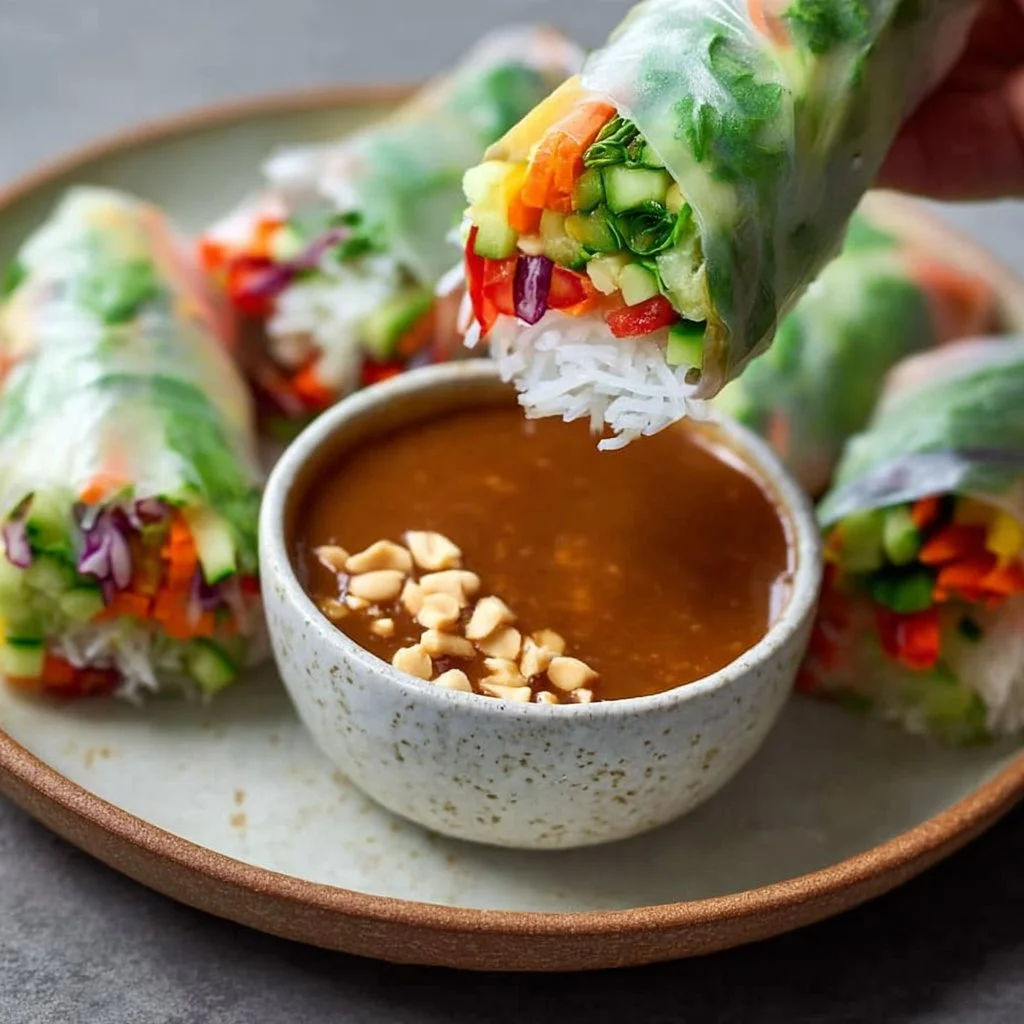
- Cut rolls in half on a diagonal with a sharp, slightly damp knife if you want a pretty presentation, or serve whole with dipping sauce on the side.
Variations and kitchen tips:
- Roasted vs. raw veggies: Roast thin strips of sweet potato, asparagus, or bell pepper on a baking tray for 10–15 minutes at 400°F (200°C) for a smoky-sweet variation. Roasted veggies deepen the flavor but let them cool before wrapping.
- Protein swaps: Use smoked tofu, marinated tempeh, leftover roast chicken, or quickly seared steak slices for heartier mains.
- Flavor boosts: Add a thin smear of chili-garlic sauce or sambal oelek inside the wrapper for heat, or a drizzle of ponzu for brightness.
- For extra crunch: Add crushed peanuts or toasted sesame seeds to the filling or sprinkle on the dipping sauce.
Storage, Freezing & Make-Ahead Tips
Storing leftovers
- Fresh spring rolls are best eaten the same day. If you must store them, place them seam-side down in an airtight container lined with a damp paper towel to maintain moisture. They’ll keep well for up to 24 hours in the refrigerator, but the rice paper will become chewier and some vegetables (like cucumber and avocado) may release moisture.
Freezing
- Freezing is not recommended for fresh rice paper rolls — the texture of the rice wrapper and many vegetables will suffer. If you want to freeze components, pre-cook proteins (shrimp, chicken, tofu) and freeze them separately; freeze rice noodles and vegetables only if you plan to use them in cooked dishes later.
Make-ahead strategy
- Prep everything a few hours ahead — chop veggies, cook noodles and proteins, and prepare dipping sauces. Keep ingredients chilled. When guests arrive or mealtime nears, soften the wrappers and assemble fresh for the best texture.
- Portioning advice: If making for a crowd, set up an assembly line and let guests build their own rolls. Provide bowls of herbs, veggies, and proteins so everyone can make personalized rolls.
How to Use / Serve This Dish
Serving ideas
- As an appetizer: Cut each roll in half and arrange on a platter with small bowls of peanut-hoisin and nuoc cham for dipping.
- As a main dish: Serve 3–4 rolls per person with a mixed green salad or edamame and a bowl of miso soup.
- For lunchboxes: Wrap individual rolls tightly in plastic wrap and keep a small container of sauce in a leakproof cup. Consider leaving avocado out if packing more than a few hours ahead.
Pairings
- Light, bright sides: pickled daikon and carrot, steamed jasmine rice, or a citrusy slaw complement the fresh flavors.
- Drinks: a chilled white wine like Sauvignon Blanc, jasmine tea, or a refreshing cucumber-lime mocktail pairs well.
Creative variations
- Mediterranean twist: swap herbs for dill and parsley, use grilled halloumi, and pair with a tahini-lemon dip.
- Breakfast rolls: fill with scrambled egg, sautéed mushrooms, spinach, and a smear of ricotta for a morning-friendly roll.
For ideas on balancing seasonality and health in other recipes, you might enjoy learning about the benefits of Japanese pink salt and how small ingredient swaps can make a meal both tasty and mindful.
FAQ
Q: Can I make these vegan?
A: Absolutely — omit shrimp/chicken and use marinated tofu, tempeh, or extra avocado. Use a vegan hoisin or soy-based sauce instead of fish sauce for the nuoc cham.
Q: My rice paper keeps tearing. What am I doing wrong?
A: Wrappers tear when over-soaked or when water is too hot. Soak briefly until pliable (8–12 seconds) and work on a damp towel. Also, don’t overload the filling. A light hand produces neater rolls.
Q: How long will leftovers keep in the fridge?
A: Stored seam-side down in an airtight container with a damp paper towel, they’ll be best within 24 hours. After that, rice paper texture degrades and vegetables can get soggy.
Q: Can I substitute other noodles?
A: Yes — thin glass noodles or soba (cold and rinsed) work well. For a lower-carb option, skip the noodles and add extra veggies or shredded cabbage.
Conclusion
These fresh spring rolls capture the bright, crunchy spirit of spring — light enough for a healthy weeknight meal and elegant enough for entertaining. They celebrate seasonal vegetables and herbs, letting texture and freshness take center stage. If you want more inspiration and variations, check out this roundup of A Sweet Pea Chef’s healthy spring roll recipes, a detailed Fresh Spring Rolls Recipe from JoyFoodSunshine for step-by-step photos and technique tips, and an easy fresh vegan spring rolls guide for plant-based options. Give these rolls a try, share them with friends, and let me know which fillings become your new favorite — happy rolling!
Fresh Spring Rolls
Ingredients
For the rolls
- 8-10 pieces rice paper wrappers (round, 22–24 cm / 8.5–9.5 inches)
- 4 oz rice vermicelli noodles or thin rice sticks
- 1 medium carrot, julienned
- 1 small cucumber, seeded and julienned
- 1 piece red bell pepper, thinly sliced
- 4-6 pieces green onions (scallions), cut into thin matchsticks
- 1 cup red cabbage, thinly sliced or use napa cabbage
- 1 cup fresh herbs (mint, Thai basil, cilantro) mixed
- 8-10 pieces cooked shrimp (optional) or 1 cup cooked shredded chicken or tofu for a vegetarian option
- 1 piece ripe avocado, thinly sliced (optional)
- 1 piece lime, cut into wedges for serving
For the dipping sauce
- 3 tbsp smooth peanut butter
- 2 tbsp hoisin sauce
- 1 tbsp soy sauce (or tamari)
- 1 tbsp rice vinegar
- 1 tsp sesame oil
- Warm water to thin
- 3 tbsp fish sauce (or substitute soy sauce) for nuoc cham
- 2 tbsp lime juice for nuoc cham
- 1 tbsp sugar for nuoc cham
- 1 clove garlic (minced) for nuoc cham
- 1 small red chili (optional) for nuoc cham
- water to taste for nuoc cham
Instructions
Preparation
- Cook rice vermicelli according to package directions (usually 2–4 minutes in boiling water), drain, rinse under cold water, and toss lightly with a teaspoon of sesame oil to prevent sticking.
- Julienne or thinly slice all vegetables. Arrange herbs and protein (shrimp, chicken, or tofu) so they’re easy to reach while assembling.
- Make your dipping sauce: for peanut-hoisin, whisk peanut butter, hoisin, soy sauce, rice vinegar, sesame oil and warm water until smooth. Adjust sweetness or salt to taste. Store in a small bowl.
Rolling
- Fill a large shallow bowl or pie plate with warm water (not hot). Place a damp kitchen towel or parchment-lined plate nearby to hold finished rolls.
- Lay out fillings in small piles in the order you’ll use them — it speeds assembly and avoids mess.
- Submerge one rice paper wrapper in warm water for about 8–12 seconds, or until it’s pliable but not falling apart. Lay it flat on the damp towel or a clean surface.
- On the bottom third of the softened wrapper (closest to you), place a small handful of noodles, a few pieces of each vegetable, 2–3 herbs, 1–2 shrimp (or a line of shredded chicken/tofu), and a slice or two of avocado if using.
- Fold the bottom edge over the filling, tuck gently, fold both sides inward, then roll away from you in a tight cylinder, like rolling a burrito. Press gently to seal the edge.
- If a wrapper doesn’t seal, dab a bit of water along the edge with your finger.
- Repeat with remaining wrappers and fillings. Place finished rolls seam-side down on the damp towel to keep them from drying out.
Serving
- Cut rolls in half on a diagonal with a sharp, slightly damp knife if you want a pretty presentation, or serve whole with dipping sauce on the side.