The Best Grandma’s Thanksgiving Stuffing Recipe

Published December 4, 2025 By Carol bonaparte

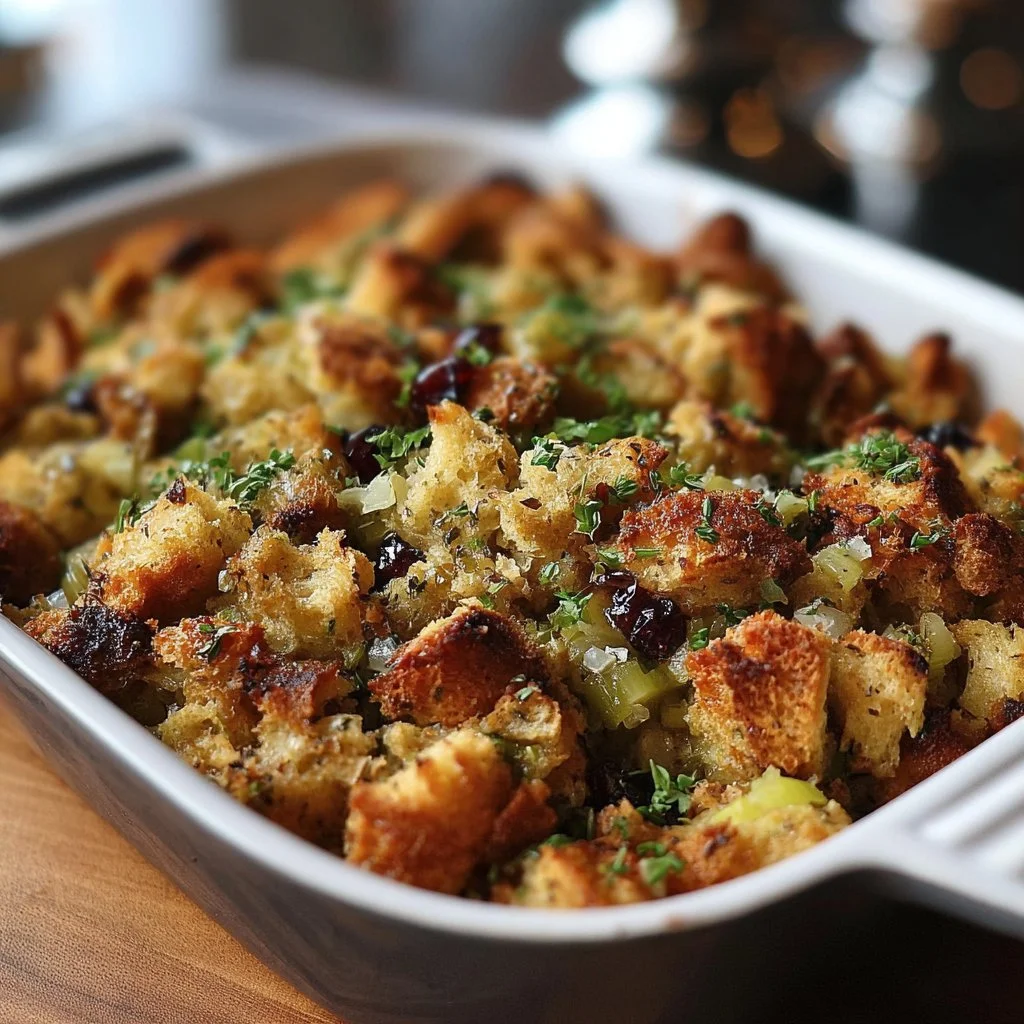
Bowl of Grandma's classic Thanksgiving stuffing, rich in flavor and comfort.

Delicious Grandma’s Thanksgiving Stuffing Recipe

There’s something about the aroma of onions, celery and sage sizzling in butter that makes the house feel like a hug — and that familiar, comforting scent is the heart of my family’s Delicious Grandma’s Thanksgiving Stuffing Recipe. If you’re looking for a classic from-scratch stuffing that feels seasonal, warm, and deeply satisfying, this is it. The main ingredient — hearty cubed sourdough or French bread — soaks up savory herb-infused broth and butter until it’s moist, flavorful, and just begging to steal the spotlight next to a golden roast turkey.

This recipe is perfect for cooks who love hands-on, comforting dishes that have a little nostalgia built in. Whether you’re feeding a crowd or making a cozy holiday meal for a few, the combination of fresh sage, thyme, rosemary, and that rich, low-sodium broth creates a stuffing that tastes like family memories and slow afternoons. If you’re exploring seasoning ideas for your holiday table, you might find value in learning about the unique mineral profile of pink salts and how they can affect flavor — check out this helpful piece on the benefits of Japanese pink salt as you plan your pantry staples.

Ingredients & Equipment

Ingredients

  • Bread (sourdough or French): 10 cups cubed
  • Onion: 1 large, finely diced
  • Celery: 2 cups, finely chopped (about 3–4 stalks)
  • Fresh herbs: 2 tbsp sage, 2 tbsp thyme, 1 tbsp rosemary (all finely chopped)
  • Low-sodium broth: 4 cups (chicken or vegetable)
  • Unsalted butter: ½ cup (1 stick), melted
  • Salt and pepper: To taste

Notes:

  • Use day-old or lightly toasted bread for best texture — slightly stale cubes absorb broth without becoming gummy.
  • Low-sodium broth lets you control the final seasoning; taste before adding extra salt.
  • Fresh herbs provide the best flavor, but if you must use dried, use about one-third the amount.

Equipment

  • Large mixing bowl
  • Large sauté pan or skillet
  • Baking dish or casserole (9×13 inch or similar)
  • Baking tray (for toasting bread)
  • Wooden spoon or spatula
  • Chef’s knife and cutting board
  • Optional: instant-read thermometer (for checking internal turkey temp if stuffing into the bird)

Helpful tools: a baking tray to dry or toast the bread cubes, a large skillet for sautéing the aromatics, and an instant-read thermometer if you choose to cook the stuffing inside your turkey. If you like very fine herb blending, a small food processor will chop herbs quickly, but a sharp knife works great for a rustic texture. For an inventive twist, you can reference a fun savory pairing like this Best Pickle Pizza Recipe when planning your appetizer course — the tangy contrast can be delightful with rich Thanksgiving sides.

Step-by-Step Instructions (with tips)

Prep and Toast the Bread

  1. Preheat the oven to 350°F (175°C). Spread cubed bread on a baking tray in a single layer. Toast for 10–15 minutes, stirring once or twice, until the cubes are dry and lightly golden. If your bread is already day-old, you can skip to the next step or toast briefly to refresh it.
  • Tip: “Stale” bread absorbs liquid better. If you’re short on time, toast at 300°F for 20 minutes to dry it out without heavy browning.

Sauté the Aromatics and Herbs

  1. In a large skillet over medium heat, melt the unsalted butter. Add the finely diced onion and sauté 5–7 minutes until translucent and sweet. Add the chopped celery and cook another 4–5 minutes until softened.
  2. Stir in the chopped fresh sage, thyme, and rosemary. Cook for 1–2 minutes until fragrant.
  • Tip: For deeper flavor, add a splash (1–2 teaspoons) of poultry seasoning or a pinch of crushed red pepper for subtle warmth. If you prefer a roasted flavor, briefly roast the onion and celery in the oven on a sheet pan with the butter before combining.

Combine the Bread and Broth

  1. Place the toasted bread cubes in the large mixing bowl. Pour the sautéed onion, celery, and herb mixture over the bread. Gradually add the low-sodium broth while tossing gently with a wooden spoon until the bread is evenly moistened but not soggy. You may not need the full 4 cups depending on how dry your bread is; aim for a slightly damp, cohesive mixture.
  • Tip: Add broth in stages and press a handful of bread cubes — they should hold together but not be mushy. If you’re making a richer version, substitute 1 cup of the broth with warm chicken stock or a splash of dry white wine.

Season and Test

  1. Season with salt and plenty of black pepper to taste. Mix gently and taste a small spoonful (careful if hot) to adjust seasoning.
  • Tip: If you used low-sodium broth and fresh herbs, you’ll often only need a small pinch of salt. Taste twice if you plan to stuff the turkey, since stuffing cooked inside the bird will pick up extra juices.

Bake (Stuff in Turkey vs. Bake Separately)

6a. To bake separately (recommended for crispy top and even cooking): Preheat oven to 350°F (175°C). Transfer the stuffing to a lightly greased baking dish, cover with foil, and bake for 25–30 minutes. Remove foil and bake another 10–15 minutes until the top is golden and slightly crisp.

  • Tip: For a crunchy top, dot a few tablespoons of butter across the top before the final bake.

6b. To stuff inside the turkey (traditional method): Loosely fill the turkey cavity with room-temperature stuffing immediately before roasting (do not pack tightly). Roast the turkey following safe internal temperature guidelines — stuffing should reach an internal temperature of 165°F (74°C) for food safety. Use an instant-read thermometer to check the center of the stuffing when the turkey is nearly done.

  • Tip: Cooking stuffing inside the bird adds flavor but can increase the turkey’s overall roasting time. If you’re new to this, bake a portion separately as insurance.

Variations and Flavor Suggestions

  • Roasted vegetables vs. sautéed: For a nutty depth, roast diced carrots and parsnips along with the onions and celery instead of sautéing. Roasting caramelizes sugars and adds complexity.
  • Sausage stuffing: Brown 1 pound of mild or spicy sausage and fold it into the mixture for a meaty, hearty version.
  • Vegetarian: Use vegetable broth and add toasted walnuts or roasted mushrooms for umami.
  • Fruit & nut: Stir in ½ cup dried cranberries and ¼ cup chopped toasted pecans for sweet-tart contrast.
  • Gluten-free: Swap bread for a sturdy gluten-free loaf or cubed cornbread and check that broth is labeled gluten-free.

Storage, Freezing & Make-Ahead Tips

Make-ahead

  • Prepare the stuffing mixture (steps through combining with broth) up to 2 days in advance. Store tightly covered in the refrigerator. When ready to bake, let it come close to room temperature for about 30 minutes, then bake as directed.
  • Alternatively, assemble in the casserole dish, cover tightly with foil and refrigerate. Bake an extra 10–15 minutes if cold from the fridge.

Freezing

  • To freeze before baking: Place the assembled stuffing in a freezer-safe container or wrap the casserole tightly in foil and plastic wrap. Freeze for up to 3 months. Thaw overnight in the refrigerator before baking; add 10–15 minutes to baking time if still chilled.
  • To freeze leftovers: Cooked stuffing freezes well for up to 2 months. Portion into airtight containers or freezer bags (flatten for easier stacking).

Storing leftovers

  • Refrigerate cooked stuffing within 2 hours of serving. Store in an airtight container for 3–4 days.
  • Reheating: Reheat individual portions in the microwave or spread in a baking dish, add a splash of broth to rehydrate, cover with foil and bake at 350°F until warmed through (about 15–20 minutes).

Portioning advice

  • Plan on about 1 cup of stuffing per person as a side dish. With 10 cups of cubed bread, this recipe will serve roughly 8–10 people depending on appetites and the number of sides.

How to Use / Serve This Dish

This Delicious Grandma’s Thanksgiving Stuffing Recipe is wonderfully versatile. Traditionally served beside roast turkey, it also shines as a starring side with roasted chicken or ham. Here are a few serving ideas and creative variations:

  • Classic pairing: Spoon into a warm casserole alongside roasted turkey, mashed potatoes, green beans, and tart cranberry sauce.
  • Stuffing muffins: Press stuffing into a greased muffin tin and bake for 20–25 minutes for individual portions that are perfect for presentation.
  • Stuffing as a side bar: Serve slices of the baked stuffing with gravy drizzled over top — it’s indulgent and beautiful.
  • Leftover remix: Use leftover stuffing in a skillet breakfast scramble with eggs and sautéed greens, or make stuffing-stuffed mushrooms as a party appetizer.
  • Cross-course pairing: For a surf-and-turf holiday twist, pair a light seafood course like a creamy shrimp pasta to balance the savory depth — consider pairing notes with a recipe for creamy shrimp pasta if you’re serving a multi-course meal.

Presentation tips: Garnish the top with a few whole fresh sage leaves and a light sprinkle of chopped parsley for color right before serving.

FAQ

Q: Can I use any bread for this stuffing? A: Yes, but choose a sturdier loaf like sourdough, French, or an artisan country loaf. Soft sandwich bread tends to break down and become gummy. Day-old or toasted bread cubes yield the best texture.

Q: How can I keep the stuffing moist without making it soggy? A: Add broth gradually and aim for a moist but not saturated mixture. Toast the bread first to help it absorb liquid more uniformly. If baking separately, cover with foil for most of the bake time, then uncover for the final 10–15 minutes to get a crispy top.

Q: Is it safe to cook stuffing inside the turkey? A: Yes, but food safety is crucial. Stuffing cooked inside the turkey must reach an internal temperature of 165°F (74°C). Use an instant-read thermometer to check the center of the stuffing. Because it can lengthen the turkey’s roast time, many home cooks bake stuffing separately to ensure both are cooked correctly.

Q: Can I make this recipe vegetarian or vegan? A: Absolutely. Use vegetable broth and replace butter with a plant-based spread or olive oil for a vegan option. Add sautéed mushrooms or toasted nuts for added richness and texture.

Q: How long does leftover stuffing keep in the fridge? A: Properly stored in an airtight container, cooked stuffing keeps for 3–4 days in the refrigerator. Reheat thoroughly before serving.

Conclusion

There’s a quiet joy in stirring together simple ingredients into something that tastes like home — and this Delicious Grandma’s Thanksgiving Stuffing Recipe delivers that comfort in every forkful. Its balance of buttery richness, bright herbs, and chewy bread makes it an essential holiday side, and the make-ahead and freezing options mean you can enjoy the season without last-minute stress.

If you want to compare family-style takes or find inspiration for slight twists on the classic, take a look at these trusted variations: Grandma’s Thanksgiving Turkey Stuffing | Tastes of Lizzy T, Grandma’s Thanksgiving Stuffing Recipe – The Carefree Kitchen, and Best Traditional Thanksgiving Stuffing Recipe | The Gracious Wife. Try this recipe, adapt it with your favorite add-ins, and don’t forget to share the love — pass it down as Grandma did. Happy cooking, and may your holiday table be full of warmth and delicious memories.
Thanksgiving Stuffing

A classic from-scratch stuffing with cubed sourdough or French bread, sautéed onions, celery, and fresh herbs, perfect for the holiday season.
Prep Time 30 minutes
Cook Time 45 minutes
Total Time 1 hour 15 minutes
Course Holiday, Side Dish
Cuisine American
Servings 8 servings
Calories 220 kcal

Ingredients
  

Bread and Base

  • 10 cups sourdough or French bread, cubed Use day-old or lightly toasted bread for best texture.
  • 1 large onion, finely diced
  • 2 cups celery, finely chopped (about 3–4 stalks)

Herbs and Flavorings

  • 2 tbsp fresh sage, finely chopped
  • 2 tbsp fresh thyme, finely chopped
  • 1 tbsp fresh rosemary, finely chopped
  • 4 cups low-sodium broth (chicken or vegetable) Low-sodium broth lets you control final seasoning.
  • ½ cup unsalted butter, melted (1 stick)
  • to taste salt and pepper

Instructions
 

Preparation and Toasting

  • Preheat the oven to 350°F (175°C). Spread cubed bread on a baking tray in a single layer. Toast for 10–15 minutes, stirring once or twice, until the cubes are dry and lightly golden.
  • If your bread is already day-old, you can skip to the next step or toast briefly to refresh it.

Sautéing the Aromatics and Herbs

  • In a large skillet over medium heat, melt the unsalted butter. Add the finely diced onion and sauté for 5–7 minutes until translucent and sweet.
  • Add the chopped celery and cook another 4–5 minutes until softened.
  • Stir in the chopped fresh sage, thyme, and rosemary. Cook for 1–2 minutes until fragrant.

Combining the Mixture

  • Place the toasted bread cubes in a large mixing bowl. Pour the sautéed onion, celery, and herb mixture over the bread.
  • Gradually add the low-sodium broth while tossing gently with a wooden spoon until the bread is evenly moistened but not soggy.
  • Season with salt and plenty of black pepper to taste. Mix gently and taste a small spoonful to adjust seasoning.

Baking

  • Transfer the stuffing to a lightly greased baking dish, cover with foil, and bake for 25–30 minutes. Remove foil and bake another 10–15 minutes until the top is golden and slightly crisp.

Notes

Prepare the stuffing mixture up to 2 days in advance and store in the refrigerator. For freezing, use a freezer-safe container and freeze for up to 3 months.
Keyword Comfort Food, Holiday Recipe, Stuffing Recipe, Thanksgiving Stuffing, Traditional Recipe

The Best Grandma’s Thanksgiving Stuffing Recipe

Published: December 4, 2025 By Carol bonaparte

Bowl of Grandma's classic Thanksgiving stuffing, rich in flavor and comfort.

Delicious Grandma’s Thanksgiving Stuffing Recipe

There’s something about the aroma of onions, celery and sage sizzling in butter that makes the house feel like a hug — and that familiar, comforting scent is the heart of my family’s Delicious Grandma’s Thanksgiving Stuffing Recipe. If you’re looking for a classic from-scratch stuffing that feels seasonal, warm, and deeply satisfying, this is it. The main ingredient — hearty cubed sourdough or French bread — soaks up savory herb-infused broth and butter until it’s moist, flavorful, and just begging to steal the spotlight next to a golden roast turkey.

This recipe is perfect for cooks who love hands-on, comforting dishes that have a little nostalgia built in. Whether you’re feeding a crowd or making a cozy holiday meal for a few, the combination of fresh sage, thyme, rosemary, and that rich, low-sodium broth creates a stuffing that tastes like family memories and slow afternoons. If you’re exploring seasoning ideas for your holiday table, you might find value in learning about the unique mineral profile of pink salts and how they can affect flavor — check out this helpful piece on the benefits of Japanese pink salt as you plan your pantry staples.

Ingredients & Equipment

Ingredients

  • Bread (sourdough or French): 10 cups cubed
  • Onion: 1 large, finely diced
  • Celery: 2 cups, finely chopped (about 3–4 stalks)
  • Fresh herbs: 2 tbsp sage, 2 tbsp thyme, 1 tbsp rosemary (all finely chopped)
  • Low-sodium broth: 4 cups (chicken or vegetable)
  • Unsalted butter: ½ cup (1 stick), melted
  • Salt and pepper: To taste

Notes:

  • Use day-old or lightly toasted bread for best texture — slightly stale cubes absorb broth without becoming gummy.
  • Low-sodium broth lets you control the final seasoning; taste before adding extra salt.
  • Fresh herbs provide the best flavor, but if you must use dried, use about one-third the amount.

Equipment

  • Large mixing bowl
  • Large sauté pan or skillet
  • Baking dish or casserole (9×13 inch or similar)
  • Baking tray (for toasting bread)
  • Wooden spoon or spatula
  • Chef’s knife and cutting board
  • Optional: instant-read thermometer (for checking internal turkey temp if stuffing into the bird)

Helpful tools: a baking tray to dry or toast the bread cubes, a large skillet for sautéing the aromatics, and an instant-read thermometer if you choose to cook the stuffing inside your turkey. If you like very fine herb blending, a small food processor will chop herbs quickly, but a sharp knife works great for a rustic texture. For an inventive twist, you can reference a fun savory pairing like this Best Pickle Pizza Recipe when planning your appetizer course — the tangy contrast can be delightful with rich Thanksgiving sides.

Step-by-Step Instructions (with tips)

Prep and Toast the Bread

  1. Preheat the oven to 350°F (175°C). Spread cubed bread on a baking tray in a single layer. Toast for 10–15 minutes, stirring once or twice, until the cubes are dry and lightly golden. If your bread is already day-old, you can skip to the next step or toast briefly to refresh it.
  • Tip: “Stale” bread absorbs liquid better. If you’re short on time, toast at 300°F for 20 minutes to dry it out without heavy browning.

Sauté the Aromatics and Herbs

  1. In a large skillet over medium heat, melt the unsalted butter. Add the finely diced onion and sauté 5–7 minutes until translucent and sweet. Add the chopped celery and cook another 4–5 minutes until softened.
  2. Stir in the chopped fresh sage, thyme, and rosemary. Cook for 1–2 minutes until fragrant.
  • Tip: For deeper flavor, add a splash (1–2 teaspoons) of poultry seasoning or a pinch of crushed red pepper for subtle warmth. If you prefer a roasted flavor, briefly roast the onion and celery in the oven on a sheet pan with the butter before combining.

Combine the Bread and Broth

  1. Place the toasted bread cubes in the large mixing bowl. Pour the sautéed onion, celery, and herb mixture over the bread. Gradually add the low-sodium broth while tossing gently with a wooden spoon until the bread is evenly moistened but not soggy. You may not need the full 4 cups depending on how dry your bread is; aim for a slightly damp, cohesive mixture.
  • Tip: Add broth in stages and press a handful of bread cubes — they should hold together but not be mushy. If you’re making a richer version, substitute 1 cup of the broth with warm chicken stock or a splash of dry white wine.

Season and Test

  1. Season with salt and plenty of black pepper to taste. Mix gently and taste a small spoonful (careful if hot) to adjust seasoning.
  • Tip: If you used low-sodium broth and fresh herbs, you’ll often only need a small pinch of salt. Taste twice if you plan to stuff the turkey, since stuffing cooked inside the bird will pick up extra juices.

Bake (Stuff in Turkey vs. Bake Separately)

6a. To bake separately (recommended for crispy top and even cooking): Preheat oven to 350°F (175°C). Transfer the stuffing to a lightly greased baking dish, cover with foil, and bake for 25–30 minutes. Remove foil and bake another 10–15 minutes until the top is golden and slightly crisp.
  • Tip: For a crunchy top, dot a few tablespoons of butter across the top before the final bake.

6b. To stuff inside the turkey (traditional method): Loosely fill the turkey cavity with room-temperature stuffing immediately before roasting (do not pack tightly). Roast the turkey following safe internal temperature guidelines — stuffing should reach an internal temperature of 165°F (74°C) for food safety. Use an instant-read thermometer to check the center of the stuffing when the turkey is nearly done.

  • Tip: Cooking stuffing inside the bird adds flavor but can increase the turkey’s overall roasting time. If you’re new to this, bake a portion separately as insurance.

Variations and Flavor Suggestions

  • Roasted vegetables vs. sautéed: For a nutty depth, roast diced carrots and parsnips along with the onions and celery instead of sautéing. Roasting caramelizes sugars and adds complexity.
  • Sausage stuffing: Brown 1 pound of mild or spicy sausage and fold it into the mixture for a meaty, hearty version.
  • Vegetarian: Use vegetable broth and add toasted walnuts or roasted mushrooms for umami.
  • Fruit & nut: Stir in ½ cup dried cranberries and ¼ cup chopped toasted pecans for sweet-tart contrast.
  • Gluten-free: Swap bread for a sturdy gluten-free loaf or cubed cornbread and check that broth is labeled gluten-free.

Storage, Freezing & Make-Ahead Tips

Make-ahead

  • Prepare the stuffing mixture (steps through combining with broth) up to 2 days in advance. Store tightly covered in the refrigerator. When ready to bake, let it come close to room temperature for about 30 minutes, then bake as directed.
  • Alternatively, assemble in the casserole dish, cover tightly with foil and refrigerate. Bake an extra 10–15 minutes if cold from the fridge.

Freezing

  • To freeze before baking: Place the assembled stuffing in a freezer-safe container or wrap the casserole tightly in foil and plastic wrap. Freeze for up to 3 months. Thaw overnight in the refrigerator before baking; add 10–15 minutes to baking time if still chilled.
  • To freeze leftovers: Cooked stuffing freezes well for up to 2 months. Portion into airtight containers or freezer bags (flatten for easier stacking).

Storing leftovers

  • Refrigerate cooked stuffing within 2 hours of serving. Store in an airtight container for 3–4 days.
  • Reheating: Reheat individual portions in the microwave or spread in a baking dish, add a splash of broth to rehydrate, cover with foil and bake at 350°F until warmed through (about 15–20 minutes).

Portioning advice

  • Plan on about 1 cup of stuffing per person as a side dish. With 10 cups of cubed bread, this recipe will serve roughly 8–10 people depending on appetites and the number of sides.

How to Use / Serve This Dish

This Delicious Grandma’s Thanksgiving Stuffing Recipe is wonderfully versatile. Traditionally served beside roast turkey, it also shines as a starring side with roasted chicken or ham. Here are a few serving ideas and creative variations:

  • Classic pairing: Spoon into a warm casserole alongside roasted turkey, mashed potatoes, green beans, and tart cranberry sauce.
  • Stuffing muffins: Press stuffing into a greased muffin tin and bake for 20–25 minutes for individual portions that are perfect for presentation.
  • Stuffing as a side bar: Serve slices of the baked stuffing with gravy drizzled over top — it’s indulgent and beautiful.
  • Leftover remix: Use leftover stuffing in a skillet breakfast scramble with eggs and sautéed greens, or make stuffing-stuffed mushrooms as a party appetizer.
  • Cross-course pairing: For a surf-and-turf holiday twist, pair a light seafood course like a creamy shrimp pasta to balance the savory depth — consider pairing notes with a recipe for creamy shrimp pasta if you’re serving a multi-course meal.

Presentation tips: Garnish the top with a few whole fresh sage leaves and a light sprinkle of chopped parsley for color right before serving.

FAQ

Q: Can I use any bread for this stuffing? A: Yes, but choose a sturdier loaf like sourdough, French, or an artisan country loaf. Soft sandwich bread tends to break down and become gummy. Day-old or toasted bread cubes yield the best texture.

Q: How can I keep the stuffing moist without making it soggy? A: Add broth gradually and aim for a moist but not saturated mixture. Toast the bread first to help it absorb liquid more uniformly. If baking separately, cover with foil for most of the bake time, then uncover for the final 10–15 minutes to get a crispy top.

Q: Is it safe to cook stuffing inside the turkey? A: Yes, but food safety is crucial. Stuffing cooked inside the turkey must reach an internal temperature of 165°F (74°C). Use an instant-read thermometer to check the center of the stuffing. Because it can lengthen the turkey’s roast time, many home cooks bake stuffing separately to ensure both are cooked correctly.

Q: Can I make this recipe vegetarian or vegan? A: Absolutely. Use vegetable broth and replace butter with a plant-based spread or olive oil for a vegan option. Add sautéed mushrooms or toasted nuts for added richness and texture.

Q: How long does leftover stuffing keep in the fridge? A: Properly stored in an airtight container, cooked stuffing keeps for 3–4 days in the refrigerator. Reheat thoroughly before serving.

Conclusion

There’s a quiet joy in stirring together simple ingredients into something that tastes like home — and this Delicious Grandma’s Thanksgiving Stuffing Recipe delivers that comfort in every forkful. Its balance of buttery richness, bright herbs, and chewy bread makes it an essential holiday side, and the make-ahead and freezing options mean you can enjoy the season without last-minute stress.

If you want to compare family-style takes or find inspiration for slight twists on the classic, take a look at these trusted variations: Grandma’s Thanksgiving Turkey Stuffing | Tastes of Lizzy T, Grandma’s Thanksgiving Stuffing Recipe – The Carefree Kitchen, and Best Traditional Thanksgiving Stuffing Recipe | The Gracious Wife. Try this recipe, adapt it with your favorite add-ins, and don’t forget to share the love — pass it down as Grandma did. Happy cooking, and may your holiday table be full of warmth and delicious memories.

Thanksgiving Stuffing

A classic from-scratch stuffing with cubed sourdough or French bread, sautéed onions, celery, and fresh herbs, perfect for the holiday season.
Prep Time 30 minutes
Cook Time 45 minutes
Total Time 1 hour 15 minutes
Course Holiday, Side Dish
Cuisine American
Servings 8 servings
Calories 220 kcal

Ingredients
  

Bread and Base

  • 10 cups sourdough or French bread, cubed Use day-old or lightly toasted bread for best texture.
  • 1 large onion, finely diced
  • 2 cups celery, finely chopped (about 3–4 stalks)

Herbs and Flavorings

  • 2 tbsp fresh sage, finely chopped
  • 2 tbsp fresh thyme, finely chopped
  • 1 tbsp fresh rosemary, finely chopped
  • 4 cups low-sodium broth (chicken or vegetable) Low-sodium broth lets you control final seasoning.
  • ½ cup unsalted butter, melted (1 stick)
  • to taste salt and pepper

Instructions
 

Preparation and Toasting

  • Preheat the oven to 350°F (175°C). Spread cubed bread on a baking tray in a single layer. Toast for 10–15 minutes, stirring once or twice, until the cubes are dry and lightly golden.
  • If your bread is already day-old, you can skip to the next step or toast briefly to refresh it.

Sautéing the Aromatics and Herbs

  • In a large skillet over medium heat, melt the unsalted butter. Add the finely diced onion and sauté for 5–7 minutes until translucent and sweet.
  • Add the chopped celery and cook another 4–5 minutes until softened.
  • Stir in the chopped fresh sage, thyme, and rosemary. Cook for 1–2 minutes until fragrant.

Combining the Mixture

  • Place the toasted bread cubes in a large mixing bowl. Pour the sautéed onion, celery, and herb mixture over the bread.
  • Gradually add the low-sodium broth while tossing gently with a wooden spoon until the bread is evenly moistened but not soggy.
  • Season with salt and plenty of black pepper to taste. Mix gently and taste a small spoonful to adjust seasoning.

Baking

  • Transfer the stuffing to a lightly greased baking dish, cover with foil, and bake for 25–30 minutes. Remove foil and bake another 10–15 minutes until the top is golden and slightly crisp.

Notes

Prepare the stuffing mixture up to 2 days in advance and store in the refrigerator. For freezing, use a freezer-safe container and freeze for up to 3 months.
Keyword Comfort Food, Holiday Recipe, Stuffing Recipe, Thanksgiving Stuffing, Traditional Recipe

Leave a Comment

Recipe Rating