
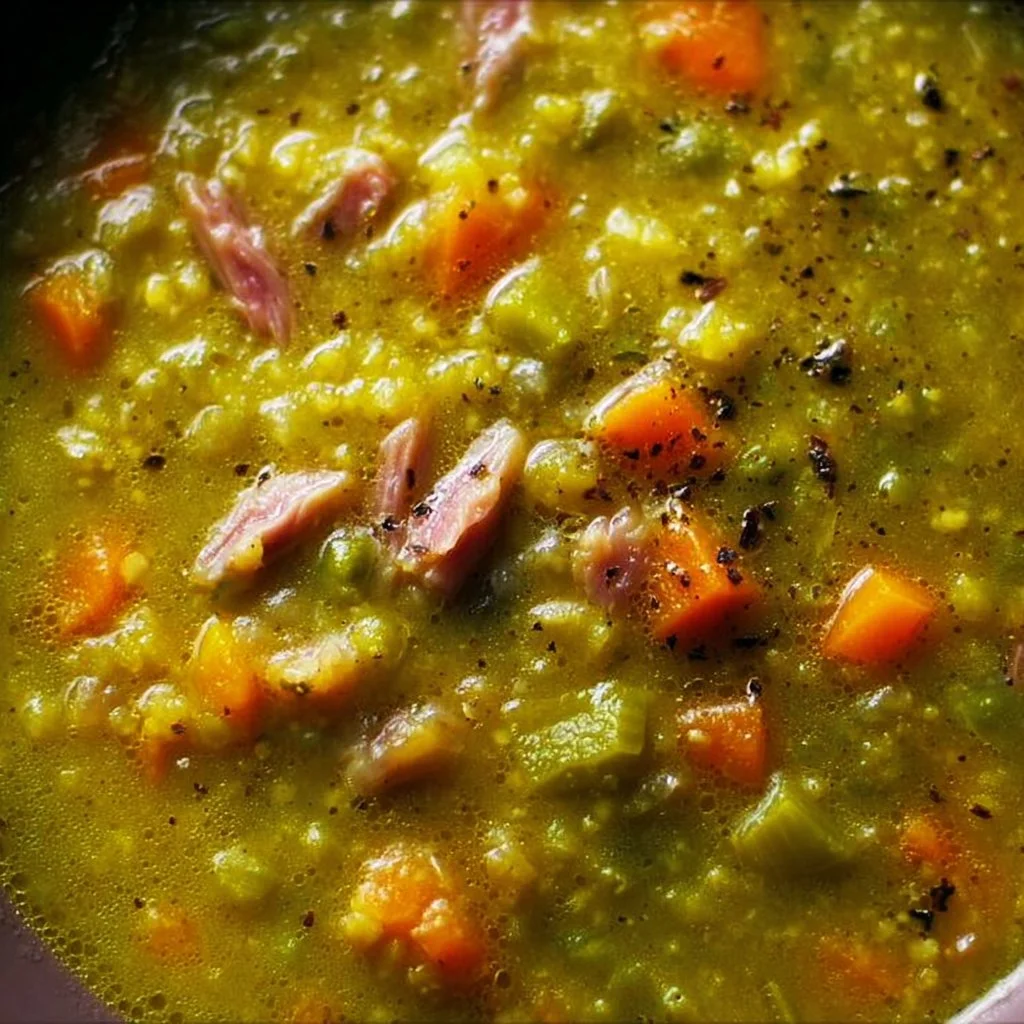
Split Pea Soup is a cozy, forgiving bowl of comfort that belongs on chilly evenings and lazy weekends. Made primarily from green split peas and enriched with savory bits of ham, earthy aromatics, and a silky yet slightly chunky texture, this classic is the kind of recipe you’ll come back to season after season. Whether you’re craving a heartwarming lunch or a make-ahead dinner that improves overnight, this recipe delivers on both flavor and ease. I also love pairing it with a simple crusty loaf or a bright salad, and for a sweet finish try a quick treat like a simple dessert idea to keep things easy and crowd-pleasing.
Ingredients & Equipment
Ingredients
- 1 cup split peas (green or yellow), rinsed
- 4 cups vegetable or chicken broth (use low-sodium if possible)
- 1 cup diced ham (leftover ham, ham steak, or cubed ham)
- 1 onion, chopped
- 2 carrots, diced
- 2 celery stalks, diced
- 2 cloves garlic, minced
- 1 bay leaf
- Salt and pepper to taste
- Olive oil for sautéing
Equipment
- Large heavy-bottomed pot or Dutch oven
- Wooden spoon or heatproof spatula
- Chef’s knife and cutting board
- Measuring cups and spoons
- Immersion blender (optional) or countertop blender
- Ladle and bowls for serving
- Container(s) for storing leftovers (airtight)
- Optional: fine-mesh sieve for extra-smooth texture
Helpful notes
- Rinsing split peas removes dust and any small stones; it also helps them cook evenly.
- An immersion blender makes quick work of partially pureeing the soup for a creamy consistency without losing all texture.
- If you have a thermometer, soup surface temperature for safe hot-holding is 140°F (60°C) or higher.
- A Dutch oven helps maintain even heat. If using a slow cooker or Instant Pot, see the Step-by-Step variations below.
Step-by-Step Instructions (with tips)
Rinse the split peas under cold water and set aside.
- Tip: Pick through the peas quickly as you rinse to remove any discolored pieces or debris.
In a large pot, heat a tablespoon of olive oil over medium heat. Add the chopped onion, diced carrots, and diced celery; cook until softened, about 5–7 minutes.
- Tip: Don’t rush this step. Sweating the vegetables brings out their natural sweetness and builds the soup’s base flavor.
Stir in the minced garlic and cook for another minute until fragrant.
- Tip: Add garlic toward the end of the sauté stage to avoid bitterness from overcooking.
Add the split peas, broth, diced ham, and bay leaf. Bring to a boil.
- Tip: If you want more depth, add a teaspoon of dried thyme or a bay leaf and a small piece of kombu for a subtle umami boost.
Reduce heat and let it simmer gently for about 1 hour, or until the peas are tender and begin to break down.
- Tip: Stir occasionally and skim any foam that rises to the top in the early minutes of simmering. If the soup gets too thick, add hot water or additional broth 1/2 cup at a time.
Remove the bay leaf, and season with salt and pepper to taste.
- Tip: If you used salted ham or a ham hock, taste before salting—you may need less salt than you expect.
For a creamier texture, use an immersion blender to blend some of the soup, or leave it chunky as preferred.
- Variation: Blend half the pot to create a balance of silky body and chunky goodness. If using a countertop blender, cool slightly and process in batches, leaving the lid slightly ajar and covering it with a towel to vent steam.
Serve hot.
- Tip: Finish with a drizzle of good olive oil, a sprinkle of chopped parsley, crumbled bacon, or a swirl of whole-grain mustard for brightness.
Variations and additional cooking methods
- Stove-top (basic): Follow the steps above. This method gives you the most control over texture.
- Slow cooker: Sauté the vegetables first, then transfer everything to a slow cooker and cook on low for 6–8 hours or high for 3–4 hours. Add diced ham in the last hour to prevent it from becoming too soft.
- Instant Pot/Pressure cooker: Use the sauté setting first for the vegetables, then add peas, broth, ham, and bay leaf. Seal and cook at high pressure for 12–15 minutes, followed by a 10–15 minute natural release. Quick-release remaining pressure, remove bay leaf, and adjust seasoning.
- Vegetarian version: Omit ham and use vegetable broth. Add a teaspoon of smoked paprika or a splash of liquid smoke to mimic smokiness, and add cooked diced potatoes or smoked tempeh for bite.
- Roasted vs. sautéed veggies: For a deeper, slightly caramelized flavor, roast the onion, carrots, and celery at 425°F (220°C) for 20–25 minutes with a bit of oil and then add them to the pot with the peas and broth.
- Layering flavor: For extra aroma, sear a ham hock in the pot to render fat and brown surfaces before adding vegetables and liquid, then remove and shred meat into the soup as it finishes.
Pro tip: For deeper flavor, try building an aromatic base similar to my chicken noodle method at aromatic soup base technique—the same ideas of slowly developing flavor apply and will elevate your split pea soup.
Storage, Freezing & Make-Ahead Tips
Storing leftovers
- Refrigerator: Transfer cooled soup to airtight containers and refrigerate within two hours of cooking. Properly stored, it will keep for 3–4 days.
- Portioning: Divide into meal-sized portions before refrigerating so you only reheat what you need. Glass containers with snap lids or BPA-free plastic are both fine.
Freezing
- Cool completely before freezing to reduce condensation and ice crystals.
- Portion into freezer-safe containers or resealable bags, leaving 1 inch of headspace to allow for expansion.
- Frozen split pea soup lasts up to 3 months for best quality. Label containers with date and contents.
Thawing and reheating
- Thaw overnight in the refrigerator for best texture.
- Reheat gently on the stovetop over medium-low heat, stirring occasionally. Add a splash of broth if it’s thicker than desired after chilling.
- If reheating from frozen, warm on low heat, covered, longer than from-thawed—use low heat to prevent scorching and to allow the peas to loosen back into a creamy texture.
Make-ahead tips
- Split pea soup often tastes better the next day once the flavors meld. Prepare it a day ahead and reheat for dinner.
- If you plan to freeze, slightly under-salt the soup before freezing; salt can concentrate as liquids reduce.
- For easy lunches, freeze in single-serving mason jars (leave enough headspace) and transfer jars to the fridge the night before to thaw.
For additional make-ahead and reheating ideas, see these practical make-ahead soup tips that work well across many soup recipes.
How to Use / Serve This Dish
Serving ideas
- Classic pairing: A crusty sourdough or a warm dinner roll is perfect for dipping and soaking up the thick broth.
- Lighter pairing: Serve with a crisp green salad dressed in a tangy vinaigrette to balance the soup’s richness.
- Toppings: Offer chopped fresh parsley, chives, a swirl of olive oil, cracked black pepper, shredded cheddar, or a spoonful of Dijon mustard on the side for guests to customize.
- Protein boost: Stir in cooked barley, farro, or diced roasted potatoes to add heft for a main-course meal.
- Garnish suggestions: Crispy pancetta or bacon, toasted croutons, or a squeeze of lemon can brighten the bowl.
Creative uses
- Split pea soup makes an excellent base for a shepherd’s pie-style casserole—top with mashed potatoes and bake until golden.
- Use thickened leftovers as a hearty spread on warm toast or flatbread.
- Blend more fully and chill to create a cold pea puree that can be served as an unusual, savory summer side with grilled fish.
Kid-friendly tweaks
- Puree the soup thoroughly for picky eaters, and serve with small, fun-shaped grilled cheese on the side.
- Stir in a bit of cream or mild cheese for a softer taste.
FAQ
Q: Can I use regular dried peas instead of split peas?
A: Split peas are dried peas that have been peeled and split, which is why they break down quickly and create a creamy texture. Whole dried peas (or fresh peas) will take significantly longer to cook and won’t produce the same texture; if using whole dried peas, soak overnight and plan for much longer simmering. Fresh peas are best cooked briefly and used in different recipes.
Q: How long does split pea soup last in the fridge and freezer?
A: In the refrigerator, expect 3–4 days of safe quality. In the freezer, it will hold well for about 3 months. Always cool and store promptly in airtight containers for best results.
Q: My soup is too thick or too thin—how can I fix it?
A: Too thick: Add hot broth, stock, or water a little at a time and reheat gently until you reach the desired consistency. Too thin: Simmer uncovered to reduce and thicken, or puree a portion of the soup and stir it back in to naturally thicken the pot.
Q: What can I use if I don’t have ham?
A: For a smoky, meaty flavor without ham, use a smoked ham hock, smoked turkey leg, or a few strips of cooked bacon. For a vegetarian alternative, add smoked paprika or a small amount of liquid smoke, and incorporate roasted root vegetables or smoked tempeh for texture.
Conclusion
There’s a reason Split Pea Soup remains a seasonal favorite: it’s simple, comforting, and endlessly adaptable to what you have on hand. The split peas give you a bowl that feels rich and satisfying without being fussy, while a handful of diced ham, some sautéed aromatics, and a little time transform humble ingredients into something genuinely soothing. If you’re inspired to try variations or want pressure-cooker and slow-cooker options for busy nights, this Split Pea Soup Recipe (Stovetop, Crockpot, Instant Pot) offers a great set of methods to explore. For another classic ham-and-pea approach and helpful tips, check out this hearty Ham and Split Pea Soup Recipe that many home cooks love. If you like seeing different takes on the same idea—especially ones with bright finishing touches—this version from Striped Spatula’s Split Pea Soup with Ham is a lovely companion read. Give the recipe a try this week, tweak it to your tastes, and please share what you added or changed—I’d love to hear how your bowl turns out.
Split Pea Soup
Ingredients
Main Ingredients
- 1 cup split peas (green or yellow), rinsed
- 4 cups vegetable or chicken broth (use low-sodium if possible)
- 1 cup diced ham (leftover ham, ham steak, or cubed ham)
- 1 onion, chopped
- 2 carrots, diced
- 2 stalks celery, diced
- 2 cloves garlic, minced
- 1 leaf bay leaf
- Salt and pepper to taste
Instructions
Preparation
- Rinse the split peas under cold water and set aside.
- In a large pot, heat a tablespoon of olive oil over medium heat. Add the chopped onion, diced carrots, and diced celery; cook until softened, about 5–7 minutes.
- Stir in the minced garlic and cook for another minute until fragrant.
Cooking
- Add the split peas, broth, diced ham, and bay leaf. Bring to a boil.
- Reduce heat and let it simmer gently for about 1 hour, or until the peas are tender and begin to break down.
- Remove the bay leaf, and season with salt and pepper to taste.
- For a creamier texture, use an immersion blender to blend some of the soup, or leave it chunky as preferred.
- Serve hot.

1 thought on “Split Pea Soup”