
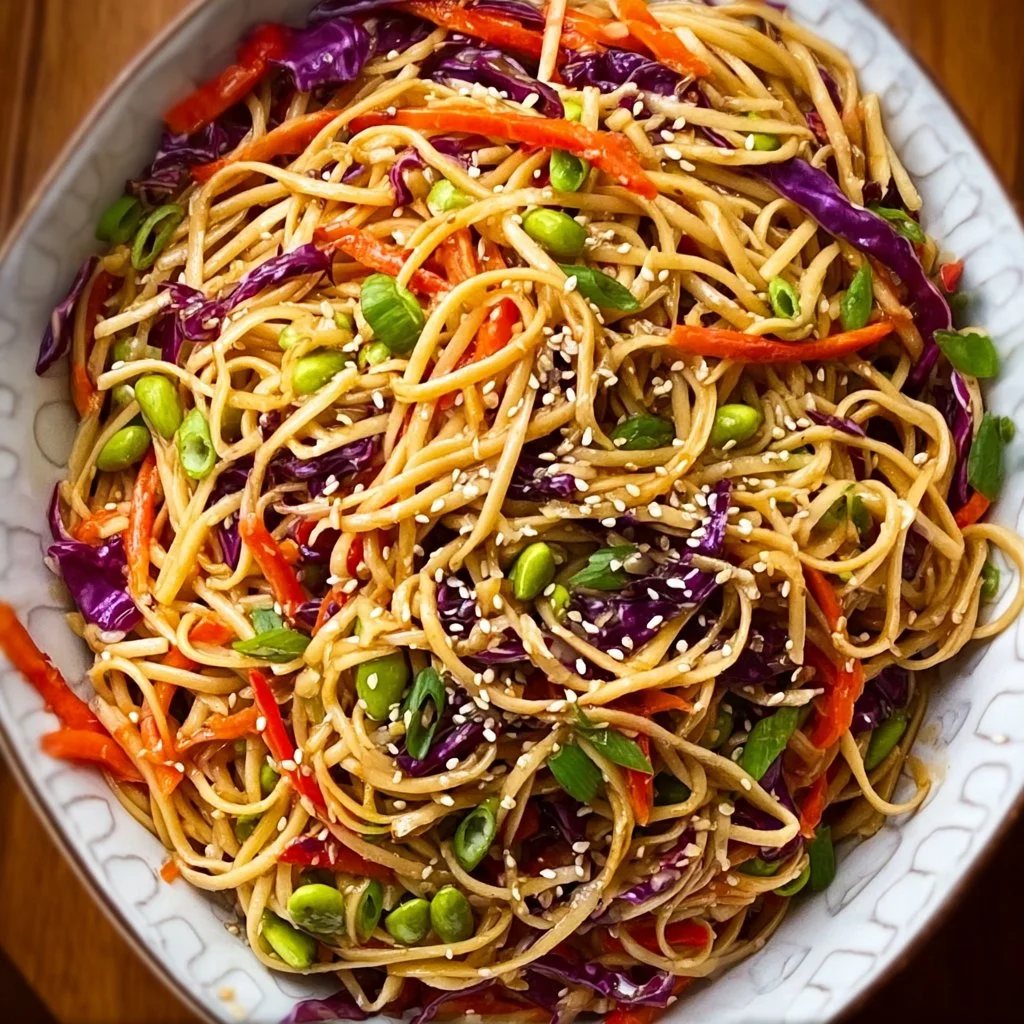
Sesame Noodle Salad is the kind of dish that feels like sunshine in a bowl: bright, nutty, and endlessly adaptable. If you love simple, from-scratch meals that come together quickly, this salad deserves a spot in your seasonal rotation. Made with tender noodles, crisp mixed vegetables, and a gingery sesame dressing, it balances silky, crunchy, salty, and a touch of tang—perfect for warm evenings, potlucks, or meal-prep lunches. The recipe uses humble pantry staples like sesame oil and soy sauce but tastes elevated and fresh. For seasonal inspiration and pairing ideas, I often glance at other favorite salads like this fall honeycrisp apple salad to spark new flavor combinations.
Why this Sesame Noodle Salad works (and when to make it)
Sesame Noodle Salad is versatile: it’s a great side for grilled meats, a light main for warmer days, and a crowd-pleaser at picnics. The sesame oil gives a toasty aroma, fresh ginger adds a bright bite, and crunchy veggies provide texture contrast to the soft noodles. It’s also a seasonal chameleon — swap vegetables to spotlight whatever’s fresh: thinly sliced cucumbers and bell peppers in summer, shredded carrots and cabbage in spring and fall. The dressing clings to each strand, delivering consistent flavor in every forkful, which is why it’s reliably satisfying whether served chilled or at room temperature.
Ingredients & Equipment
Ingredients
- 8 ounces of noodles (your choice)
- 1 cup of mixed fresh veggies (like bell peppers, carrots, and cucumber)
- 1/4 cup of sesame oil
- 2 tablespoons of soy sauce
- 1 tablespoon of rice vinegar
- 1 tablespoon of fresh ginger, grated
- 1 tablespoon of sesame seeds
- Salt and pepper to taste
Notes on ingredients
- Noodles: Use what you have—spaghetti, udon, soba, rice noodles, or even ramen all work. Whole wheat or gluten-free options are fine too; cooking times vary so follow package directions.
- Mixed fresh veggies: Aim for a variety of colors and textures. Julienne or thinly slice bell peppers, grate or ribbon carrots, and slice cucumber thin for crunch. You can also add sliced scallions or a handful of shredded cabbage.
- Dressing backbone: Sesame oil is the star. If you prefer a nuttier depth, use a toasted sesame oil, but be mindful it’s strong—start with less if you’re new to it.
- Ginger: Fresh grated ginger brightens the dressing. Ground ginger won’t have the same punch but can be used in a pinch.
- Soy sauce: For gluten-free, use tamari.
Helpful tools
- Large pot for boiling noodles
- Colander for draining and rinsing
- Large mixing bowl
- Whisk or fork to emulsify the dressing
- Vegetable peeler and sharp knife for prepping veggies
- Microplane or fine grater for fresh ginger
- Optional: salad tongs, or a large spoon for tossing
For smoother dressings or to emulsify additional add-ins (peanut butter, tahini, or honey), a small blender or immersion blender can help. A baking tray is handy if you decide to roast vegetables instead of using them raw.
(For more savory, warming bowls that use ginger in creative ways, try this ginger garlic chicken noodle soup to inspire seasonal variations.)
Step-by-Step Instructions (with tips)
Cook the noodles according to package instructions, then drain and rinse with cold water.
- Tip: Salt the pasta water for flavor if you’re using wheat noodles. Cook just to al dente so the noodles hold texture when chilled. After draining, rinse under cold water to stop the cooking and remove surface starch, which helps the dressing cling without becoming gummy.
- Variation: If using rice noodles, soak them per package instructions rather than boiling. They soften quickly and can become mushy if overcooked.
In a large bowl, whisk together sesame oil, soy sauce, rice vinegar, and grated ginger to make the dressing.
- Tip: If you’d like a touch of sweetness or more body, whisk in a teaspoon of honey or a tablespoon of smooth peanut butter/tahini. A splash of lime juice brightens the flavor. Taste and adjust: more soy sauce for saltiness, more rice vinegar for zing, more sesame oil for nuttiness.
- Kitchen hack: To mellow the intensity of toasted sesame oil, whisk it with a neutral oil (like grapeseed or canola) for a subtler background note.
Add the cooked noodles and mixed fresh veggies to the bowl and toss to combine.
- Tip: Toss gently with tongs or two large forks so you coat everything evenly without breaking noodles. For best texture, add the dressing while the noodles are slightly warm so they absorb flavor, then chill or serve at room temperature.
- Variation: Roast or sauté vegetables like bell pepper and carrots for a warm, caramelized take instead of raw veggies—roasting brings sweetness and deeper flavor. To roast, toss veggies with a little oil, spread on a baking tray, roast at 425°F (220°C) for 12–18 minutes until tender and slightly charred, then cool and toss into the salad.
Sprinkle with sesame seeds, salt, and pepper.
- Tip: Toast the sesame seeds in a dry skillet over medium heat for 2–3 minutes until fragrant to amplify their nuttiness. Add them at the end so they stay crunchy.
- Variation: Add chopped peanuts, toasted almonds, or sliced green onions for extra crunch and flavor layers.
Serve chilled or at room temperature.
- Tip: If serving chilled, let the salad rest in the refrigerator for 20–30 minutes to allow flavors to meld. If you plan to serve later, keep the dressing separate and toss shortly before serving to maintain bright textures.
- Creative finish: A drizzle of chili oil, a scattering of cilantro, or a squeeze of lime brightens and personalizes the bowl.
Additional flavor suggestions
- Make it spicy: Add a teaspoon of chili-garlic sauce, Sriracha, or a pinch of red pepper flakes.
- Make it creamy: Stir in a tablespoon of tahini or a spoonful of peanut butter to the dressing.
- Make it protein-forward: Fold in shredded rotisserie chicken, baked tofu, edamame, or leftover sliced steak.
Storage, Freezing & Make-Ahead Tips
Storing leftovers
- Refrigerator: Store the Sesame Noodle Salad in an airtight container for up to 3–4 days. If the salad has been dressed, expect the noodles to soften over time and the veggies to lose some crunch. To maintain texture, keep the dressing separate and toss just before eating.
- Portioning: Divide into single-serve containers for easy lunches. Add any delicate garnishes (like fresh herbs or toasted sesame seeds) right before serving.
Freezing
- I don’t recommend freezing the fully dressed salad; the texture of noodles and fresh veggies degrades after freezing and thawing. If you want to freeze components, cooked noodles freeze fine on their own: flash cool, portion into freezer bags, and freeze for up to 2 months. Thaw in the refrigerator and reheat briefly before mixing with fresh veggies and dressing.
- For a freezer-friendly meal prep, prepare and freeze a simple sauce (without sesame oil—it can separate) in a small jar and freeze noodles separately. Thaw and combine fresh vegetables when ready to eat.
Make-ahead
- Dressing: Make the dressing up to 5 days ahead and refrigerate in a sealed jar. Shake or whisk before using.
- Noodles: Cook and cool the noodles earlier in the day and toss lightly with a teaspoon of oil to prevent sticking. Refrigerate until ready to assemble.
- Veggies: Prep vegetables the day before, store in airtight containers with a paper towel to absorb excess moisture, and assemble the salad later.
Portioning advice
- This recipe using 8 ounces of noodles and 1 cup veggies serves 2–3 as a main or 4 as a side. Multiply or halve the recipe accordingly. If making for a crowd, prepare double the sauce and a bit more vegetables to keep everything bright.
How to Use / Serve This Dish
Pairing and serving ideas
- As a side: Serve alongside grilled salmon, teriyaki chicken, or barbecue skewers for an easy weeknight meal.
- As a main: Add protein—baked tofu, shredded rotisserie chicken, or chilled shrimp—to make it a complete meal.
- Potluck-perfect: Transport the dressing separately and toss the salad just before serving to maintain texture; bring a garnish of toasted sesame seeds and chopped herbs on the side.
- Bento boxes and lunches: Portion into reusable containers with a leakproof dressing cup so your midday meal stays crisp.
Creative variations
- Mediterranean twist: Swap sesame oil for olive oil, add lemon instead of rice vinegar, toss in cherry tomatoes and olives, and finish with feta.
- Asian-inspired green: Add edamame, sliced shiitake mushrooms (quickly sautéed), and a sprinkle of furikake or nori for umami depth.
- Cold noodle bowls: Serve over a bed of baby spinach or mixed greens for a hybrid salad-bowl feel.
Presentation tips
- Serve in a wide shallow bowl so the dressing can coat noodles evenly and garnishes are visible.
- Add a pop of color with thinly sliced red bell pepper, carrot ribbons, or purple cabbage.
- Garnish with fresh herbs (cilantro, basil, or mint) just before serving to add brightness.
(If you like bright, chilled salads with textural contrast, you might also enjoy this cranberry pretzel salad as a contrasting sweet-and-salty option for gatherings.)
FAQ
Q: What noodles are best for Sesame Noodle Salad?
A: Use what you enjoy and can cook confidently. Soba and udon give a more authentic Asian vibe; spaghetti or linguine are excellent pantry stand-ins. For a gluten-free version, rice noodles work nicely. Just watch cooking times to avoid over-softening.
Q: Can I make this recipe gluten-free or vegan?
A: Yes. Use tamari in place of soy sauce for gluten-free. The recipe is naturally vegan as written; omit animal proteins or add plant-based proteins like tofu or edamame.
Q: How long does Sesame Noodle Salad keep in the fridge?
A: When dressed, it stays good for about 3–4 days, though textures soften over time. If you plan to keep salads for multiple days, store the dressing separately and toss shortly before eating.
Q: Can I add protein or other vegetables?
A: Absolutely. Shredded chicken, sliced steak, shrimp, tofu, or edamame are fantastic additions. Swap or add vegetables like snap peas, shredded cabbage, or thinly sliced radish for crunch and color.
Conclusion
Sesame Noodle Salad is a comforting, versatile dish that brings together simple pantry ingredients and fresh seasonal produce for a bowl that’s both satisfying and light. Whether you’re serving it chilled on a hot day, offering it as a colorful side at a gathering, or building a weeknight dinner bowl with added protein, this recipe adapts easily and rewards small tweaks. For more recipe inspiration and variations, check out this vibrant take on sesame noodles from a popular food blog in case you want additional ideas: Sesame Noodle Salad – Fresh + Light + Veggie-Packed. If you’d like another well-loved version with clear step-by-step guidance, see this tested favorite: Sesame Noodle Salad Recipe. And for one more fresh perspective on bright sesame-forward bowls, explore this additional approach: Sesame Noodle Salad. Give it a try, make it your own, and share how you customize yours — I’d love to hear what you add!
Sesame Noodle Salad
Ingredients
For the Salad
- 8 ounces noodles (your choice) Spaghetti, udon, soba, rice noodles, or ramen can be used.
- 1 cup mixed fresh veggies (like bell peppers, carrots, and cucumber) Aim for a variety of colors and textures.
For the Dressing
- ¼ cup sesame oil Toast sesame oil for a nuttier flavor, but use it sparingly if new to it.
- 2 tablespoons soy sauce Use tamari for gluten-free.
- 1 tablespoon rice vinegar
- 1 tablespoon fresh ginger, grated Ground ginger can be used in a pinch.
- 1 tablespoon sesame seeds Toast for enhanced flavor.
- to taste salt and pepper Adjust to personal preference.
Instructions
Cooking the Noodles
- Cook the noodles according to package instructions, then drain and rinse with cold water.
- Tip: Salt the pasta water for flavor if you’re using wheat noodles. Cook just to al dente to hold texture when chilled.
Making the Dressing
- In a large bowl, whisk together sesame oil, soy sauce, rice vinegar, and grated ginger.
- Tip: For sweetness, whisk in a teaspoon of honey or a tablespoon of peanut butter/tahini.
Combining Ingredients
- Add the cooked noodles and mixed fresh veggies to the bowl and toss to combine.
- Tip: Toss gently so you coat everything evenly without breaking noodles.
Finalizing the Salad
- Sprinkle with sesame seeds, salt, and pepper.
- Tip: Toast sesame seeds in a dry skillet for enhanced nuttiness.
Serving
- Serve chilled or at room temperature.
- Tip: If serving chilled, let the salad rest in the refrigerator for 20–30 minutes to meld flavors.



1 thought on “Sesame Noodle Salad”