
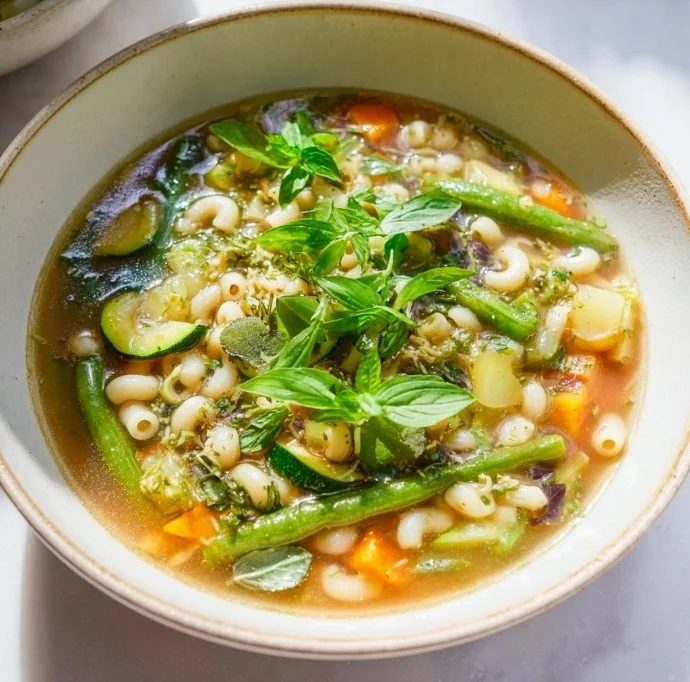
Pistou Soup is the kind of bowl that wraps you in a warm, herbal hug — bright basil, tender seasonal vegetables, a savory hit of Parmesan, and a silky pistou that lifts every spoonful. This Provençal-inspired vegetable soup shines in spring and summer when zucchini and fresh basil are at their peak, but it’s equally comforting on crisp autumn evenings when you crave something fresh yet soothing. The texture is a delightful mix of soft, stewy vegetables and the slightly oily, aromatic pistou spooned on top. If you enjoy exploring cozy, from-scratch bowls, you might also like this comforting aromatic ginger garlic chicken noodle soup for a different flavor profile.
Ingredients & Equipment
Ingredients
- 2 cups vegetable broth
- 1 cup green beans, chopped
- 1 zucchini, diced
- 1 carrot, diced
- 1 potato, diced
- 1 can (15 oz) diced tomatoes
- 1/4 cup fresh basil leaves
- 1/4 cup olive oil
- 2 cloves garlic
- 1/4 cup grated Parmesan cheese
- Salt and pepper to taste
Notes on ingredients
- Vegetable broth: Use low-sodium broth so you can control the seasoning. For a richer soup, use homemade vegetable stock.
- Green beans & zucchini: Fresh is best, but frozen green beans work in a pinch. If using larger zucchini, scoop out large seeds.
- Potato: Yukon Gold or Russet both work; Yukon Gold gives a creamier mouthfeel.
- Parmesan: For a vegetarian version, use a vegetarian hard cheese or nutritional yeast.
- Basil & olive oil: Fresh basil is essential for authentic pistou flavor. High-quality extra-virgin olive oil will make a noticeable difference.
Helpful tools and equipment
- Large pot or Dutch oven: For even heating and room to simmer the vegetables.
- Blender or food processor: To make a smooth pistou quickly (or use a mortar and pestle for a more rustic texture).
- Sharp chef’s knife and cutting board: For quick, safe prep.
- Ladle and wooden spoon: For stirring and serving.
- Optional: Baking tray if you prefer to roast vegetables, and a slotted spoon if you plan to remove vegetables individually.
You can swap tools depending on your kitchen—if you don’t have a blender, finely mince the basil, garlic, and Parmesan and whisk them with oil.
Step-by-Step Instructions (with tips)
In a large pot, heat the vegetable broth over medium heat.
- Tip: Bring the broth to a gentle simmer rather than a hard boil to keep flavors bright. If you have homemade broth, warm it slowly to extract aromatics from any added herbs.
Add the green beans, zucchini, carrot, and potato. Cook until the vegetables are tender, about 10–15 minutes.
- Tip: Cut vegetables into similar-sized pieces so they cook evenly. If you prefer firmer vegetables, check after 8 minutes. For an extra layer of flavor, sauté the carrots and potatoes in a tablespoon of olive oil until lightly golden before adding the broth.
Variation — Roasting vs. Boiling:
- Roasted vegetables: Toss diced carrots, potato, and zucchini with olive oil, salt, and pepper, roast at 425°F (220°C) for 20–25 minutes until caramelized, then add to the simmering broth for a deeper, slightly sweet flavor.
- Boiled/stewed vegetables: This method yields a lighter, brothy soup that highlights the pistou and fresh basil.
Stir in the diced tomatoes and cook for an additional 5 minutes.
- Tip: Use good-quality canned tomatoes. If you prefer less acidity, add a pinch of sugar or a splash of cream at the end to round out flavors.
In a blender, combine the fresh basil, olive oil, garlic, Parmesan cheese, and a pinch of salt and pepper. Blend until smooth to make the Pistou.
- Tip: Pulse first to break down the basil, then slowly stream in olive oil for a silky texture. If your blender struggles with small volumes, add a teaspoon or two of warm soup to help emulsify. For a chunkier pistou, use a mortar and pestle or finely chop the basil and garlic and stir with the oil and cheese.
Variations for the pistou:
- Nutty pistou: Add 1–2 tablespoons of toasted pine nuts, almonds, or walnuts for a pesto-like nuttiness.
- Dairy-free pistou: Swap Parmesan for nutritional yeast and use extra olive oil; add a little lemon zest for brightness.
- Spicy pistou: Add a small pinch of red pepper flakes or a piece of roasted red pepper for heat and color.
- Serve the soup hot with a dollop of Pistou on top.
- Tip: Stir the pistou into each bowl right before eating to keep the fresh basil aroma. Offer extra grated Parmesan and a drizzle of olive oil at the table.
Optional additions and swaps:
- Add white beans (cannellini) or chickpeas for protein and a heartier texture.
- Stir in 1/2 cup cooked small pasta (like ditalini or small shells) in the last 5 minutes of cooking for a classic Soupe au Pistou feel.
- Finish with a squeeze of lemon juice or a splash of vinegar to brighten the bowl.
Storage, Freezing & Make-Ahead Tips
Storing leftovers
- Refrigerator: Cool soup to room temperature, then transfer to an airtight container. Store for up to 4 days. Keep the pistou separate in a small jar to preserve its bright green color and aroma.
- Portioning: Divide soup into individual servings before refrigerating for easy reheating and to limit repeated temperature changes.
Freezing
- Soup base: Pistou Soup freezes well without the fresh pistou. Freeze the cooled soup in freezer-safe containers or heavy-duty freezer bags for up to 3 months.
- Pistou: Freezing pesto-style sauces is possible — spoon into an ice cube tray and freeze, then transfer cubes to a bag. Use within 3 months. Note: texture may change slightly; thaw in the fridge and stir well before using.
Make-ahead tips
- Prepare pistou ahead: Make the pistou up to 48 hours ahead and store in a jar with a thin layer of olive oil sealing the surface to reduce oxidation. Stir before serving.
- Prep vegetables in advance: Chop and store vegetables in airtight containers in the fridge for 1–2 days to shave off active cooking time.
- Reheating: Gently reheat on the stovetop over medium-low heat. If you added pasta before freezing, the pasta may become soft; consider adding fresh cooked pasta when reheating for best texture.
Safety note: If you’ve added potatoes, cool and refrigerate promptly — don’t leave perishable food at room temperature for more than two hours.
How to Use / Serve This Dish
Simple serving ideas
- Classic bowl: Ladle hot soup into bowls and top each serving with a spoonful of pistou, extra grated Parmesan, and a drizzle of olive oil.
- With bread: Serve with crusty bread, garlic toast, or a slice of rustic country loaf to soak up the broth.
- Light meal: Pair with a crisp green salad or a simple fennel and orange salad for a bright contrast.
Pairings and wine
- Wine: A light, crisp white like a Sauvignon Blanc or an unoaked Chardonnay pairs nicely with the herbaceous basil and tomato acidity.
- Cheese: Alongside grated Parmesan, a little shaved Pecorino or a dollop of ricotta swirled into the bowl makes it richer and more indulgent.
Creative variations and uses
- Turn it into a stew: Add cooked beans and a handful of kale or spinach for a thicker, protein-rich version.
- Grain bowl: Spoon warmed soup over cooked farro, barley, or quinoa for a hearty grain bowl topped with pistou.
- Leftover inspiration: Use leftover pistou-sprinkled soup as a base for a frittata — pour warmed, slightly reduced soup into a skillet, add beaten eggs, and bake until set for a unique savory pie.
If you love exploring different comforting soups, this recipe complements other hearty bowls; try pairing it with a rustic butter bean soup on a chilly day for a soup-tasting night.
FAQ
Q: Can I make Pistou Soup without a blender?
A: Yes — you can finely mince basil, garlic, and Parmesan and mix with olive oil by hand to create a chunky pistou. A mortar and pestle works beautifully and gives a rustic texture. If you prefer a silky pistou but lack a blender, pulse ingredients in a food processor or whisk with warm soup to help emulsify.
Q: How long does pistou last in the fridge?
A: Fresh pistou keeps well for about 2–3 days refrigerated when covered with a thin layer of olive oil to limit air exposure. For longer storage, freeze in small portions (ice cube tray method) and use within 3 months.
Q: Can I add pasta or beans to make it more filling?
A: Absolutely — small pasta shapes (ditalini, small shells) or white beans (cannellini, navy) are classic additions. If adding pasta, cook it separately and add just before serving to avoid soft, mushy noodles if you plan to store or reheat the soup.
Q: What are good substitutions for Parmesan in a vegetarian or dairy-free diet?
A: For vegetarian options that avoid animal rennet, look for cheeses labeled vegetarian Parmesan or use hard cheeses like Manchego if acceptable. For dairy-free, use nutritional yeast for a cheesy, umami flavor, and increase olive oil slightly to maintain the pistou’s body.
Tips for Seasonal Cooking and Flavor Boosters
- Spring: Emphasize fresh peas, young zucchini, and lots of basil. Brighten with lemon zest.
- Summer: Use sun-ripened tomatoes (fresh or the best-quality canned) and basil at its peak. Consider adding corn for sweetness.
- Autumn/Winter: Use winter squash in place of zucchini and rosemary instead of basil for a cozy twist; roasted vegetables add depth.
- Flavor boosters: A splash of good balsamic vinegar or a few olives on the side can amplify umami. Toasted nuts add texture and richness to the pistou.
If you want a richer, indulgent bowl, stir in a tablespoon of butter at the end or fold in a few tablespoons of crème fraîche for silkiness.
Conclusion
Pistou Soup offers a simple yet deeply satisfying way to celebrate seasonal vegetables and fresh basil — a bowl that’s as bright and herb-forward in summer as it is comforting on a cool evening. If you’re curious to explore traditional takes and variations from seasoned home cooks and food writers, check out David Lebovitz’s take on Soupe au pistou for a classic perspective. For another tested home-style version that leans into simplicity and pantry-friendly ingredients, see this Pistou Soup Recipe on Allrecipes. If you enjoy regional interpretations and personal storytelling with recipes, you’ll appreciate the charming spin in this Soupe au Pistou – Le Chef’s Wife article. Give this recipe a try, tuck a jar of pistou in the fridge, and share a warm bowl with someone you love — I can’t wait to hear how your kitchen turns this Provençal favorite into a new family staple.
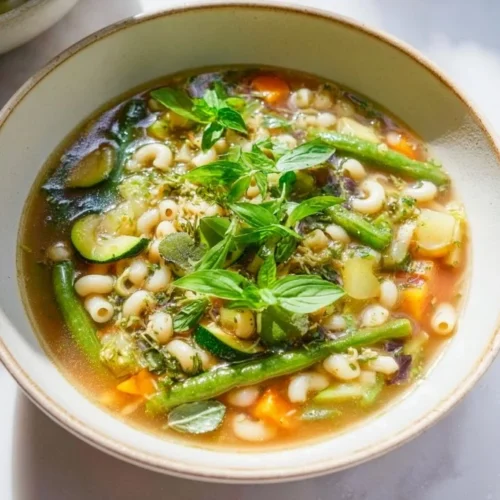
Pistou Soup
Ingredients
For the soup
- 2 cups vegetable broth Use low-sodium broth.
- 1 cup green beans, chopped Fresh is best; frozen works in a pinch.
- 1 medium zucchini, diced Scoop out large seeds if using larger zucchini.
- 1 medium carrot, diced
- 1 medium potato, diced Yukon Gold for a creamier texture.
- 1 can (15 oz) diced tomatoes Use good-quality canned tomatoes.
- ¼ cup fresh basil leaves Essential for authentic flavor.
- ¼ cup olive oil Use high-quality extra-virgin olive oil.
- 2 cloves garlic
- ¼ cup grated Parmesan cheese For vegetarian version, use vegetarian hard cheese.
- to taste salt and pepper Use low-sodium broth to control seasoning.
For the pistou
- ¼ cup fresh basil leaves
- ¼ cup olive oil
- 2 cloves garlic
- ¼ cup grated Parmesan cheese
- to taste salt and pepper
Instructions
Preparation
- In a large pot, heat the vegetable broth over medium heat.
- Add the green beans, zucchini, carrot, and potato. Cook until the vegetables are tender, about 10–15 minutes.
- Stir in the diced tomatoes and cook for an additional 5 minutes.
Make the Pistou
- In a blender, combine the fresh basil, olive oil, garlic, Parmesan cheese, and a pinch of salt and pepper. Blend until smooth.
Serve
- Serve the soup hot with a dollop of Pistou on top.






1 thought on “Pistou Soup”