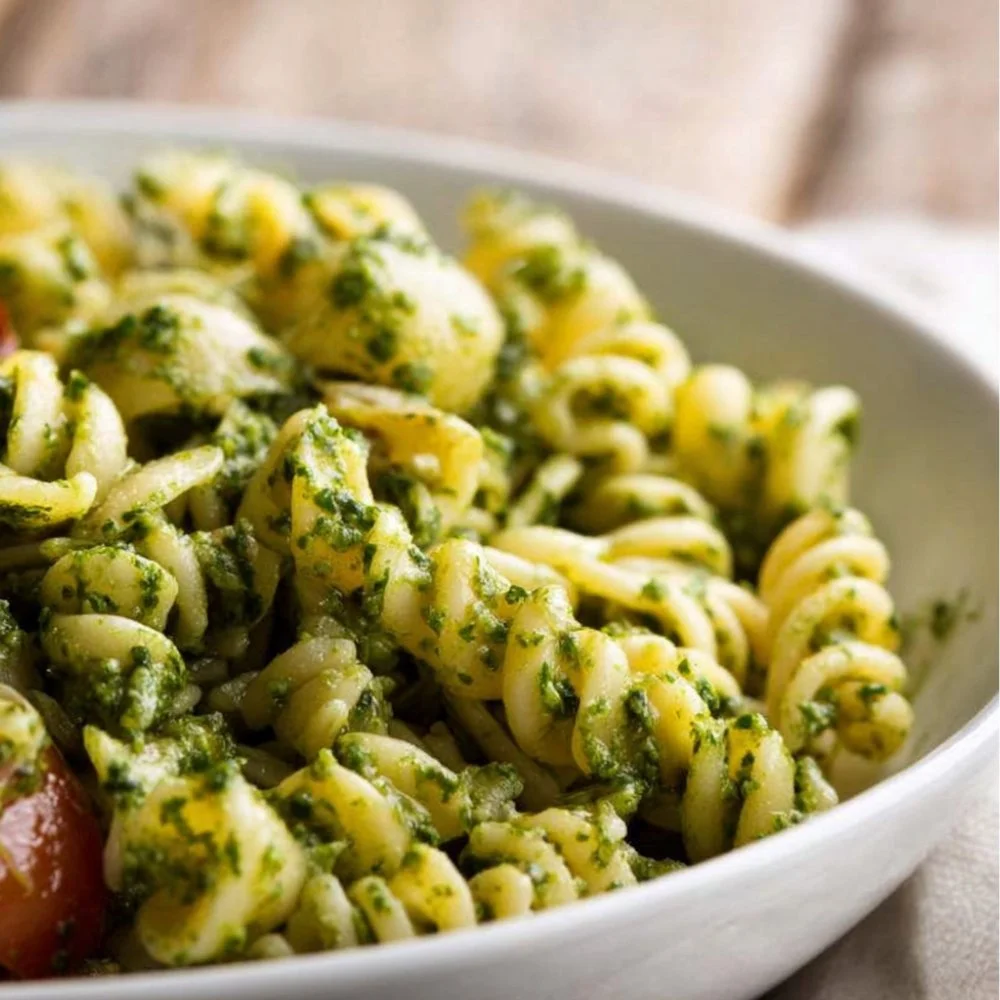
Pesto Pasta Salad is the perfect bright and comforting dish to bring to a picnic, family dinner, or a lazy weeknight. This version highlights fresh basil pesto tossed with tender pasta, juicy cherry tomatoes, and bite-sized mozzarella for a mix of creamy, tangy, and herb-forward flavors. It’s especially lovely in spring and summer when basil and tomatoes are at their best. If you enjoy creamy pasta salads with fresh, from-scratch components, this recipe will become a reliable favorite — and if you like exploring variations, I also love the texture contrast of other recipes like this creamy pasta salad you can use for inspiration.
Ingredients & Equipment
Ingredients
- 1 pound pasta (such as cavatelli or penne)
- 1 cup cherry tomatoes (halved)
- 8 oz fresh mozzarella (cut into small bite-sized pieces)
- 1/2 cup finely chopped red onion
- 1/4 cup chopped pepperoncini
- 1/4 cup finely chopped parsley
- 3 cups basil leaves
- 1/2 cup olive oil
- 1/3 cup pine nuts
- 1/3 cup grated parmesan cheese
- 1 tablespoon lemon juice
- 2 cloves garlic
- 1 teaspoon sea salt
- 1/4 teaspoon black pepper
Notes on ingredients
- Pasta: Cavatelli or penne work well because their shapes hold the pesto. Use whole wheat or gluten-free pasta if you prefer.
- Cheese: For strict vegetarian or halal-friendly labeling, look for vegetarian or halal-certified parmesan and mozzarella, or substitute with nutritional yeast and plant-based cheese for a vegan version.
- Pine nuts: Toast them lightly for extra flavor; you can substitute walnuts or almonds if pine nuts are expensive or unavailable.
- Pepperoncini add a gentle tang and mild heat — you can adjust the amount or replace with roasted red peppers for a milder salad.
Equipment and helpful tools
- Large pot for boiling pasta
- Colander for draining
- Food processor or blender to make pesto
- Large mixing bowl
- Measuring cups and spoons
- Wooden spoon or salad tongs for tossing
- Baking tray (if you roast pine nuts or tomatoes)
- Kitchen thermometer (optional, mainly for checking leftover reheats)
- Airtight containers for storage
Step-by-Step Instructions (with tips)
- Cook the pasta
- Bring a large pot of salted water to a rolling boil. Add your pasta and cook until al dente, checking the package for recommended cook time (usually 9–12 minutes for penne or cavatelli).
- Tip: Salt the water well — it’s your first chance to season the pasta. Cook it to a slightly firmer texture than you want because it will relax as it cools.
- Drain and rinse well under cold water to stop the cooking and cool the noodles for the salad. Give the pasta a gentle toss with a little olive oil to prevent sticking if you’re making this ahead.
Variations: Instead of boiling and cooling, you can shock the pasta in an ice bath for a firmer, chilled bite. If you prefer a slightly warm pasta salad, rinse less and toss while the pasta is still slightly warm.
- Make the pesto
- While the pasta cooks, prepare the basil pesto. In a food processor combine 3 cups fresh basil leaves, 1/3 cup pine nuts, 1/3 cup grated parmesan cheese, 1/2 cup olive oil, 2 cloves garlic, 1 tablespoon lemon juice, 1 teaspoon sea salt, and 1/4 teaspoon black pepper. Process until smooth and creamy.
- Tip: Scrape the sides of the food processor a couple of times so the pesto blends evenly. If it seems too thick, add olive oil or a splash of the reserved pasta water to loosen.
- Variation: For a nuttier flavor, toast pine nuts on a baking tray in a 350°F oven for 5–7 minutes before processing. If you’re making a vegan pesto, replace parmesan with nutritional yeast and ensure the pine nuts are fresh.
- Assemble the pasta salad
- In a large bowl, combine the cooled noodles, pesto, 1 cup halved cherry tomatoes, 8 oz bite-sized fresh mozzarella pieces, 1/2 cup finely chopped red onion, 1/4 cup chopped pepperoncini, and 1/4 cup finely chopped parsley. Toss until everything is evenly coated and distributed.
- Tip: Start by adding about three-quarters of the pesto, toss, then add more to taste. This helps you avoid over-saucing the salad.
- Taste and adjust seasoning with extra lemon juice, salt, or black pepper if needed.
- Chill and meld flavors
- For best flavor, cover the salad and refrigerate for at least 30 minutes to let the pesto infuse the pasta. This salad is excellent served slightly chilled or at room temperature.
- Tip: If you plan to serve it right away, let the bowl sit at room temperature for 10–15 minutes after tossing. If making ahead, keep the salad tightly covered.
- Final touches
- Before serving, give the salad a gentle toss and garnish with a few extra torn basil leaves, a drizzle of olive oil, or a sprinkle of grated parmesan.
- Flavor suggestion: Add a scatter of toasted pine nuts on top for crunch, or stir in a handful of arugula for peppery contrast.
Extra kitchen tips and variations
- Roasted vs. Fresh: Roasting the cherry tomatoes brings out sweetness and a richer texture: toss tomatoes with olive oil, salt, and pepper and roast on a baking tray at 400°F for 12–18 minutes until blistered. Use them warm or cooled in the salad.
- Protein options: To make this a heartier main, add sliced grilled chicken or chickpeas. If you enjoy chicken pairings, try the flavor profile from this grilled chicken asparagus pesto pasta for inspiration.
- Herb swaps: Mix in fresh mint or basil varieties like Genovese or sweet basil for subtle changes in aroma and taste.
- Nut substitutes: If pine nuts are unavailable or costly, substitute equal amounts of toasted walnuts, almonds, or sunflower seeds for a similar texture and a different flavor note.
Storage, Freezing & Make-Ahead Tips
Storing leftovers
- Refrigerate in an airtight container within two hours of serving. The salad will last 3–4 days in the fridge when stored properly.
- Tip: Because fresh mozzarella can release moisture over time, give the salad a quick toss before serving again and drain off any excess liquid.
Freezing
- Freezing the fully assembled salad is not recommended: the texture of fresh mozzarella and the pasta will deteriorate upon thawing.
- Freezing pesto alone: Make a double batch of pesto and freeze it in ice cube trays or small containers. Once frozen, transfer pesto cubes to a freezer bag and store for up to 3 months. Thaw a cube to freshen up plain pasta quickly or stir into soups and marinades.
- Make-ahead approach: Cook the pasta and refrigerate separately, make the pesto and refrigerate in a sealed jar, and chop the vegetables and cheese. Assemble within 24 hours for best texture.
Portioning advice
- This recipe yields approximately 6–8 side-dish portions or 4 main-dish servings. For parties, plan on 3/4 to 1 cup per person as a side and 1 to 1 1/2 cups as a main.
Reheating
- If you prefer your pasta warm, gently reheat single servings in a skillet over low heat with a splash of water or olive oil to keep it from drying out. Avoid microwave reheats for cheese-heavy portions, as mozzarella can become rubbery.
How to Use / Serve This Dish
Serving ideas
- Potluck favorite: Bring this to weekend gatherings or community meals — it travels well when kept chilled.
- Light dinner: Serve with a crisp seasonal salad and warm bread for a cozy, vegetarian-friendly weeknight meal.
- Picnic or lunchbox: Pack in a cooler and enjoy cold; it keeps well for a few hours if chilled properly.
- Playful pairings: Top with grilled or baked chicken for extra protein, or add roasted vegetables for a vegetarian main. If you like Caesar-style flavors with chicken, consider this easy chicken Caesar pasta salad for another twist.
Creative variations
- Mediterranean twist: Add kalamata olives, cucumber, and crumbled feta (use halal/vegetarian-certified cheese when desired).
- Vegan version: Replace parmesan and mozzarella with plant-based cheese alternatives or nutritional yeast and marinated tofu or roasted chickpeas for protein.
- Warm salad: Toss warm roasted vegetables into the pasta with pesto and serve immediately for a comforting autumn or winter take.
Presentation tips
- Serve in a wide, shallow bowl so the vibrant green pesto and colorful tomatoes show off.
- Garnish with whole basil leaves, extra parmesan shavings, or a few halved cherry tomatoes for a fresh look.
FAQ
Q: Can I substitute the pine nuts with something else?
A: Yes. Pine nuts provide a buttery richness, but toasted walnuts, almonds, or even sunflower seeds make great substitutes and are often more budget-friendly. Toast the nuts slightly for deeper flavor.
Q: How long will this pesto pasta salad keep in the fridge?
A: Stored in an airtight container, the assembled salad will stay good for 3–4 days. Fresh mozzarella can release liquid and soften the pasta over time, so plan to enjoy it within a few days for best texture.
Q: Can I make this recipe vegan or dairy-free?
A: Absolutely. Replace parmesan and mozzarella with nutritional yeast and a plant-based cheese or omit the cheese and add extra nuts for richness. Make sure to use a vegan-friendly pesto or make your own without cheese.
Q: Can I freeze the completed salad if I have leftovers?
A: Freezing the fully assembled salad is not recommended due to texture changes in the cheese and pasta. Freeze pesto separately in small portions if you want to preserve it long-term (up to 3 months).
Conclusion
Pesto Pasta Salad captures bright summer basil, tangy tomatoes, and creamy mozzarella in a simple, make-ahead dish that’s both comforting and fresh. If you’re looking to compare techniques or draw inspiration, this helpful recipe roundup on Pesto pasta salad – RecipeTin Eats offers great variations and tips. For another straightforward take on pesto pasta salads with easy step-by-step guidance, see Easy Pesto Pasta Salad – Tastes Better From Scratch. And if you’d like a different presentation or serving style to inspire a weeknight dinner, check out this Pesto Pasta Salad Recipe – Cooking with Cocktail Rings. I hope this recipe inspires you to make pesto from scratch, personalize the salad with your favorite add-ins, and share it with the people you love — let me know how yours turns out or any tasty twists you discover!
Pesto Pasta Salad
Ingredients
Pasta and Vegetables
- 1 pound pasta (such as cavatelli or penne) Use whole wheat or gluten-free pasta if preferred.
- 1 cup cherry tomatoes (halved) Roasted tomatoes can be used for extra sweetness.
- ½ cup finely chopped red onion
- ¼ cup chopped pepperoncini Can replace with roasted red peppers if preferred.
- ¼ cup finely chopped parsley
Cheese and Nuts
- 8 oz fresh mozzarella (cut into small bite-sized pieces) For vegetarian labeling, use vegetarian-certified cheese.
- ⅓ cup pine nuts Toast for extra flavor, or substitute with walnuts or almonds.
- ⅓ cup grated parmesan cheese Substitute with nutritional yeast for a vegan version.
Pesto Ingredients
- 3 cups basil leaves
- ½ cup olive oil
- 1 tablespoon lemon juice
- 2 cloves garlic
- 1 teaspoon sea salt
- ¼ teaspoon black pepper
Instructions
Cook the pasta
- Bring a large pot of salted water to a rolling boil. Add your pasta and cook until al dente, checking the package for recommended cook time (usually 9–12 minutes).
- Drain and rinse well under cold water to stop the cooking and cool the noodles for the salad.
- Optionally, toss the pasta with a little olive oil to prevent sticking.
Make the pesto
- In a food processor, combine fresh basil leaves, pine nuts, grated parmesan cheese, olive oil, garlic, lemon juice, sea salt, and black pepper. Process until smooth and creamy.
Assemble the pasta salad
- In a large bowl, combine the cooled noodles, pesto, halved cherry tomatoes, mozzarella, red onion, pepperoncini, and parsley. Toss until evenly coated.
Chill and meld flavors
- Cover the salad and refrigerate for at least 30 minutes to allow flavors to meld.
Final touches
- Before serving, give the salad a gentle toss and garnish with extra basil leaves, a drizzle of olive oil, or grated parmesan.