Privacy Policy

Contact Us

Privacy Policy

Contact Us

Mini Lemon Tarts

Published January 28, 2026 By Carol bonaparte

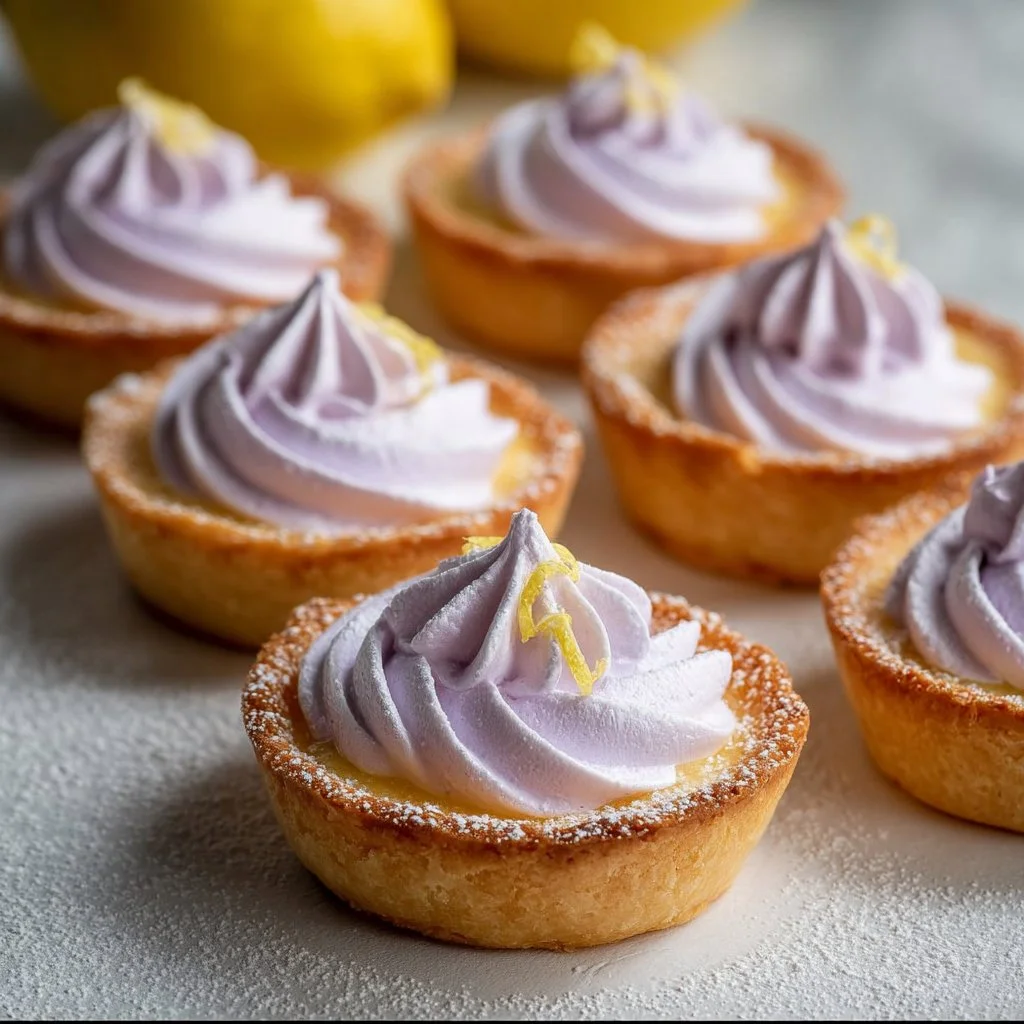
Delicious mini lemon tarts topped with whipped cream on a decorative plate

Mini Lemon Tarts are a bright, bite-sized indulgence that make any season feel special. These little tarts marry a crisp, buttery shortcrust with a silky, tangy lemon curd and a cloud of toasted meringue — the contrast of textures is what keeps people coming back for more. If you love the zing of citrus and the comfort of homemade baking, this recipe is worth trying because it’s approachable, adaptable, and perfect for gatherings, tea time, or a cheerful weeknight dessert. For a cozy seasonal pairing idea, consider serving them alongside a warm bowl like this easy lemon chicken orzo soup to echo the lemon notes in a savory way.

Ingredients & Equipment

Ingredients

  • 1 cup all-purpose flour
  • 1/4 cup powdered sugar
  • 1/2 cup unsalted butter, softened
  • 1/4 teaspoon salt
  • 2 large eggs
  • 1/2 cup granulated sugar
  • 1/2 cup freshly squeezed lemon juice
  • 1 tablespoon lemon zest
  • 1/4 teaspoon cream of tartar
  • 1/2 cup granulated sugar (for meringue)
  • 1/4 cup water

Notes on ingredients:

  • Use the freshest lemons you can find for the brightest flavor; Meyer lemons (if available) add a sweeter, floral note.
  • Powdered sugar in the crust keeps the texture tender and slightly crumbly — don’t swap with granulated sugar there.
  • The recipe calls for whole eggs for the curd and separate egg whites for the meringue; you’ll need a total of three eggs (two for the curd, one white for meringue), so plan accordingly.
  • If you prefer less sweet meringue, reduce the meringue sugar by 10–15% to taste.

Equipment

  • Mini tartlet pan or muffin tin (12-cup mini tart pan recommended)
  • Mixing bowls (one for crust, one for curd, one for meringue)
  • Electric mixer or stand mixer (hand mixer works fine) for meringue
  • Whisk and rubber spatula
  • Microplane or zester for lemon zest
  • Measuring cups and spoons
  • Baking tray to set tart pan on (for stable oven transfer)
  • Pastry brush (optional, for edges)
  • Piping bag (optional, for neat meringue)
  • Candy/instant-read thermometer (optional, to check curd temperature)

Helpful tool tips: a tartlet pan with removable bottoms makes unmolding easy, and a small offset spatula helps smooth the curd. If you don’t own a tartlet pan, a muffin tin lined with thin rounds of parchment will work in a pinch. For a short-cut crust variation inspired by small pie traditions, check out recipes for other mini treats like this mini pumpkin pies to see how different fillings pair with tiny shells.

Step-by-Step Instructions (with tips)

Preheat and prep

  1. Preheat the oven to 350°F (175°C). Place your tartlet pan on a baking tray so it’s easier to move in and out of the oven.

Make the crust
2. In a bowl, mix 1 cup all-purpose flour, 1/4 cup powdered sugar, 1/2 cup softened unsalted butter, and 1/4 teaspoon salt until crumbly. Use a pastry cutter, fork, or your fingers; if the dough seems too dry, add a teaspoon of cold water at a time until it holds.
Tip: Chill the dough for 15–20 minutes if it becomes too soft while you work — chilled dough presses into shells more neatly and helps prevent shrinking during baking.

Form and blind bake
3. Press the crumbly dough into your tartlet shells, ensuring an even thickness and sealing around the edges. Prick the bottoms lightly with a fork. Bake for 15–20 minutes until lightly golden. If you’re worried about puffing, line each shell with a small square of parchment and fill with pie weights or dried beans for the first 10–12 minutes, removing the weights for the final few minutes to let the bottoms color.
Tip: For an extra-crisp base, brush the inside of each shell with a thin layer of melted white chocolate or egg wash and return to the oven for 2 minutes before filling.

Make the lemon curd filling
4. In another bowl, whisk 2 large eggs with 1/2 cup granulated sugar until slightly frothy, then stir in 1/2 cup freshly squeezed lemon juice and 1 tablespoon lemon zest. Pour the mixture into the baked shells.
Tip: If you prefer an ultra-smooth curd, strain the lemon mixture before pouring to catch any coagulated egg bits or zest fragments. For a thicker set, gently cook the curd on the stovetop first until it reaches about 170°F (77°C), stirring constantly, then pour into shells.

Bake the filled tartlets
5. Bake for 15–20 minutes until set — the curd should feel like a firm but slightly wobbly gelatin in the center. Avoid overbaking; curd will continue to firm as it cools.

Prepare the meringue
6. For meringue, beat egg whites (from 1 large egg) and 1/4 teaspoon cream of tartar until soft peaks form. Gradually add 1/2 cup granulated sugar and 1/4 cup water (if you prefer, dissolve the sugar into the water and use it as a hot sugar syrup for an Italian meringue variation; that makes a silkier, more stable topping). Continue to beat until stiff, glossy peaks form.
Tip: Make sure your mixing bowl is free of any grease; a glass or metal bowl works best. For Swiss meringue, gently heat the sugar and egg whites over a double boiler before whipping.

Top and brown
7. Spread or pipe the meringue over the tarts, making peaks and swirls if you like. Bake the assembled tarts for an additional 5–10 minutes until the meringue has a light golden color. Alternatively, skip the oven and use a kitchen torch to toast the meringue to get precise browning.
Safety note: If you torch the meringue, keep the flame moving and watch for sugar flare-ups.

Cool and finish
8. Let cool before serving. Cooling on a wire rack helps air circulate and prevents condensation under the tart bottoms. Chill slightly in the fridge for cleaner slices, but bring to cool room temperature before serving for the best flavor.

Variations and flavor suggestions

  • Roasted lemon curd: roast lemon halves at 400°F for 10–12 minutes until caramelized, then juice and use for a deeper, more caramelized lemon flavor. This is the “roasting vs boiling” example — roasting concentrates sugars and reduces acidity.
  • Meyer lemon twist: swap standard lemons for Meyer lemons for a sweeter, floral curd. Reduce sugar slightly if you want the tartness dialed down.
  • Shortbread shell: stir in a teaspoon of cornstarch or replace part of the flour with finely ground almonds for a sturdier, nutty crust — similar to the shortbread approach in other mini tart recipes, like this mini pumpkin bread with cinnamon swirl which highlights buttery mini-bake textures.

Kitchen tips for success

  • Room temperature eggs incorporate better into the curd.
  • If your curd is too runny after baking, return to the oven for 3–5 minute intervals — just watch closely to avoid overcooking.
  • To prevent weeping meringue, make sure the sugar is fully dissolved and don’t under-beat the whites; serve meringue-topped tarts the same day for the best texture.

Storage, Freezing & Make-Ahead Tips

Storing leftovers

  • Refrigerator: Store finished tarts in an airtight container in the refrigerator for up to 2–3 days. Note that meringue will soften and may weep over time, so for best presentation, consume within 24 hours.
  • Room temperature: If you skip the meringue and only use lemon curd, tarts can sit covered at cool room temperature for a few hours, but refrigeration is safer for longer storage.

Freezing

  • Freezing with meringue is not ideal because meringue loses its crispness and becomes soggy after thawing. Instead, freeze components separately: bake and freeze the shells (unfilled) wrapped tightly for up to 1 month; freeze lemon curd in a freezer-safe container for up to 2 months. Thaw curd overnight in the fridge and reheat gently if needed before filling shells.
  • For parties: prepare the curd and shells ahead. On the day, fill baked shells, top with freshly whipped meringue, and torch or bake quickly for a just-made appearance.

Make-ahead strategy

  • Make the crusts 1–2 days ahead and keep covered in the fridge, or bake and freeze shells up to a month in advance.
  • Cook and chill the lemon curd a day ahead to let flavors meld; bring to room temperature before filling and baking a short time.

Portioning advice

  • Mini tartlets are perfect for parties because they require no slicing; plan on 1–2 per person as a dessert portion, or 2–3 for a dessert buffet where other sweets are offered.

How to Use / Serve This Dish

Serving ideas

  • Afternoon tea: place mini lemon tarts on a pretty platter with dainty forks and pair with green tea or Earl Grey to complement the citrus.
  • Dessert trio: create a small sampler plate with one mini lemon tart, one small chocolate ganache bite, and a fresh berry skewer for color contrast.
  • Brunch brightener: these tarts make a lovely sweet contrast to savory brunch items like quiches and frittatas; their acidity helps cleanse the palate.

Pairings

  • Beverages: pair with a light white wine (Muscadet or a dry Riesling), sparkling wine, or a citrus-forward cocktail. Non-alcoholic pairings like chilled lemonade or a rosemary-laced soda are also great.
  • Complementary desserts: a dollop of crème fraîche or a few macerated berries on the side brings balance and visual appeal. A spoonful of vanilla whipped cream calms the tartness for guests who prefer milder sweets.

Creative serving variations

  • Mini tart bars: pipe lemon curd into small shortbread tart bases and top with chopped pistachios and a tiny sugared lemon twist.
  • Savory-sweet contrast: serve one mini tart alongside a small portion of lemon-rescued savory dish to highlight the citrus theme across courses.

FAQ

Q: Can I substitute bottled lemon juice for fresh lemon juice?
A: Fresh lemon juice gives a brighter, more nuanced citrus flavor. You can use bottled juice in a pinch, but you may notice a difference in aroma and brightness. If using bottled juice, taste and adjust the sugar slightly, since bottled juice can be slightly less acidic.

Q: How long will these tarts keep once made?
A: With meringue, store covered in the refrigerator and consume within 24–48 hours for the best texture and to avoid weeping. If kept without meringue, filled tarts will last 3–4 days refrigerated.

Q: Can I make the meringue ahead of time?
A: Meringue can be made ahead but is best applied right before serving. If you must prepare it earlier, keep it in an airtight container in the refrigerator for a few hours and re-whip slightly before torching or baking to refresh the peaks.

Q: What can I use instead of cream of tartar?
A: If you don’t have cream of tartar, you can substitute a small splash (1/2 teaspoon) of white vinegar or lemon juice to stabilize the egg whites. Another option is to use an Italian meringue method, which uses hot sugar syrup and no stabilizer.

Conclusion

There’s something wonderfully comforting about baking small things by hand, and Mini Lemon Tarts capture that warmth — bright lemon curd tucked into a fragile, buttery shell with a billowy meringue crown. Whether you’re baking for a crowd, pairing a dessert with soup, or making a simple treat for the family, these tarts are flexible, sharable, and seasonally cheerful. For more mini tart inspiration and other small-batch lemon recipes, you might enjoy comparing versions like this Mini Lemon Tarts Recipe, reading a home baker’s take on similar tartlets at Mini Lemon Tartlets – Taming of the Spoon, or exploring a shortbread-crust variation with Meyer lemon notes here: Mini Lemon Tarts with Shortbread Crust – Lively Table. Give this recipe a try, and if you make them, I’d love to hear how your tarts turned out — recipes feel extra cozy when they’re shared.
Delicious mini lemon tarts topped with whipped cream on a decorative plate

Mini Lemon Tarts

Bright, bite-sized indulgences featuring a crisp, buttery shortcrust filled with silky lemon curd and topped with toasted meringue. Perfect for gatherings, tea time, or a cheerful dessert.
Prep Time 30 minutes
Cook Time 1 hour
Total Time 1 hour 30 minutes
Course Dessert, Snack
Cuisine American
Servings 12 tarts
Calories 150 kcal

Ingredients
  

For the crust

  • 1 cup all-purpose flour Use for the tart crust.
  • ¼ cup powdered sugar Keeps the crust tender.
  • ½ cup unsalted butter, softened Make sure it is softened.
  • ¼ teaspoon salt

For the lemon curd filling

  • 2 large eggs For the curd.
  • ½ cup granulated sugar Used in the curd.
  • ½ cup freshly squeezed lemon juice Use the freshest lemons.
  • 1 tablespoon lemon zest

For the meringue

  • 1 large egg white Use the egg white from the curd preparation.
  • ¼ teaspoon cream of tartar Stabilizes the meringue.
  • ½ cup granulated sugar Sweetening for meringue.
  • ¼ cup water Optional for Italian meringue.

Instructions
 

Preheat and prep

  • Preheat the oven to 350°F (175°C). Place your tartlet pan on a baking tray.

Make the crust

  • In a bowl, mix flour, powdered sugar, butter, and salt until crumbly.
  • Chill the dough for 15–20 minutes if it becomes too soft while working.

Form and blind bake

  • Press the dough into the tartlet shells and prick the bottoms with a fork.
  • Bake for 15–20 minutes until lightly golden.

Make the lemon curd filling

  • Whisk eggs with granulated sugar until frothy, then stir in lemon juice and zest.
  • Pour the mixture into the baked shells.

Bake the filled tartlets

  • Bake for 15–20 minutes until the curd is set, avoiding overbaking.

Prepare the meringue

  • Beat egg whites and cream of tartar until soft peaks form, then gradually add sugar.
  • Beat until stiff, glossy peaks form.

Top and brown

  • Spread or pipe the meringue over the tarts and bake for 5–10 minutes until lightly golden.

Cool and finish

  • Let cool before serving. Chill slightly for cleaner slices.

Notes

For variety, try roasted lemon curd or swap for Meyer lemons for a sweeter flavor.

Nutrition

Serving: 1gCalories: 150kcalCarbohydrates: 20gProtein: 2gFat: 7gSaturated Fat: 4gSodium: 30mgSugar: 10g
Keyword Citrus treats, Lemon tarts, Meringue, Mini desserts
Tried this recipe?Let us know how it was!

Mini Lemon Tarts

Published: January 28, 2026 By Carol bonaparte

Delicious mini lemon tarts topped with whipped cream on a decorative plate

Mini Lemon Tarts are a bright, bite-sized indulgence that make any season feel special. These little tarts marry a crisp, buttery shortcrust with a silky, tangy lemon curd and a cloud of toasted meringue — the contrast of textures is what keeps people coming back for more. If you love the zing of citrus and the comfort of homemade baking, this recipe is worth trying because it’s approachable, adaptable, and perfect for gatherings, tea time, or a cheerful weeknight dessert. For a cozy seasonal pairing idea, consider serving them alongside a warm bowl like this easy lemon chicken orzo soup to echo the lemon notes in a savory way.

Ingredients & Equipment

Ingredients

  • 1 cup all-purpose flour
  • 1/4 cup powdered sugar
  • 1/2 cup unsalted butter, softened
  • 1/4 teaspoon salt
  • 2 large eggs
  • 1/2 cup granulated sugar
  • 1/2 cup freshly squeezed lemon juice
  • 1 tablespoon lemon zest
  • 1/4 teaspoon cream of tartar
  • 1/2 cup granulated sugar (for meringue)
  • 1/4 cup water

Notes on ingredients:

  • Use the freshest lemons you can find for the brightest flavor; Meyer lemons (if available) add a sweeter, floral note.
  • Powdered sugar in the crust keeps the texture tender and slightly crumbly — don’t swap with granulated sugar there.
  • The recipe calls for whole eggs for the curd and separate egg whites for the meringue; you’ll need a total of three eggs (two for the curd, one white for meringue), so plan accordingly.
  • If you prefer less sweet meringue, reduce the meringue sugar by 10–15% to taste.

Equipment

  • Mini tartlet pan or muffin tin (12-cup mini tart pan recommended)
  • Mixing bowls (one for crust, one for curd, one for meringue)
  • Electric mixer or stand mixer (hand mixer works fine) for meringue
  • Whisk and rubber spatula
  • Microplane or zester for lemon zest
  • Measuring cups and spoons
  • Baking tray to set tart pan on (for stable oven transfer)
  • Pastry brush (optional, for edges)
  • Piping bag (optional, for neat meringue)
  • Candy/instant-read thermometer (optional, to check curd temperature)

Helpful tool tips: a tartlet pan with removable bottoms makes unmolding easy, and a small offset spatula helps smooth the curd. If you don’t own a tartlet pan, a muffin tin lined with thin rounds of parchment will work in a pinch. For a short-cut crust variation inspired by small pie traditions, check out recipes for other mini treats like this mini pumpkin pies to see how different fillings pair with tiny shells.

Step-by-Step Instructions (with tips)

Preheat and prep

  1. Preheat the oven to 350°F (175°C). Place your tartlet pan on a baking tray so it’s easier to move in and out of the oven.

Make the crust
2. In a bowl, mix 1 cup all-purpose flour, 1/4 cup powdered sugar, 1/2 cup softened unsalted butter, and 1/4 teaspoon salt until crumbly. Use a pastry cutter, fork, or your fingers; if the dough seems too dry, add a teaspoon of cold water at a time until it holds.
Tip: Chill the dough for 15–20 minutes if it becomes too soft while you work — chilled dough presses into shells more neatly and helps prevent shrinking during baking.

Form and blind bake
3. Press the crumbly dough into your tartlet shells, ensuring an even thickness and sealing around the edges. Prick the bottoms lightly with a fork. Bake for 15–20 minutes until lightly golden. If you’re worried about puffing, line each shell with a small square of parchment and fill with pie weights or dried beans for the first 10–12 minutes, removing the weights for the final few minutes to let the bottoms color.
Tip: For an extra-crisp base, brush the inside of each shell with a thin layer of melted white chocolate or egg wash and return to the oven for 2 minutes before filling.

Make the lemon curd filling
4. In another bowl, whisk 2 large eggs with 1/2 cup granulated sugar until slightly frothy, then stir in 1/2 cup freshly squeezed lemon juice and 1 tablespoon lemon zest. Pour the mixture into the baked shells.
Tip: If you prefer an ultra-smooth curd, strain the lemon mixture before pouring to catch any coagulated egg bits or zest fragments. For a thicker set, gently cook the curd on the stovetop first until it reaches about 170°F (77°C), stirring constantly, then pour into shells.

Bake the filled tartlets
5. Bake for 15–20 minutes until set — the curd should feel like a firm but slightly wobbly gelatin in the center. Avoid overbaking; curd will continue to firm as it cools.

Prepare the meringue
6. For meringue, beat egg whites (from 1 large egg) and 1/4 teaspoon cream of tartar until soft peaks form. Gradually add 1/2 cup granulated sugar and 1/4 cup water (if you prefer, dissolve the sugar into the water and use it as a hot sugar syrup for an Italian meringue variation; that makes a silkier, more stable topping). Continue to beat until stiff, glossy peaks form.
Tip: Make sure your mixing bowl is free of any grease; a glass or metal bowl works best. For Swiss meringue, gently heat the sugar and egg whites over a double boiler before whipping.

Top and brown
7. Spread or pipe the meringue over the tarts, making peaks and swirls if you like. Bake the assembled tarts for an additional 5–10 minutes until the meringue has a light golden color. Alternatively, skip the oven and use a kitchen torch to toast the meringue to get precise browning.
Safety note: If you torch the meringue, keep the flame moving and watch for sugar flare-ups.

Cool and finish
8. Let cool before serving. Cooling on a wire rack helps air circulate and prevents condensation under the tart bottoms. Chill slightly in the fridge for cleaner slices, but bring to cool room temperature before serving for the best flavor.

Variations and flavor suggestions

  • Roasted lemon curd: roast lemon halves at 400°F for 10–12 minutes until caramelized, then juice and use for a deeper, more caramelized lemon flavor. This is the “roasting vs boiling” example — roasting concentrates sugars and reduces acidity.
  • Meyer lemon twist: swap standard lemons for Meyer lemons for a sweeter, floral curd. Reduce sugar slightly if you want the tartness dialed down.
  • Shortbread shell: stir in a teaspoon of cornstarch or replace part of the flour with finely ground almonds for a sturdier, nutty crust — similar to the shortbread approach in other mini tart recipes, like this mini pumpkin bread with cinnamon swirl which highlights buttery mini-bake textures.

Kitchen tips for success

  • Room temperature eggs incorporate better into the curd.
  • If your curd is too runny after baking, return to the oven for 3–5 minute intervals — just watch closely to avoid overcooking.
  • To prevent weeping meringue, make sure the sugar is fully dissolved and don’t under-beat the whites; serve meringue-topped tarts the same day for the best texture.

Storage, Freezing & Make-Ahead Tips

Storing leftovers

  • Refrigerator: Store finished tarts in an airtight container in the refrigerator for up to 2–3 days. Note that meringue will soften and may weep over time, so for best presentation, consume within 24 hours.
  • Room temperature: If you skip the meringue and only use lemon curd, tarts can sit covered at cool room temperature for a few hours, but refrigeration is safer for longer storage.

Freezing

  • Freezing with meringue is not ideal because meringue loses its crispness and becomes soggy after thawing. Instead, freeze components separately: bake and freeze the shells (unfilled) wrapped tightly for up to 1 month; freeze lemon curd in a freezer-safe container for up to 2 months. Thaw curd overnight in the fridge and reheat gently if needed before filling shells.
  • For parties: prepare the curd and shells ahead. On the day, fill baked shells, top with freshly whipped meringue, and torch or bake quickly for a just-made appearance.

Make-ahead strategy

  • Make the crusts 1–2 days ahead and keep covered in the fridge, or bake and freeze shells up to a month in advance.
  • Cook and chill the lemon curd a day ahead to let flavors meld; bring to room temperature before filling and baking a short time.

Portioning advice

  • Mini tartlets are perfect for parties because they require no slicing; plan on 1–2 per person as a dessert portion, or 2–3 for a dessert buffet where other sweets are offered.

How to Use / Serve This Dish

Serving ideas

  • Afternoon tea: place mini lemon tarts on a pretty platter with dainty forks and pair with green tea or Earl Grey to complement the citrus.
  • Dessert trio: create a small sampler plate with one mini lemon tart, one small chocolate ganache bite, and a fresh berry skewer for color contrast.
  • Brunch brightener: these tarts make a lovely sweet contrast to savory brunch items like quiches and frittatas; their acidity helps cleanse the palate.

Pairings

  • Beverages: pair with a light white wine (Muscadet or a dry Riesling), sparkling wine, or a citrus-forward cocktail. Non-alcoholic pairings like chilled lemonade or a rosemary-laced soda are also great.
  • Complementary desserts: a dollop of crème fraîche or a few macerated berries on the side brings balance and visual appeal. A spoonful of vanilla whipped cream calms the tartness for guests who prefer milder sweets.

Creative serving variations

  • Mini tart bars: pipe lemon curd into small shortbread tart bases and top with chopped pistachios and a tiny sugared lemon twist.
  • Savory-sweet contrast: serve one mini tart alongside a small portion of lemon-rescued savory dish to highlight the citrus theme across courses.

FAQ

Q: Can I substitute bottled lemon juice for fresh lemon juice?
A: Fresh lemon juice gives a brighter, more nuanced citrus flavor. You can use bottled juice in a pinch, but you may notice a difference in aroma and brightness. If using bottled juice, taste and adjust the sugar slightly, since bottled juice can be slightly less acidic.

Q: How long will these tarts keep once made?
A: With meringue, store covered in the refrigerator and consume within 24–48 hours for the best texture and to avoid weeping. If kept without meringue, filled tarts will last 3–4 days refrigerated.

Q: Can I make the meringue ahead of time?
A: Meringue can be made ahead but is best applied right before serving. If you must prepare it earlier, keep it in an airtight container in the refrigerator for a few hours and re-whip slightly before torching or baking to refresh the peaks.

Q: What can I use instead of cream of tartar?
A: If you don’t have cream of tartar, you can substitute a small splash (1/2 teaspoon) of white vinegar or lemon juice to stabilize the egg whites. Another option is to use an Italian meringue method, which uses hot sugar syrup and no stabilizer.

Conclusion

There’s something wonderfully comforting about baking small things by hand, and Mini Lemon Tarts capture that warmth — bright lemon curd tucked into a fragile, buttery shell with a billowy meringue crown. Whether you’re baking for a crowd, pairing a dessert with soup, or making a simple treat for the family, these tarts are flexible, sharable, and seasonally cheerful. For more mini tart inspiration and other small-batch lemon recipes, you might enjoy comparing versions like this Mini Lemon Tarts Recipe, reading a home baker’s take on similar tartlets at Mini Lemon Tartlets – Taming of the Spoon, or exploring a shortbread-crust variation with Meyer lemon notes here: Mini Lemon Tarts with Shortbread Crust – Lively Table. Give this recipe a try, and if you make them, I’d love to hear how your tarts turned out — recipes feel extra cozy when they’re shared.

Delicious mini lemon tarts topped with whipped cream on a decorative plate

Mini Lemon Tarts

Bright, bite-sized indulgences featuring a crisp, buttery shortcrust filled with silky lemon curd and topped with toasted meringue. Perfect for gatherings, tea time, or a cheerful dessert.
Prep Time 30 minutes
Cook Time 1 hour
Total Time 1 hour 30 minutes
Course Dessert, Snack
Cuisine American
Servings 12 tarts
Calories 150 kcal

Ingredients
  

For the crust

  • 1 cup all-purpose flour Use for the tart crust.
  • ¼ cup powdered sugar Keeps the crust tender.
  • ½ cup unsalted butter, softened Make sure it is softened.
  • ¼ teaspoon salt

For the lemon curd filling

  • 2 large eggs For the curd.
  • ½ cup granulated sugar Used in the curd.
  • ½ cup freshly squeezed lemon juice Use the freshest lemons.
  • 1 tablespoon lemon zest

For the meringue

  • 1 large egg white Use the egg white from the curd preparation.
  • ¼ teaspoon cream of tartar Stabilizes the meringue.
  • ½ cup granulated sugar Sweetening for meringue.
  • ¼ cup water Optional for Italian meringue.

Instructions
 

Preheat and prep

  • Preheat the oven to 350°F (175°C). Place your tartlet pan on a baking tray.

Make the crust

  • In a bowl, mix flour, powdered sugar, butter, and salt until crumbly.
  • Chill the dough for 15–20 minutes if it becomes too soft while working.

Form and blind bake

  • Press the dough into the tartlet shells and prick the bottoms with a fork.
  • Bake for 15–20 minutes until lightly golden.

Make the lemon curd filling

  • Whisk eggs with granulated sugar until frothy, then stir in lemon juice and zest.
  • Pour the mixture into the baked shells.

Bake the filled tartlets

  • Bake for 15–20 minutes until the curd is set, avoiding overbaking.

Prepare the meringue

  • Beat egg whites and cream of tartar until soft peaks form, then gradually add sugar.
  • Beat until stiff, glossy peaks form.

Top and brown

  • Spread or pipe the meringue over the tarts and bake for 5–10 minutes until lightly golden.

Cool and finish

  • Let cool before serving. Chill slightly for cleaner slices.

Notes

For variety, try roasted lemon curd or swap for Meyer lemons for a sweeter flavor.

Nutrition

Serving: 1gCalories: 150kcalCarbohydrates: 20gProtein: 2gFat: 7gSaturated Fat: 4gSodium: 30mgSugar: 10g
Keyword Citrus treats, Lemon tarts, Meringue, Mini desserts
Tried this recipe?Let us know how it was!

Leave a Comment

Recipe Rating