Privacy Policy

Contact Us

Privacy Policy

Contact Us

Lemon Blueberry Sourdough Bread Recipe

Published January 7, 2026 By sarah

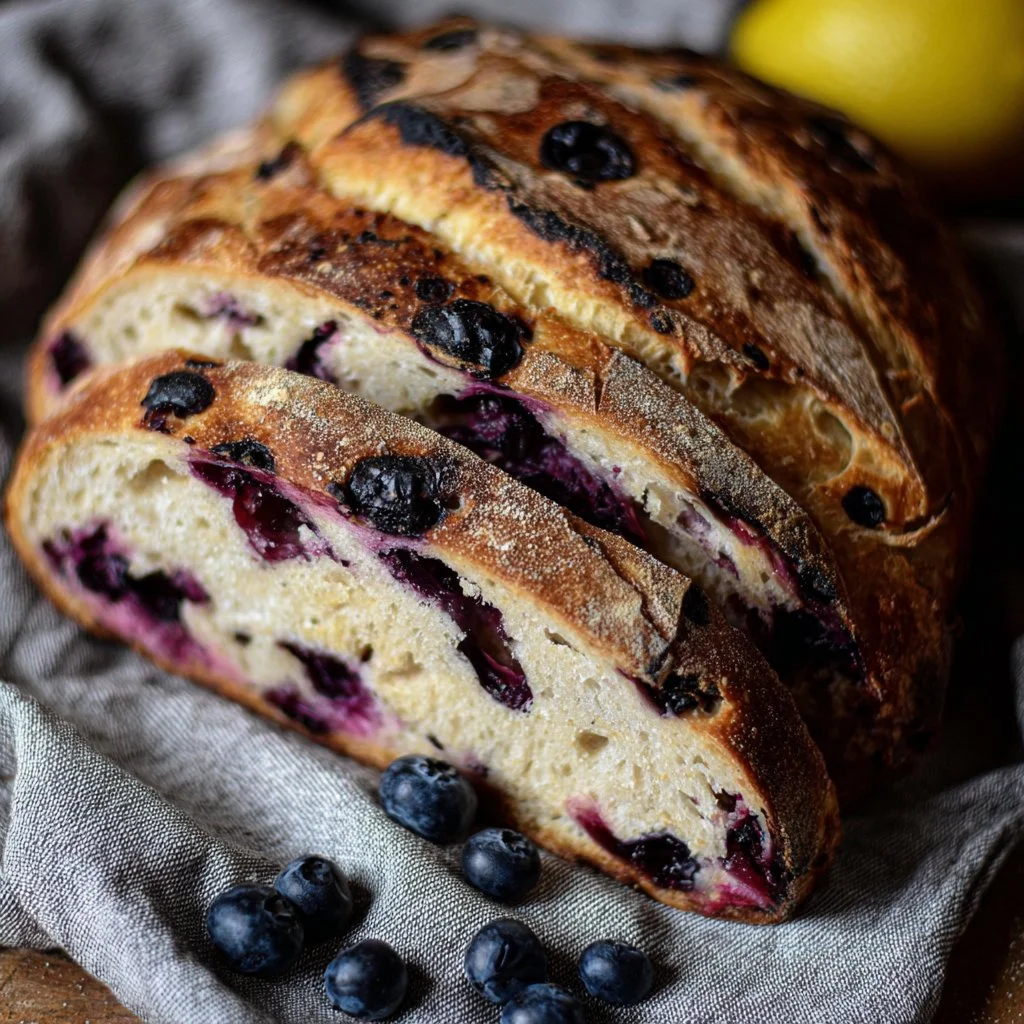
Homemade Lemon Blueberry Sourdough Bread sliced on a wooden board

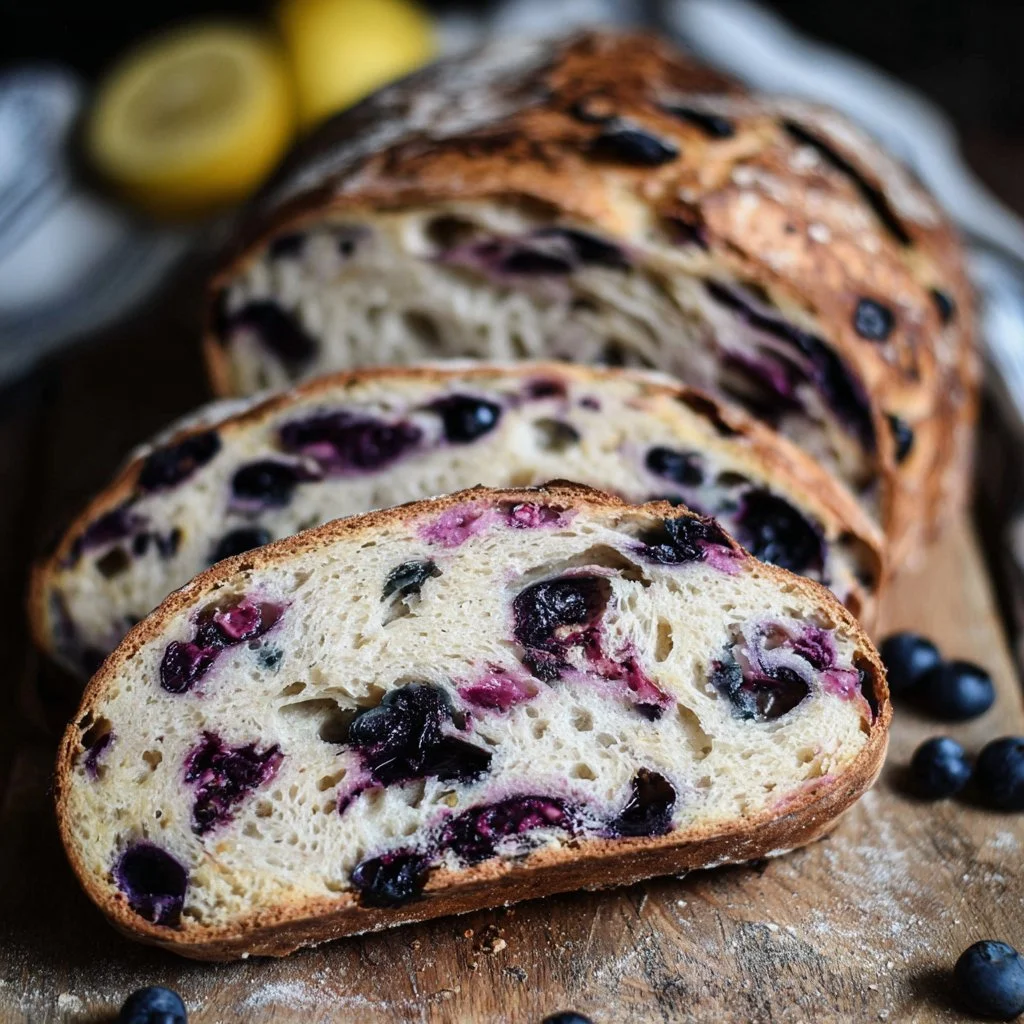
There’s something about warm bread studded with juicy fruit and bright citrus that instantly feels like home — enter this Lemon Blueberry Sourdough Bread Recipe. Combining the tangy depth of a well-fed sourdough starter with bursts of fresh blueberry and a zing of lemon zest, this loaf is a seasonal celebration: think picnic baskets, lazy weekend breakfasts, and cozy afternoons with tea. It’s forgiving enough for everyday bakers and special enough to share with friends. If you enjoy making comforting, from-scratch treats and exploring layers of flavor in each loaf, you might also love this easy-to-follow twist on sourdough and the 4-ingredient chocolate peanut butter balls I tried last month — sweet, simple, and crowd-pleasing.

Ingredients & Equipment

Ingredients

  • 50g active sourdough starter
  • 350g water
  • 500g bread flour
  • 11g salt
  • 150g fresh blueberries
  • Zest of a lemon
  • 8 Tablespoons butter, room temperature (113g)
  • 1/2 cup fresh blueberries, mashed (75g)
  • 2 Tablespoon honey (45g)
  • A pinch of salt

Notes on ingredients

  • The recipe uses both whole fresh blueberries (150g) for juicy pockets and 1/2 cup mashed blueberries (75g) folded into the dough for color and flavor depth. If using frozen blueberries, do not thaw fully — toss gently and add them cold to reduce bleeding.
  • Butter at room temperature (about 65–70°F / 18–21°C) will incorporate more smoothly. If you prefer dairy-free, swap to a neutral-tasting plant-based butter.
  • The lemon zest is essential for brightness; use organic if you can or scrub non-organic well before zesting.

Equipment

  • Large mixing bowl (or stand mixer bowl)
  • Dough scraper
  • Measuring scale (preferred for accuracy)
  • Rubber spatula
  • Bench scraper
  • Proofing basket (banneton) or a well-floured bowl lined with a tea towel
  • Dutch oven or baking stone and a baking tray for steam
  • Clean kitchen towel or plastic wrap
  • Sharp lame or sharp knife for scoring
  • Oven thermometer (helpful for accuracy)
  • Optional: blender for mashed blueberries, instant-read thermometer

Helpful tools like a kitchen scale and proofing basket make this loaf more consistent, but you can adapt with cups and a floured bowl if needed. For notes on salt and mineral benefits in broader cooking, I often refer to articles like this one about Japanese pink salt when thinking about mindful seasoning.

Step-by-Step Instructions (with tips)

This method assumes a traditional sourdough approach with an autolyse, stretch-and-folds during bulk fermentation, incorporation of butter, honey, lemon, and blueberries, shaping, and a final proof.

  1. Feed your starter
  • 4–6 hours before mixing (or the night before), feed your starter so it is active and bubbly. You want a bubbly, active 50g of starter at mixing time.
  1. Autolyse (mix flour, water, mashed blueberries)
  • In a large bowl, mix 350g water with 500g bread flour and the 1/2 cup mashed blueberries (75g). Mix until no dry flour remains. Cover and let sit 30–60 minutes. This hydrates the flour and starts gluten development.

Tip: The mashed blueberries in the autolyse add color and flavor throughout the dough. If you prefer less bleed, save all blueberries to add later.

  1. Add starter, salt, honey, and lemon zest
  • Add 50g active sourdough starter, 2 Tablespoons honey (45g), the zest of a lemon, and 11g salt to the autolysed dough. Mix until combined.

Tip: Dissolve the salt in a tablespoon of warm water if you want even distribution, but mixing directly is fine.

  1. Incorporate butter
  • Soften the 8 Tablespoons butter (113g) to room temperature and cut into pieces. Add to the dough and gently fold in until mostly incorporated. The dough may get sticky; continue gentle folds until the butter is evenly distributed.

Kitchen tip: If mixing by hand, use a slap-and-fold or gentle kneading; in a stand mixer, use the dough hook on low. The dough will be rich and slightly more tender due to butter.

  1. Bulk fermentation with stretch-and-folds
  • Cover and start bulk fermentation at room temperature (around 70°F / 21°C). Over the next 3–4 hours, perform 3–4 sets of stretch-and-folds every 30–45 minutes during the first 2 hours.

Signs your dough is progressing well:

  • The dough should have increased in size by at least 50%.
  • The dough looks light, and jiggles when shaken.
  • The dough should easily pull away from the bowl.
  • There should be visible bubbles in and on top of the dough.
  • The dough doesn’t tear when you do a windowpane test.

Tip: If your dough tears during a windowpane test, continue folding and allow more time — patience yields stronger gluten.

  1. Fold in whole blueberries
  • After the bulk fermentation and final stretch-and-fold, gently fold in the 150g fresh blueberries. Do this on a lightly floured surface or in the bowl: cup the dough and fold to incorporate, avoiding crushing the berries.

Variation: Roasting the blueberries for 10–12 minutes at 375°F (190°C) with a teaspoon of honey concentrates their flavor and reduces bleeding. Alternatively, briefly macerate the berries with lemon zest and a pinch of sugar to encourage syrupy pockets.

  1. Pre-shape and bench rest
  • Turn the dough onto the bench, pre-shape into a round, and let rest 20–30 minutes, uncovered. This relaxes the dough and makes final shaping easier.
  1. Final shaping
  • Shape into a tight boule or batard depending on your proofing vessel. Use a bench scraper to create surface tension by dragging the dough toward you on the counter.
  1. Final proof
  • Place the shaped loaf seam-side up in a floured banneton or bowl. Cover and proof in the refrigerator overnight (8–12 hours) for flavor and scheduling flexibility, or proof at room temperature for 2–4 hours until puffy but not overproofed.

Tip: Cold-proofing makes the dough easier to score and can concentrate flavor; if you’re short on time, a room-temp proof works fine.

  1. Preheat oven and bake
  • Preheat your oven to 450°F (230°C) with a Dutch oven inside for at least 30 minutes. Score the loaf with a lame or sharp knife. Carefully transfer the dough to the hot Dutch oven, cover, and bake 20 minutes covered. Remove cover and bake 20–25 minutes until deep golden brown and internal temperature ~200–205°F (93–96°C).

Alternative: If not using a Dutch oven, place the loaf on a baking stone, and add steam to the oven (a tray of hot water on the bottom rack or spritzing the oven walls) for the first 15 minutes.

Baking tip: An oven thermometer helps ensure accurate temperature. If the crust brownness is uneven, rotate the loaf once halfway through uncovered baking.

  1. Cool
  • Remove from the oven and cool on a wire rack for at least 2 hours before slicing to allow crumb to set and flavors to finish developing.
Lemon Blueberry Sourdough Bread Recipe

Storage, Freezing & Make-Ahead Tips

  • Room temperature storage: Keep the cooled loaf wrapped in a clean tea towel or stored in a bread box for up to 2 days to preserve crust texture. If your kitchen is humid, use a paper bag inside a loose plastic bag.
  • Refrigeration: Avoid long-term refrigeration — it dries bread quickly. If you must, wrap tightly and consume within 3–4 days.
  • Freezing: Slice the bread before freezing. Place parchment sheets between slices or wrap portions in plastic wrap and aluminum foil. Freeze for up to 3 months. To thaw, move slices to the fridge overnight or toast/thaw directly from frozen in a toaster or low oven (300°F / 150°C for 10–15 minutes).
  • Make-ahead: The dough benefits from an overnight cold bulk or final proof. Make the dough the evening before, refrigerate overnight, and bake fresh in the morning. This deepens flavor and fits into busy schedules.
  • Portioning: If you entertain, consider making two smaller loaves — one to serve fresh and one to freeze for later. Use a serrated knife to slice without crushing the crumb.

For pairing ideas that bring out savory and sweet contrasts, check out my suggestions later in the serving section and consider complementing dishes like deviled eggs or light salads referenced here: best deviled egg recipes for every occasion.

How to Use / Serve This Dish

  • Breakfast: Toast slices and spread with soft butter or ricotta, then drizzle with a little honey. The lemon and blueberry pair beautifully with cream cheese.
  • Brunch centerpiece: Serve thick slices with whipped mascarpone and a scattering of fresh berries. The loaf’s sourdough tang balances sweet accompaniments well.
  • Dessert: A warm slice with a scoop of vanilla ice cream and a spoonful of warm blueberry compote turns this bread into a rustic bread pudding plate.
  • Savory pairing: Try thin slices with goat cheese and a sprinkle of microgreens for a bright savory bite — the acid from the sourdough and lemon lifts the creaminess.
  • Sandwich idea: Use for a mild chicken salad or turkey sandwich with arugula for contrast; the fruit notes add complexity.

Creative variation: Turn leftover slices into a lemon-blueberry French toast — soak in an egg-milk-honey mixture, pan-fry in butter until caramelized, and top with maple syrup and more lemon zest for brightness.

FAQ

Q: Can I use frozen blueberries instead of fresh?
A: Yes. Add frozen berries directly from the freezer to avoid mushy spots from thawed berries. Fold them in carefully to minimize color bleed. You might reduce mashed-blueberry quantity if frozen berries are already very juicy.

Q: What if my sourdough starter isn’t very active?
A: Use a fed, bubbly starter for best fermentation. If it’s sluggish, extend bulk fermentation time or keep the dough in a warmer spot (about 78°F / 25°C). You can also increase the starter to 75–100g if you need a quicker rise, but expect a different flavor profile.

Q: Can I make this bread dairy-free or vegan?
A: Swap the butter for plant-based butter of similar fat content. Honey can be replaced with maple syrup if you avoid honey. The loaf will still be tender and flavorful.

Q: How long will this bread keep, and how should I store leftovers?
A: Fresh baked sourdough with fruit will be best within 48 hours at room temperature. For longer storage, slice and freeze; toast straight from frozen or thaw gently to preserve texture.

Tips & Troubleshooting

  • If the dough feels too tight and resists stretching, give it more time during bulk fermentation. The stretch-and-fold method is forgiving — the dough will relax and strengthen.
  • If blueberries bleed a lot, try roasting them beforehand or mixing them in right before shaping to limit juice spreading. Roasted berries produce caramelized pockets and an attractive crumb.
  • Butter leakage: If butter seems to pool, it may have been too warm; cool slightly before adding or incorporate in smaller portions.
  • Underbaked center: Use an instant-read thermometer; 200–205°F (93–96°C) is a safe internal temperature for enriched sourdough.

Conclusion

This Lemon Blueberry Sourdough Bread Recipe brings the season to your kitchen: tangy sourdough complexity balanced with sweet juicy blueberries and bright lemon zest, wrapped in a tender, buttery crumb. It’s a loaf that invites sharing — whether at coffee hour, a relaxed brunch, or as a thoughtful homemade gift. For more inspiration and to see different bakers’ interpretations, you might enjoy this version from Blueberry Lemon Sourdough Bread – Amy Bakes Bread, a slightly different technique found at Lemon Blueberry Sourdough Bread – Country Roads Sourdough, and a playful take in the recipe roundup at Lemon Blueberry Sourdough Bread | Somebody Feed Seb. I’d love to hear how your loaf turns out — try it, tweak it for your tastes, and share a photo or note about what you loved most. Happy baking!
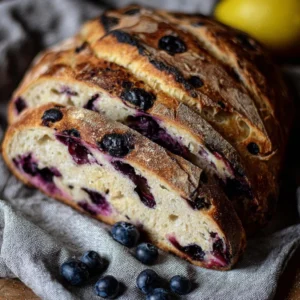
Homemade Lemon Blueberry Sourdough Bread sliced on a wooden board

Lemon Blueberry Sourdough Bread

A delightful sourdough bread featuring bursts of fresh blueberries and zesty lemon, perfect for breakfast, brunch, or dessert.
Prep Time 3 hours
Cook Time 45 minutes
Total Time 3 hours 45 minutes
Course Breakfast, Brunch, Dessert
Cuisine American, Homemade
Servings 12 servings
Calories 210 kcal

Ingredients
  

Dough Ingredients

  • 50 g active sourdough starter Ensure it's bubbly and active.
  • 350 g water Room temperature water.
  • 500 g bread flour All-purpose flour can be used.
  • 11 g salt Use sea salt for better flavor.
  • 150 g fresh blueberries Whole blueberries for juicy pockets.
  • Zest of a lemon Use organic if possible.
  • 8 Tablespoons butter, room temperature 113g of butter; can substitute with plant-based butter.
  • 75 g fresh blueberries, mashed For color and flavor depth.
  • 2 Tablespoon honey Can substitute with maple syrup.
  • A pinch of salt For balance in flavor.

Instructions
 

Preparation

  • Feed your starter 4–6 hours before mixing.
  • In a large bowl, mix 350g water with 500g bread flour and 75g mashed blueberries. Cover and let sit for 30–60 minutes.
  • Add 50g active sourdough starter, 2 tablespoons honey, the zest of a lemon, and 11g salt to the autolysed dough. Mix until combined.
  • Soften 8 tablespoons butter and fold it into the dough until mostly incorporated.

Bulk Fermentation

  • Cover the dough and start bulk fermentation at room temperature for 3–4 hours, performing stretch-and-folds every 30–45 minutes.

Final Steps

  • Gently fold in 150g fresh blueberries.
  • Pre-shape the dough into a round and let rest for 20–30 minutes.
  • Shape the dough into a tight boule and place it seam-side up in a floured banneton.
  • Proof in the refrigerator overnight or at room temperature for 2–4 hours.
  • Preheat oven to 450°F (230°C). Score the loaf and bake in a Dutch oven for 20 minutes covered, then 20–25 minutes uncovered.
  • Cool on a wire rack for at least 2 hours before slicing.

Notes

For storage, keep wrapped in a tea towel or bread box for up to 2 days. Freeze slices for longer storage. Consider making two smaller loaves for easier serving.

Nutrition

Serving: 1gCalories: 210kcalCarbohydrates: 30gProtein: 5gFat: 8gSaturated Fat: 5gSodium: 200mgFiber: 2gSugar: 5g
Keyword Blueberry Bread, Fruit Bread, Homemade Bread, Lemon Bread, Sourdough Bread
Tried this recipe?Let us know how it was!

Lemon Blueberry Sourdough Bread Recipe

Published: January 7, 2026 By sarah

Homemade Lemon Blueberry Sourdough Bread sliced on a wooden board

There’s something about warm bread studded with juicy fruit and bright citrus that instantly feels like home — enter this Lemon Blueberry Sourdough Bread Recipe. Combining the tangy depth of a well-fed sourdough starter with bursts of fresh blueberry and a zing of lemon zest, this loaf is a seasonal celebration: think picnic baskets, lazy weekend breakfasts, and cozy afternoons with tea. It’s forgiving enough for everyday bakers and special enough to share with friends. If you enjoy making comforting, from-scratch treats and exploring layers of flavor in each loaf, you might also love this easy-to-follow twist on sourdough and the 4-ingredient chocolate peanut butter balls I tried last month — sweet, simple, and crowd-pleasing.

Ingredients & Equipment

Ingredients

  • 50g active sourdough starter
  • 350g water
  • 500g bread flour
  • 11g salt
  • 150g fresh blueberries
  • Zest of a lemon
  • 8 Tablespoons butter, room temperature (113g)
  • 1/2 cup fresh blueberries, mashed (75g)
  • 2 Tablespoon honey (45g)
  • A pinch of salt

Notes on ingredients

  • The recipe uses both whole fresh blueberries (150g) for juicy pockets and 1/2 cup mashed blueberries (75g) folded into the dough for color and flavor depth. If using frozen blueberries, do not thaw fully — toss gently and add them cold to reduce bleeding.
  • Butter at room temperature (about 65–70°F / 18–21°C) will incorporate more smoothly. If you prefer dairy-free, swap to a neutral-tasting plant-based butter.
  • The lemon zest is essential for brightness; use organic if you can or scrub non-organic well before zesting.

Equipment

  • Large mixing bowl (or stand mixer bowl)
  • Dough scraper
  • Measuring scale (preferred for accuracy)
  • Rubber spatula
  • Bench scraper
  • Proofing basket (banneton) or a well-floured bowl lined with a tea towel
  • Dutch oven or baking stone and a baking tray for steam
  • Clean kitchen towel or plastic wrap
  • Sharp lame or sharp knife for scoring
  • Oven thermometer (helpful for accuracy)
  • Optional: blender for mashed blueberries, instant-read thermometer

Helpful tools like a kitchen scale and proofing basket make this loaf more consistent, but you can adapt with cups and a floured bowl if needed. For notes on salt and mineral benefits in broader cooking, I often refer to articles like this one about Japanese pink salt when thinking about mindful seasoning.

Step-by-Step Instructions (with tips)

This method assumes a traditional sourdough approach with an autolyse, stretch-and-folds during bulk fermentation, incorporation of butter, honey, lemon, and blueberries, shaping, and a final proof.

  1. Feed your starter
  • 4–6 hours before mixing (or the night before), feed your starter so it is active and bubbly. You want a bubbly, active 50g of starter at mixing time.
  1. Autolyse (mix flour, water, mashed blueberries)
  • In a large bowl, mix 350g water with 500g bread flour and the 1/2 cup mashed blueberries (75g). Mix until no dry flour remains. Cover and let sit 30–60 minutes. This hydrates the flour and starts gluten development.

Tip: The mashed blueberries in the autolyse add color and flavor throughout the dough. If you prefer less bleed, save all blueberries to add later.

  1. Add starter, salt, honey, and lemon zest
  • Add 50g active sourdough starter, 2 Tablespoons honey (45g), the zest of a lemon, and 11g salt to the autolysed dough. Mix until combined.

Tip: Dissolve the salt in a tablespoon of warm water if you want even distribution, but mixing directly is fine.

  1. Incorporate butter
  • Soften the 8 Tablespoons butter (113g) to room temperature and cut into pieces. Add to the dough and gently fold in until mostly incorporated. The dough may get sticky; continue gentle folds until the butter is evenly distributed.

Kitchen tip: If mixing by hand, use a slap-and-fold or gentle kneading; in a stand mixer, use the dough hook on low. The dough will be rich and slightly more tender due to butter.

  1. Bulk fermentation with stretch-and-folds
  • Cover and start bulk fermentation at room temperature (around 70°F / 21°C). Over the next 3–4 hours, perform 3–4 sets of stretch-and-folds every 30–45 minutes during the first 2 hours.

Signs your dough is progressing well:

  • The dough should have increased in size by at least 50%.
  • The dough looks light, and jiggles when shaken.
  • The dough should easily pull away from the bowl.
  • There should be visible bubbles in and on top of the dough.
  • The dough doesn’t tear when you do a windowpane test.

Tip: If your dough tears during a windowpane test, continue folding and allow more time — patience yields stronger gluten.

  1. Fold in whole blueberries
  • After the bulk fermentation and final stretch-and-fold, gently fold in the 150g fresh blueberries. Do this on a lightly floured surface or in the bowl: cup the dough and fold to incorporate, avoiding crushing the berries.

Variation: Roasting the blueberries for 10–12 minutes at 375°F (190°C) with a teaspoon of honey concentrates their flavor and reduces bleeding. Alternatively, briefly macerate the berries with lemon zest and a pinch of sugar to encourage syrupy pockets.

  1. Pre-shape and bench rest
  • Turn the dough onto the bench, pre-shape into a round, and let rest 20–30 minutes, uncovered. This relaxes the dough and makes final shaping easier.
  1. Final shaping
  • Shape into a tight boule or batard depending on your proofing vessel. Use a bench scraper to create surface tension by dragging the dough toward you on the counter.
  1. Final proof
  • Place the shaped loaf seam-side up in a floured banneton or bowl. Cover and proof in the refrigerator overnight (8–12 hours) for flavor and scheduling flexibility, or proof at room temperature for 2–4 hours until puffy but not overproofed.

Tip: Cold-proofing makes the dough easier to score and can concentrate flavor; if you’re short on time, a room-temp proof works fine.

  1. Preheat oven and bake
  • Preheat your oven to 450°F (230°C) with a Dutch oven inside for at least 30 minutes. Score the loaf with a lame or sharp knife. Carefully transfer the dough to the hot Dutch oven, cover, and bake 20 minutes covered. Remove cover and bake 20–25 minutes until deep golden brown and internal temperature ~200–205°F (93–96°C).

Alternative: If not using a Dutch oven, place the loaf on a baking stone, and add steam to the oven (a tray of hot water on the bottom rack or spritzing the oven walls) for the first 15 minutes.

Baking tip: An oven thermometer helps ensure accurate temperature. If the crust brownness is uneven, rotate the loaf once halfway through uncovered baking.

  1. Cool
  • Remove from the oven and cool on a wire rack for at least 2 hours before slicing to allow crumb to set and flavors to finish developing.

Lemon Blueberry Sourdough Bread Recipe

Storage, Freezing & Make-Ahead Tips

  • Room temperature storage: Keep the cooled loaf wrapped in a clean tea towel or stored in a bread box for up to 2 days to preserve crust texture. If your kitchen is humid, use a paper bag inside a loose plastic bag.
  • Refrigeration: Avoid long-term refrigeration — it dries bread quickly. If you must, wrap tightly and consume within 3–4 days.
  • Freezing: Slice the bread before freezing. Place parchment sheets between slices or wrap portions in plastic wrap and aluminum foil. Freeze for up to 3 months. To thaw, move slices to the fridge overnight or toast/thaw directly from frozen in a toaster or low oven (300°F / 150°C for 10–15 minutes).
  • Make-ahead: The dough benefits from an overnight cold bulk or final proof. Make the dough the evening before, refrigerate overnight, and bake fresh in the morning. This deepens flavor and fits into busy schedules.
  • Portioning: If you entertain, consider making two smaller loaves — one to serve fresh and one to freeze for later. Use a serrated knife to slice without crushing the crumb.

For pairing ideas that bring out savory and sweet contrasts, check out my suggestions later in the serving section and consider complementing dishes like deviled eggs or light salads referenced here: best deviled egg recipes for every occasion.

How to Use / Serve This Dish

  • Breakfast: Toast slices and spread with soft butter or ricotta, then drizzle with a little honey. The lemon and blueberry pair beautifully with cream cheese.
  • Brunch centerpiece: Serve thick slices with whipped mascarpone and a scattering of fresh berries. The loaf’s sourdough tang balances sweet accompaniments well.
  • Dessert: A warm slice with a scoop of vanilla ice cream and a spoonful of warm blueberry compote turns this bread into a rustic bread pudding plate.
  • Savory pairing: Try thin slices with goat cheese and a sprinkle of microgreens for a bright savory bite — the acid from the sourdough and lemon lifts the creaminess.
  • Sandwich idea: Use for a mild chicken salad or turkey sandwich with arugula for contrast; the fruit notes add complexity.

Creative variation: Turn leftover slices into a lemon-blueberry French toast — soak in an egg-milk-honey mixture, pan-fry in butter until caramelized, and top with maple syrup and more lemon zest for brightness.

FAQ

Q: Can I use frozen blueberries instead of fresh?
A: Yes. Add frozen berries directly from the freezer to avoid mushy spots from thawed berries. Fold them in carefully to minimize color bleed. You might reduce mashed-blueberry quantity if frozen berries are already very juicy.

Q: What if my sourdough starter isn’t very active?
A: Use a fed, bubbly starter for best fermentation. If it’s sluggish, extend bulk fermentation time or keep the dough in a warmer spot (about 78°F / 25°C). You can also increase the starter to 75–100g if you need a quicker rise, but expect a different flavor profile.

Q: Can I make this bread dairy-free or vegan?
A: Swap the butter for plant-based butter of similar fat content. Honey can be replaced with maple syrup if you avoid honey. The loaf will still be tender and flavorful.

Q: How long will this bread keep, and how should I store leftovers?
A: Fresh baked sourdough with fruit will be best within 48 hours at room temperature. For longer storage, slice and freeze; toast straight from frozen or thaw gently to preserve texture.

Tips & Troubleshooting

  • If the dough feels too tight and resists stretching, give it more time during bulk fermentation. The stretch-and-fold method is forgiving — the dough will relax and strengthen.
  • If blueberries bleed a lot, try roasting them beforehand or mixing them in right before shaping to limit juice spreading. Roasted berries produce caramelized pockets and an attractive crumb.
  • Butter leakage: If butter seems to pool, it may have been too warm; cool slightly before adding or incorporate in smaller portions.
  • Underbaked center: Use an instant-read thermometer; 200–205°F (93–96°C) is a safe internal temperature for enriched sourdough.

Conclusion

This Lemon Blueberry Sourdough Bread Recipe brings the season to your kitchen: tangy sourdough complexity balanced with sweet juicy blueberries and bright lemon zest, wrapped in a tender, buttery crumb. It’s a loaf that invites sharing — whether at coffee hour, a relaxed brunch, or as a thoughtful homemade gift. For more inspiration and to see different bakers’ interpretations, you might enjoy this version from Blueberry Lemon Sourdough Bread – Amy Bakes Bread, a slightly different technique found at Lemon Blueberry Sourdough Bread – Country Roads Sourdough, and a playful take in the recipe roundup at Lemon Blueberry Sourdough Bread | Somebody Feed Seb. I’d love to hear how your loaf turns out — try it, tweak it for your tastes, and share a photo or note about what you loved most. Happy baking!

Homemade Lemon Blueberry Sourdough Bread sliced on a wooden board

Lemon Blueberry Sourdough Bread

A delightful sourdough bread featuring bursts of fresh blueberries and zesty lemon, perfect for breakfast, brunch, or dessert.
Prep Time 3 hours
Cook Time 45 minutes
Total Time 3 hours 45 minutes
Course Breakfast, Brunch, Dessert
Cuisine American, Homemade
Servings 12 servings
Calories 210 kcal

Ingredients
  

Dough Ingredients

  • 50 g active sourdough starter Ensure it's bubbly and active.
  • 350 g water Room temperature water.
  • 500 g bread flour All-purpose flour can be used.
  • 11 g salt Use sea salt for better flavor.
  • 150 g fresh blueberries Whole blueberries for juicy pockets.
  • Zest of a lemon Use organic if possible.
  • 8 Tablespoons butter, room temperature 113g of butter; can substitute with plant-based butter.
  • 75 g fresh blueberries, mashed For color and flavor depth.
  • 2 Tablespoon honey Can substitute with maple syrup.
  • A pinch of salt For balance in flavor.

Instructions
 

Preparation

  • Feed your starter 4–6 hours before mixing.
  • In a large bowl, mix 350g water with 500g bread flour and 75g mashed blueberries. Cover and let sit for 30–60 minutes.
  • Add 50g active sourdough starter, 2 tablespoons honey, the zest of a lemon, and 11g salt to the autolysed dough. Mix until combined.
  • Soften 8 tablespoons butter and fold it into the dough until mostly incorporated.

Bulk Fermentation

  • Cover the dough and start bulk fermentation at room temperature for 3–4 hours, performing stretch-and-folds every 30–45 minutes.

Final Steps

  • Gently fold in 150g fresh blueberries.
  • Pre-shape the dough into a round and let rest for 20–30 minutes.
  • Shape the dough into a tight boule and place it seam-side up in a floured banneton.
  • Proof in the refrigerator overnight or at room temperature for 2–4 hours.
  • Preheat oven to 450°F (230°C). Score the loaf and bake in a Dutch oven for 20 minutes covered, then 20–25 minutes uncovered.
  • Cool on a wire rack for at least 2 hours before slicing.

Notes

For storage, keep wrapped in a tea towel or bread box for up to 2 days. Freeze slices for longer storage. Consider making two smaller loaves for easier serving.

Nutrition

Serving: 1gCalories: 210kcalCarbohydrates: 30gProtein: 5gFat: 8gSaturated Fat: 5gSodium: 200mgFiber: 2gSugar: 5g
Keyword Blueberry Bread, Fruit Bread, Homemade Bread, Lemon Bread, Sourdough Bread
Tried this recipe?Let us know how it was!

Leave a Comment

Recipe Rating