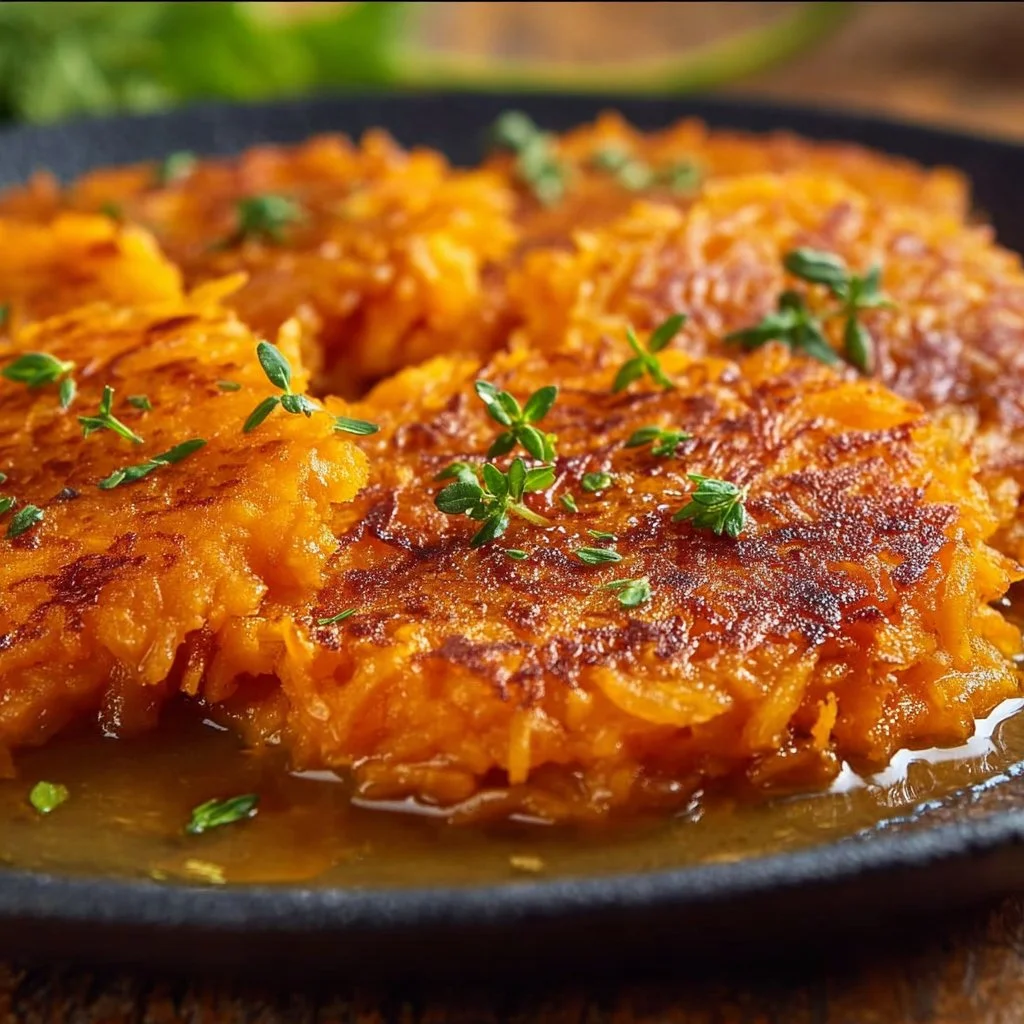
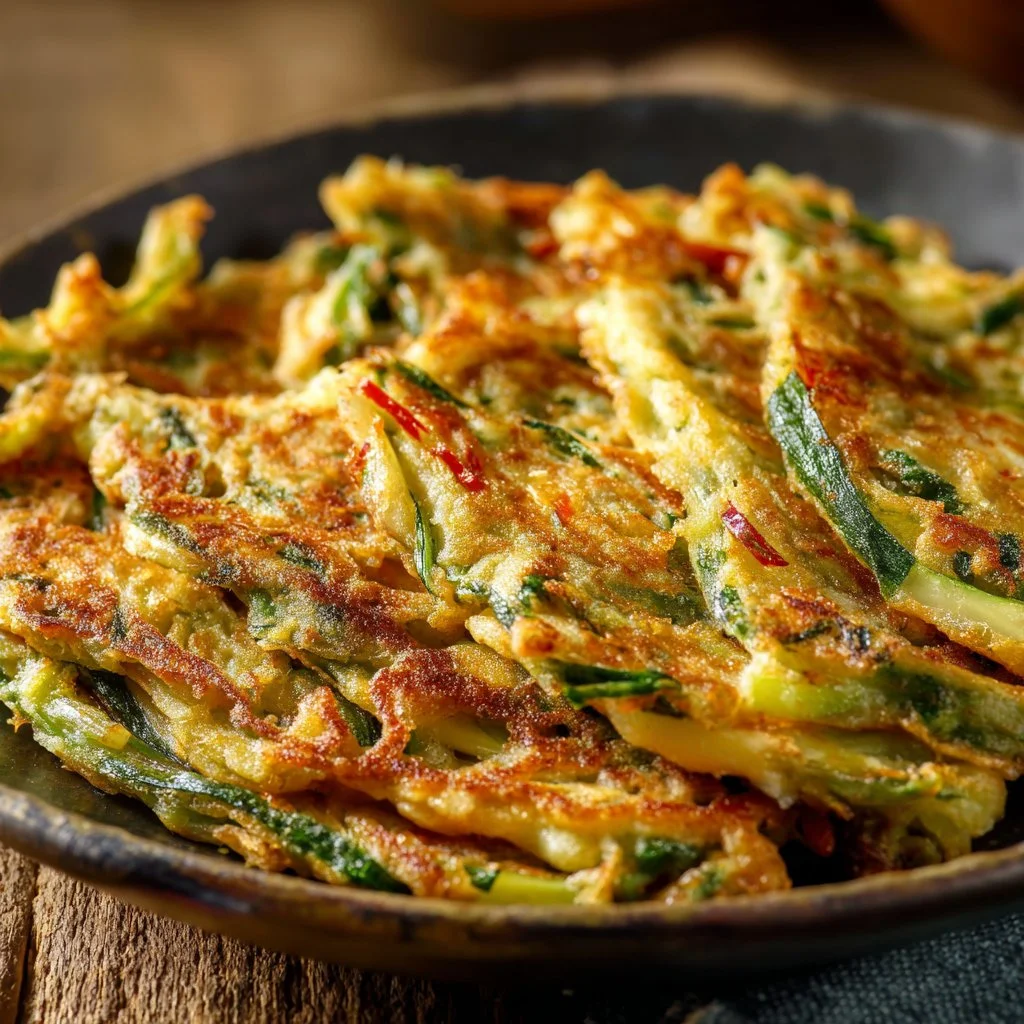
Korean Vegetable Pancakes are a vibrant, comforting dish that feels like a warm hug on a chilly day. These crisp-edged, tender-centered pancakes showcase an array of fresh vegetables — green onions, cabbage, carrot, and peppers — bound in a light, savory batter with a hint of turmeric for color and warmth. They’re perfect for seasonal cooking because you can adapt the vegetable mix to whatever’s freshest at the market, making them bright in spring or hearty in late autumn. If you enjoy simple, from-scratch recipes with big flavor, try pairing these pancakes as a starter or side with a light soup like easy vegetable soup for a satisfying, halal-friendly meal.
Ingredients & Equipment
Ingredients
- 200 g flour
- 3 tbsp cornstarch
- 250 ml water
- 1 tsp turmeric
- ½ tsp salt
- ⅓ tsp baking powder
- 10 green onions (cut short)
- 1 red onion (sliced)
- 1 carrot (cut into thin strips)
- 1 red pepper (cut into thin strips)
- ½ small cabbage (cut into thin strips)
- 1 hot pepper (finely chopped)
- Oil for frying (neutral oil like vegetable, sunflower, or light olive oil)
- 3 tbsp soy sauce
- 1 tbsp rice vinegar
- 1 tsp toasted sesame seeds
- ½ tsp chili flakes
- 1 tsp sesame oil
Equipment & Helpful Tools
- Large mixing bowl
- Whisk or fork
- Sharp knife and cutting board
- Large non-stick or cast-iron skillet (about 10–12 inches works well)
- Spatula (thin metal spatula helps with flipping)
- Measuring cups and spoons or kitchen scale
- Small bowl for dipping sauce
- Paper towels or cooling rack
- Optional: blender (for smoother batter), baking tray (for keeping pancakes warm in a low oven), thermometer (to check oil temperature if deep-frying)
Notes
- The recipe is intentionally flexible: adjust the vegetables to whatever you have on hand.
- Use a light-flavored oil for frying for a neutral taste; sesame oil is used sparingly for flavor in the dipping sauce.
- If you prefer gluten-free, see substitutions in the FAQ.
Step-by-Step Instructions (with tips)
1. Prepare the vegetables
Slice the green onions into short 1–2 cm pieces. Thinly slice the red onion, cut the carrot into thin matchstick strips, slice the red pepper into similar thin strips, thinly shred the cabbage, and finely chop the hot pepper (remove seeds if you prefer milder heat). Put all prepared vegetables in a large bowl.
Tip: For evenly textured pancakes, try to cut vegetables roughly the same thickness. If your cabbage is very wet, pat it dry with paper towels to avoid watering down the batter.
2. Make the batter
In a separate bowl, whisk together 200 g flour, 3 tbsp cornstarch, 1 tsp turmeric, ½ tsp salt, ⅓ tsp baking powder, and 250 ml water until smooth. The batter should be pourable but still thick enough to coat the back of a spoon.
Tip: If you like a slightly lighter, more delicate pancake, rest the batter for 10–15 minutes to allow the baking powder to begin working. For a smoother batter, briefly blend the dry ingredients and water in a blender.
3. Mix vegetables into the batter
Fold all the prepared vegetables into the batter until evenly coated. Use a spatula to ensure the batter clings to the vegetables — you want a good vegetable-to-batter ratio so the pancakes are packed with texture.
Variation: Add thin slices of mushroom or zucchini for extra umami and moisture. If adding watery vegetables like zucchini, squeeze out excess moisture before folding them in.
4. Prepare the dipping sauce
In a small bowl, stir together 3 tbsp soy sauce, 1 tbsp rice vinegar, 1 tsp sesame oil, 1 tsp toasted sesame seeds, and ½ tsp chili flakes. Taste and adjust: more vinegar for tang, more soy for saltiness, or a pinch of sugar if you want a touch of sweetness.
Tip: For a milder sauce, reduce the chili flakes and add a little extra sesame seed for texture. For a thicker sauce, add a small amount of water or a drop of honey to balance flavors.
5. Heat the pan
Heat a large non-stick or cast-iron pan over medium heat. Add enough oil to lightly coat the base — about 1–2 tablespoons for the first pancake. You’re aiming for a shimmering surface but not smoking oil.
Tip: If you prefer less oil, use a non-stick pan and a pastry brush to lightly slick oil before each pancake. Alternatively, use a baking tray in a low oven (see variations below).
6. Cook the pancakes
Spoon about 1/3–1/2 cup of the mixture into the pan, spreading it thin into a 10–12 cm circle. Cook until the edges are golden brown and the underside is crisp, about 3–5 minutes, then carefully flip and cook the other side for another 2–4 minutes until fully cooked and golden.
Tip: Don’t overcrowd the pan — give each pancake space so steam can escape and they crisp properly. If the pancakes are browning too quickly before the center cooks, reduce the heat slightly.
7. Repeat
Continue with remaining batter, adding a little more oil as needed. Transfer finished pancakes to a cooling rack or a baking tray in a warm (low) oven to keep them crisp while you finish the batch.
Tip: For extra crunch, press down gently with a spatula right after flipping to make full contact with the skillet.
8. Serve
Serve the pancakes warm with the prepared soy dipping sauce. Garnish with extra toasted sesame seeds or thinly sliced green onion for a fresh finish.
Cooking variations and flavor suggestions
- Pan-fry vs. shallow-fry: Shallow-frying in a little oil gives the crispiest edges. For a lighter version, use a non-stick pan and cook with minimal oil, though texture will be slightly softer.
- Oven-baked option: Spread the batter thinly on a lightly oiled baking tray and bake at 220°C (425°F) until golden and crisp, about 15–20 minutes, flipping once. This is less traditional but cuts oil use.
- Air fryer: Place small cakes in a preheated air fryer at 200°C (400°F) for 6–8 minutes, flipping halfway.
- Add protein: Fold in cooked shredded chicken or chickpeas for extra substance while keeping it halal-friendly; be sure any added protein is fully cooked.
Storage, Freezing & Make-Ahead Tips
Storing leftovers
- Refrigerate: Cool pancakes completely, then store in an airtight container lined with paper towels to absorb excess moisture. They keep well for 2–3 days.
- Reheating: Reheat in a skillet over medium heat for 2–3 minutes per side to restore crispness. A toaster oven or regular oven at 180°C (350°F) for 5–10 minutes also works well.
Freezing
- Freeze in layers separated by parchment paper so they don’t stick. Place in a freezer-safe bag or container and freeze for up to 1 month.
- To reheat from frozen, thaw in the refrigerator for a few hours or reheat straight from frozen in a preheated oven at 200°C (400°F) for 8–12 minutes, flipping once, until hot and crisp.
Make-ahead
- Prepare vegetables and batter ahead of time: Chop vegetables and store them in the fridge for up to 24 hours. For best texture, mix batter just before cooking. If you must make batter in advance, give it a good stir before using; it may thicken slightly.
- Dipping sauce can be mixed a day ahead and refrigerated; bring to room temperature before serving.
Portioning advice
- For a light snack or appetizer, plan on 2–3 pancakes per person; for a main dish with sides, 3–4 pancakes per person is a comfortable portion.
- Freeze single portions if you want quick lunches or snacks — they reheat nicely.
How to Use / Serve This Dish
Korean Vegetable Pancakes are wonderfully versatile. Here are some serving ideas and creative variations:
- As an appetizer: Cut into wedges and serve with the dipping sauce on the side for parties or gatherings.
- Main course: Pair with steamed rice and a crisp salad or a bowl of light soup. If you’d like a heartier pairing, try a dish like the savory Korean ground beef bowl for a comforting combination.
- Brunch or snack: Stack a couple of pancakes with a drizzle of extra soy-vinegar sauce and a sprinkle of sesame seeds.
- Fusion idea: Serve on a small flatbread or wrap with fresh herbs and a smear of yogurt or tahini sauce for a Mediterranean twist.
- Side for grilled vegetables: The pancakes’ crispness contrasts nicely with roasted or grilled seasonal vegetables.
Creative variations
- Make mini pancakes and use them as bite-sized canapés topped with a slice of cucumber and a dot of sauce.
- Add fresh herbs like cilantro or dill for a bright herbaceous note.
- For a nutty twist, stir in a tablespoon of ground toasted sesame seeds into the batter.
For another quick vegetable fritter idea, try these Korean zucchini fritters as a complementary dish or inspiration.
FAQ
Q: Can I make these gluten-free?
A: Yes. Substitute the all-purpose flour with a 1:1 gluten-free flour blend or use rice flour for a lighter texture. Keep the cornstarch for crispness. Note that texture will differ slightly — rice flour can make the pancakes a bit more fragile.
Q: Can I use other vegetables or add protein?
A: Absolutely. Thinly sliced mushrooms, spinach (squeezed dry), or shredded zucchini work well. For protein, add cooked shredded chicken, firm tofu cubes, or cooked chickpeas. If adding extra wet ingredients, reduce the water in the batter slightly to keep the right consistency.
Q: How long will leftover pancakes stay good in the fridge?
A: Stored in an airtight container, they will keep for 2–3 days. Reheat in a skillet or oven to restore crispiness.
Q: My pancakes are soggy in the center — how do I fix that?
A: A few tips: spread the batter thinner, cook at medium heat rather than high so the inside cooks through without burning the outside, and avoid overcrowding the pan which creates steam. Pat any very wet vegetables (like zucchini) before folding them in.
Q: Can I make these without frying?
A: Yes — see the oven-baked and air-fryer variations above. The texture will be slightly different (less deep-fried crisp), but they will still be delicious and lighter.
Conclusion
Korean Vegetable Pancakes are a simple, seasonally adaptable dish that brings crunchy edges, tender vegetable ribbons, and savory-sour dipping sauce to your table — all while staying 100% halal-friendly. They’re a great way to celebrate fresh market produce and to share a warm, homemade plate with family and friends. If you’d like to explore other takes on this classic, I recommend checking a few trusted recipe guides like Vegetable pancake (Yachaejeon) recipe by Maangchi for a traditional perspective, a crispy approach at Crispy Korean Vegetable Pancakes (Yachaejeon) – Beyond Kimchee, and another charming variation at Korean Vegetable Pancakes (Yachaejeon) – MJ and Hungryman. Try this recipe soon, and if you make a batch, I’d love to hear how you adapted the veggies and which dipping sauce tweaks became your favorite — share a photo or a note and spread the comfort!