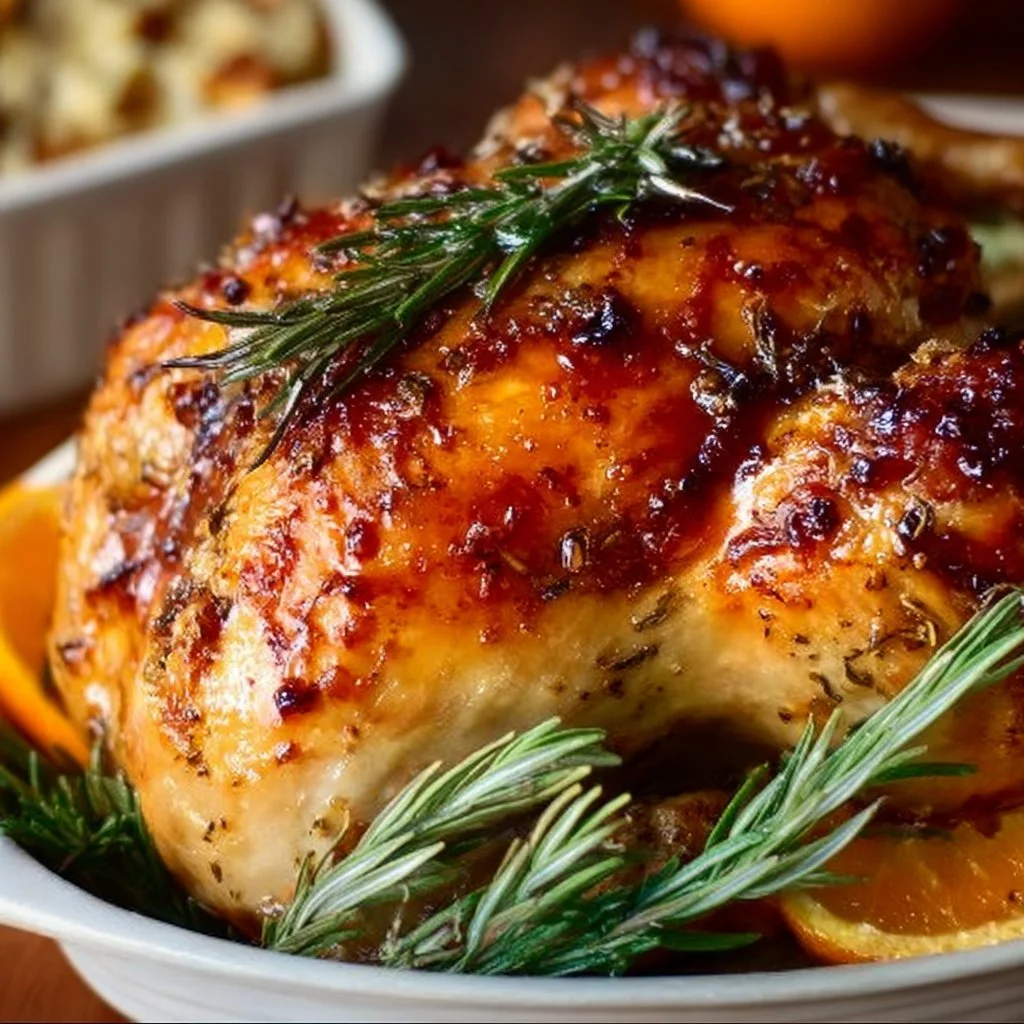
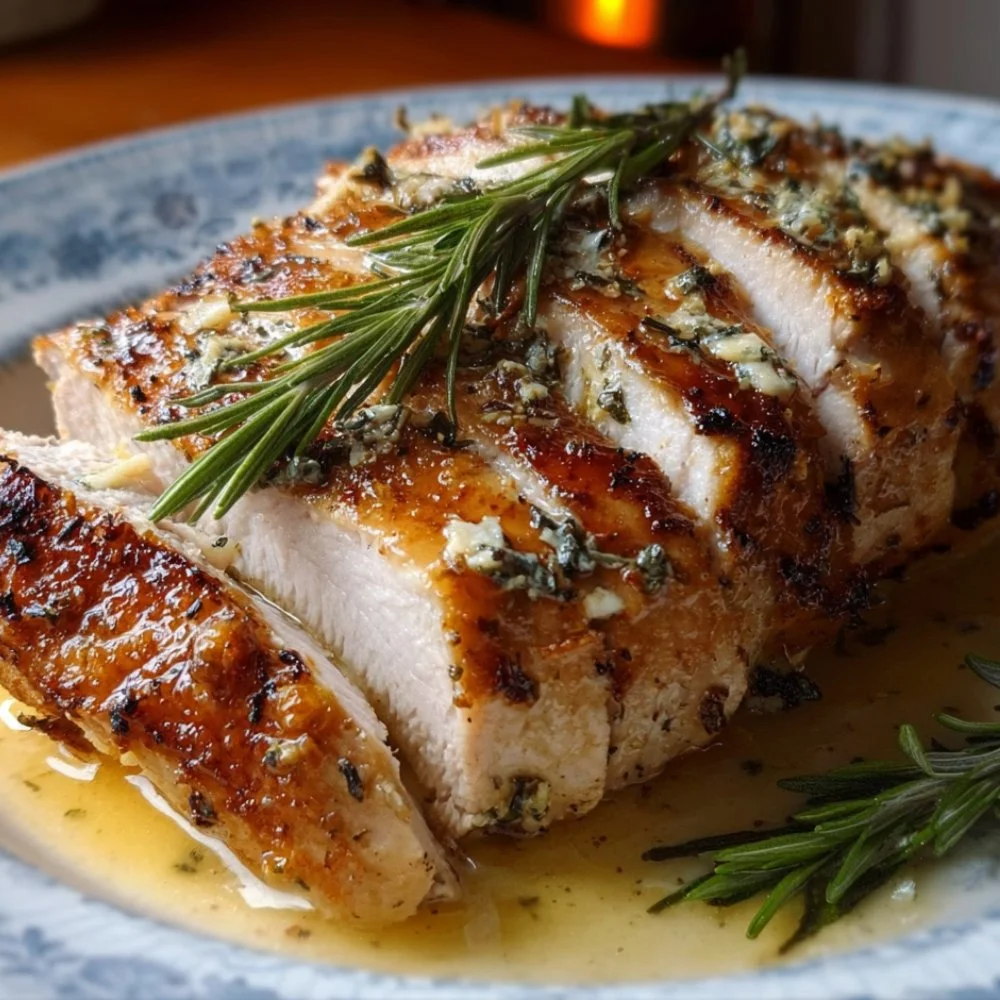
There’s something wonderfully cozy about a golden, herb-scented turkey breast coming out of the oven — the kind of dish that says “welcome home” whether it’s a seasonal holiday or a slow Sunday dinner. This Herb Butter Roasted Turkey Breast recipe is a simple, reassuring way to get that roast-turkey flavor without the full-time commitment of a whole bird. The star is the turkey breast itself, enriched with an herb butter that melts into the meat and under the skin for juicy, fragrant slices — ideal for small gatherings or when you want festive comfort without fuss. Serve it with your favorite sides (like a pan of roasted vegetables or a starter like roasted mushrooms with browned butter and thyme) and you’ve got a memorable, seasonal centerpiece.
Ingredients & Equipment
Ingredients
- 3–5 lb turkey breast (bone‑in or boneless)
- ½ cup unsalted butter (softened)
- 2 tbsp fresh rosemary (chopped)
- 2 tbsp fresh thyme (chopped)
- 1 tbsp fresh sage (chopped)
- 2 tbsp fresh parsley (chopped)
- 3 cloves garlic (minced)
- 1 tsp lemon zest
- 1.5 tsp salt
- 1 tsp black pepper (freshly ground)
- 1 tbsp olive oil
Ingredient notes
- Use fresh herbs for the brightest flavor; frozen herbs will work in a pinch (use about half the amount).
- Bone‑in turkey breast gives a bit more flavor and stays juicier, but boneless is quicker to carve.
- Unsalted butter lets you control salt levels. If you only have salted butter, reduce added salt by ½ tsp.
Equipment (helpful tools)
- Roasting pan or rimmed baking tray
- Roasting rack (optional, helps air circulate)
- Instant-read thermometer or probe thermometer (highly recommended)
- Small mixing bowl and spoon (or small food processor/blender for smoother herb butter)
- Kitchen twine (if trussing a bone-in breast)
- Aluminum foil for tenting
- Paper towels for patting dry
Quick tip: a small blender or mini food processor makes a silky herb butter, but a fork and good stirring will work perfectly for a rustic finish.
Step-by-Step Instructions (with tips)
Prep and preheat
- Preheat oven to 375°F (190°C). Position your oven rack in the center so the breast roasts evenly.
Prepare the turkey 2. Pat the turkey breast dry with paper towels and place in a roasting pan. Drying the skin helps it crisp up and allows the herb butter to stick better.
Make the herb butter 3. In a bowl, combine softened butter, rosemary, thyme, sage, parsley, garlic, lemon zest, salt, and pepper. If you’d like the butter ultra-smooth, pulse once or twice in a small blender. Fresh lemon zest brightens the herbs and prevents the richness from becoming cloying.
Oil and butter the turkey 4. Drizzle turkey with olive oil, rubbing it over the skin to help the herb butter adhere. Then gently loosen the skin from the meat with your fingers (be careful not to tear it) and spread herb butter all over and under the skin. Rub any remaining herb butter over the top of the skin for maximum flavor and color.
Roast 5. Roast for 1 hour 15 minutes to 1 hour 45 minutes, until the thickest part reaches an internal temperature of 165°F (74°C). Exact time depends on size and bone-in vs boneless: bone‑in breasts usually need the longer end of the range. If you have a probe thermometer, set it to 165°F and leave it in; otherwise check with an instant-read thermometer about 10–15 minutes before the lower end of the time range.
Tip: If the skin is browning too quickly, loosely tent with foil halfway through. For extra-crisp skin, turn on the broiler for 2–3 minutes at the end — watch it carefully so it doesn’t burn.
Rest and carve 6. Remove from oven and tent loosely with foil. Let rest for 15–20 minutes. Resting lets the juices redistribute so slices stay moist — this step is essential.
- Carve against the grain, arrange on a platter, and drizzle with pan juices. You can also skim the pan juices, deglaze with a splash of white wine or stock, and finish with a pat of butter to make a quick pan sauce.
Variations and alternative cooking methods
- Slow-Roasted: Lower oven to 300°F (150°C) and roast longer for an even more tender result — about 2 to 2.5 hours for a 3–5 lb breast. Finish at 425°F for 10 minutes to crisp the skin.
- High-Heat Sear + Roast: Sear the skin side in a hot oven (425°F/220°C) for the first 20 minutes, then reduce to 350°F (175°C) for the remainder to get a crisp, deeply golden skin.
- Spatchcocking (for whole birds): Not needed for a breast, but for even cooking on a whole bird, spatchcocking helps. For turkey breast it’s best left intact.
- Poaching or Boiling Alternative: If you prefer a more hands-off, very moist result, you can poach (gently simmer) a boneless turkey breast in seasoned stock and aromatics for about 30–40 minutes until internal temp hits 165°F. This yields tender slices but won’t have browned, crispy skin; finish under the broiler after patting dry if you want a bit of color.
- Brine before roasting: A simple wet brine (water, salt, sugar, aromatics) for 6–12 hours gives extra juiciness, especially for boneless breasts. Rinse and pat dry thoroughly before applying herb butter.
Make-ahead tip: Mix the herb butter up to 2 days ahead and keep refrigerated. If you plan to roast later in the week, you can rub the butter under the skin and keep the breast unroasted for up to 24 hours in the fridge — it will infuse flavor and save prep time the day of cooking. Also, save the pan juices and bones—if you roast a bone-in breast, they’re great for stock or to make a rich soup base once you’ve enjoyed the main meal; use them in recipes like a comforting easy leftover turkey soup.
Storage, Freezing & Make-Ahead Tips
Storing leftovers
- Refrigerate turkey within 2 hours of cooking in an airtight container. Sliced turkey breast keeps well for 3–4 days in the refrigerator.
- If you’ve made a pan sauce or gravy, store it separately in a sealed container for up to 4 days.
Freezing
- For best texture, slice the turkey before freezing. Place slices in single layers on a baking sheet and freeze until solid, then transfer to freezer bags or vacuum-seal. This prevents slabs sticking together.
- Vacuum-sealed or tightly wrapped turkey will keep up to 3 months in the freezer. For the best quality, use within 2 months.
- Thaw in the refrigerator overnight or gently in a cold-water bath (in a sealed bag) if you’re short on time. Reheat gently in a low oven (275°F/135°C) with a splash of stock to prevent drying, or use in casseroles, soups, and sandwiches.
Make-ahead strategies
- Herb butter: Make the herb butter 1–2 days ahead and refrigerate. Bring to room temp before spreading if it’s chilled and firm.
- Stuffing/sides: Most sides reheat well. Consider making components like mashed potatoes or cranberry sauce a day ahead to reduce stress on serving day.
- Carving: For beautiful serving, carve after the 15–20 minute rest. If you need to serve later, slice and keep warm (covered) for up to one hour, or cool and refrigerate for later use.
Portioning advice
- A 3–5 lb turkey breast typically serves 4–6 people as a main dish, depending on appetites and sides. Plan on ½ lb per person for hearty eaters and 1/3 lb per person if you have many sides.
How to Use / Serve This Dish
Serving ideas and pairings
- Classic holiday plate: Serve slices with mashed potatoes, roasted root vegetables, green beans, and cranberry sauce for a familiar seasonal spread.
- Light weeknight meal: Pair warm slices with a crisp green salad, warm rolls, and a drizzle of mustard vinaigrette.
- Sandwiches and leftovers: Use thinly sliced turkey on crusty bread with leftover herb butter or mayo, arugula, and cranberry jam for a quick, comforting sandwich.
- Soups and casseroles: Dice leftover turkey into soups (see the internal link to a simple leftover turkey soup above) or toss into a creamy casserole or pot pie.
Creative twists
- Herb butter variations: Swap in tarragon for a subtle anise note, or add a tablespoon of Dijon mustard to the butter for tang.
- Citrus and heat: Add a teaspoon of orange zest and a pinch of red pepper flakes to the butter for a brighter, slightly spicy finish.
- Make it Mediterranean: Replace rosemary and sage with oregano and basil, and finish with a squeeze of lemon and chop of kalamata olives on the platter.
Pairing beverages
- White wines like Chardonnay or Viognier pair nicely with the buttery-herby profile.
- Light red wines such as Pinot Noir or Gamay also complement turkey without overpowering it.
- Non‑alcoholic: Sparkling apple cider or a rosemary‑lemon spritzer highlight the herb notes.
If you like hearty, soup-forward starters as part of a seasonal menu, consider starting with a comforting cheddar garlic herb potato soup to keep flavors cohesive.
Frequently Asked Questions (FAQ)
Q: Can I use dried herbs instead of fresh? A: Yes. Use about one-third the amount of dried herbs (so 2 tbsp fresh becomes about 2 tsp dried). Fresh herbs give a brighter flavor, but dried herbs are fine when fresh aren’t available.
Q: Is bone‑in or boneless better? A: Bone‑in tends to be slightly juicier and more flavorful because the bone conducts heat and adds flavor. Boneless is easier and faster to carve and reheats neatly. Both work well with the herb butter technique.
Q: How can I tell when the turkey breast is done? A: The most reliable method is an instant-read thermometer. The thickest part of the breast should reach 165°F (74°C). Insert the thermometer into the deepest part without touching bone. After removing from the oven, the temp may rise a few degrees during resting.
Q: My turkey looks dry — what went wrong and can I fix it? A: Overcooking is the most common reason for dry turkey. Use a thermometer to prevent this. To revive slightly dry slices, reheat gently with a splash of stock or pan juices in a covered dish in a low oven (275°F/135°C) to warm without drying further. Shredded dry turkey is excellent in soups, stews, or casseroles where it absorbs liquid.
Conclusion
There’s a special kind of comfort in a simple Herb Butter Roasted Turkey Breast — it’s homey, aromatic, and elegant without being fussy. Whether you’re cooking for a small holiday crowd or craving a cozy dinner, this recipe gives you juicy meat, crisp skin, and a savory herb profile that feels seasonal and familiar. If you want to explore similar techniques and variations, check out this detailed Roast Turkey Breast with Garlic Herb Butter – RecipeTin Eats, or learn a slightly different approach at How to Roast an Herb Butter Turkey Breast – The Speckled Palate. For another recipe inspiration with herb-forward roasted turkey, see Roasted Turkey Breast with Herb Butter – Striped Spatula. Give this herb butter roast a try, tuck away the leftovers for sandwiches or soup, and if you loved it, please share the recipe with friends and family — good food is meant to be shared.
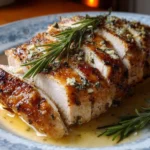
Herb Butter Roasted Turkey Breast
Ingredients
Main Ingredients
- 3–5 lb turkey breast (bone-in or boneless) Bone-in gives more flavor and stays juicier.
- ½ cup unsalted butter (softened) Use unsalted to control salt levels; decrease added salt if using salted.
- 2 tbsp fresh rosemary (chopped) Use fresh for brightest flavor.
- 2 tbsp fresh thyme (chopped) Use fresh for brightest flavor.
- 1 tbsp fresh sage (chopped) Use fresh for brightest flavor.
- 2 tbsp fresh parsley (chopped) Use fresh for brightest flavor.
- 3 cloves garlic (minced)
- 1 tsp lemon zest Brightens the herbs.
- 1.5 tsp salt
- 1 tsp black pepper (freshly ground)
- 1 tbsp olive oil Use for rubbing on turkey.
Instructions
Preparation
- Preheat oven to 375°F (190°C) and position oven rack in center.
- Pat the turkey breast dry with paper towels and place in a roasting pan.
- In a bowl, combine softened butter, rosemary, thyme, sage, parsley, garlic, lemon zest, salt, and pepper. Optionally, pulse in a small blender for a smooth texture.
- Drizzle turkey with olive oil, rubbing it over the skin. Loosen the skin from the meat and spread herb butter all over and under the skin.
Cooking
- Roast for 1 hour 15 minutes to 1 hour 45 minutes, until the thickest part reaches an internal temperature of 165°F (74°C).
- Tent loosely with foil after removing from oven and let rest for 15–20 minutes.
- Carve against the grain, arrange on a platter, and drizzle with pan juices.