
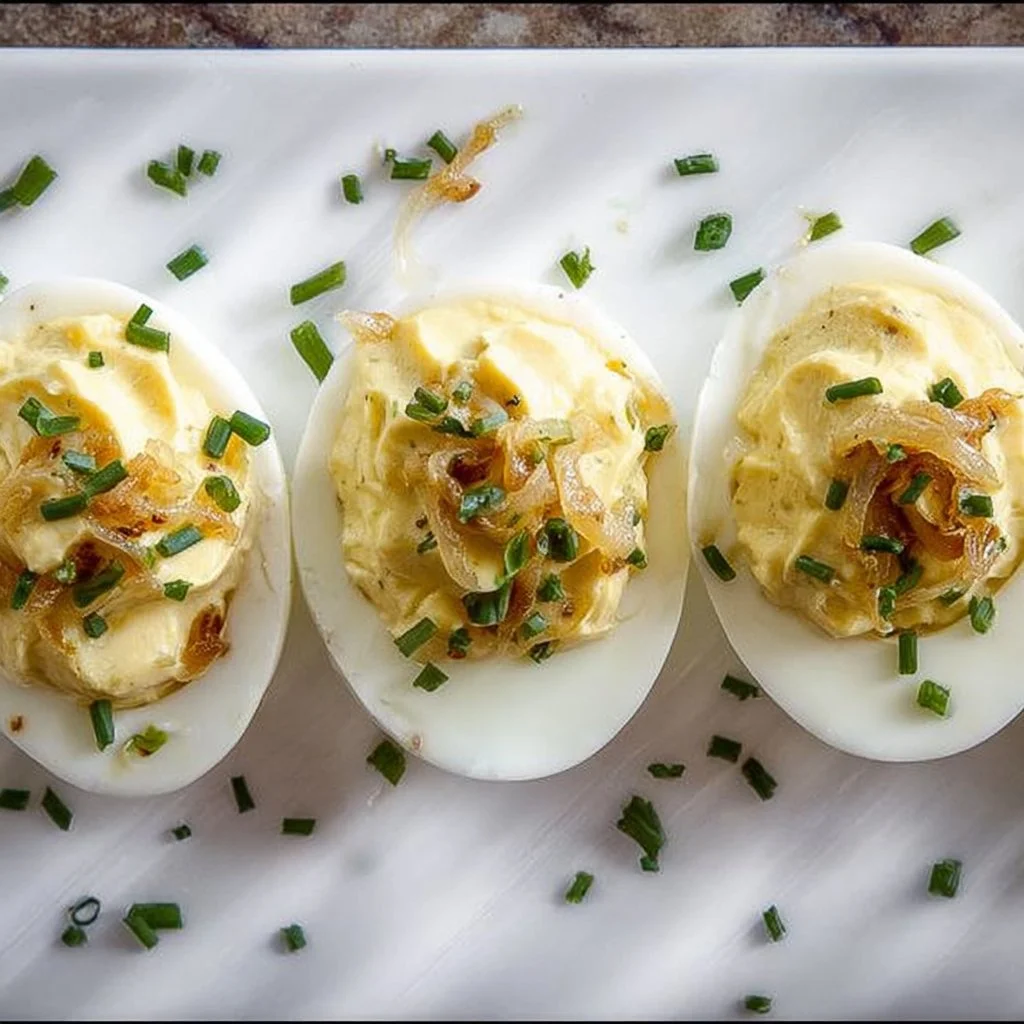
If you love the cozy, sweet-savory comfort of French onion soup but want a finger-food twist, French Onion Deviled Eggs are your new go-to appetizer. These little bites combine creamy egg yolks with rich caramelized onions and nutty gruyère for a seasonal treat that feels both familiar and fancy. They’re perfect for autumn gatherings, holiday spreads, or a weekend brunch when onions are at their best and you want a make-ahead dish that still tastes freshly assembled. Give your classic deviled eggs a grown-up, deeply flavored update that will have guests asking for the recipe and passing plates around the table. For more inspiration on hearty deviled egg variations, check out this savory Deviled Eggs with Bacon spin.
Ingredients & Equipment
Ingredients
- 6 large eggs
- 1/4 cup mayonnaise
- 1/4 cup sour cream
- 1/2 cup caramelized onions (see notes)
- 1/2 cup grated gruyère cheese
- 1 tsp Dijon mustard
- Salt and pepper to taste
- Chives for garnish
Ingredient notes
- Caramelized onions: Use sweet yellow or Vidalia onions for the best natural sweetness. Cook low and slow until deeply golden for maximum flavor.
- Gruyère: If you can’t find gruyère, a good-quality Swiss or aged cheddar will work, but gruyère brings that slightly nutty, melty character that pairs beautifully with onions.
- Mayonnaise & sour cream: The combo keeps the filling rich but light enough; you can tweak ratios to taste.
Helpful equipment
- Heavy-bottomed skillet (for sautéing onions)
- Saucepan or pot for boiling eggs
- Bowl for ice bath
- Mixing bowl
- Fork or small whisk
- Piping bag or resealable plastic bag (for piping the filling)
- Fine grater (for gruyère)
- Baking tray or serving platter
- Optional: blender or food processor (if you want an ultra-smooth filling)
- Instant-read thermometer (helpful if you want to roast eggs or check water temp)
I like to have a small silicone spatula for scraping both the pan and the mixing bowl — it makes transfer cleaner and reduces waste. If you’re into precise timing, an egg timer works wonders for consistent yolk texture.
Step-by-Step Instructions (with tips)
-
Hard boil the eggs
- Place the 6 large eggs in a single layer in a pot and cover with cold water by about an inch. Bring to a gentle boil over medium-high heat.
- Once the water reaches a rolling boil, remove the pot from heat, cover, and let sit for 12 minutes.
- Tip: For consistently easy-to-peel eggs, start with older eggs (a week old) and plunge them into an ice bath immediately after the 12 minutes. An ice bath stops cooking and helps the membrane separate from the shell.
Variation tip (roasting vs boiling)
- Roasted eggs: You can roast eggs in the oven at 325°F (160°C) for about 25–30 minutes for a hands-off method. Roasted eggs have a slightly different texture — some prefer them for making deviled eggs because the whites set uniformly. Use an instant-read thermometer to confirm doneness (yolk ~155–160°F but you’ll only get an approximate reading with whole eggs).
-
Peel and halve the eggs
- Transfer the cooled eggs to a cutting board, gently tap to crack the shells, and peel under running water to ease the process.
- Slice each egg in half lengthwise and carefully remove the yolks, placing the yolks in a mixing bowl. Arrange the whites on a serving platter or tray.
Tip: If any whites have nicks or look uneven, use the back of a small spoon to smooth edges for a pleasant presentation.
-
Make the filling
- Mash the yolks with a fork until crumbly.
- Add 1/4 cup mayonnaise, 1/4 cup sour cream, and 1 tsp Dijon mustard. Season with salt and pepper to taste and mix until smooth. For an ultra-silky texture, pulse the mixture briefly in a blender or food processor.
- Tip: Taste as you go. The balance should be creamy and tangy with salt to enhance the gruyère and caramelized onions.
-
Fold in caramelized onions and gruyère
- Stir in 1/2 cup finely chopped caramelized onions and 1/2 cup grated gruyère cheese until well combined. Aim for an even distribution so each bite has a little onion and cheese.
- Tip: Warm the caramelized onions slightly before mixing if they’ve been refrigerated — it helps them blend into the filling more smoothly.
-
Fill the whites
- Spoon or pipe the yolk mixture back into the egg white halves. Use a piping bag fitted with a star tip for a polished look, or snip a corner off a resealable plastic bag to pipe quickly.
- Tip: If you don’t have a piping bag and want fancier swirls, mound a teaspoon of filling and swirl with the back of a spoon.
-
Garnish and serve
- Sprinkle with finely chopped chives and a little extra grated gruyère if you like a melty finish. Serve at room temperature or slightly chilled.
- Variation suggestion: For a smoky twist, add a few drops of smoked paprika or top with a crisp of fried shallot.
Additional tips and flavor suggestions
- Add texture with finely toasted breadcrumbs or chopped toasted walnuts on top for crunchy contrast.
- If you want a bit of tang, fold in a teaspoon of white wine vinegar or a splash of sherry to echo classic French onion notes.
- For an indulgent version, broil the filled eggs briefly with extra gruyère on top until the cheese bubbles — watch carefully so they don’t over-brown.
- If you’re hosting a party, keep a small tray of extra caramelized onions and grated gruyère on the side so guests can customize.
For other deviled egg ideas (including rich bacon-forward options), this deviled egg recipe offers helpful techniques and variations you can borrow.
Storage, Freezing & Make-Ahead Tips
Storing leftovers
- Refrigerate assembled deviled eggs in an airtight container, layered with parchment paper to prevent sticking. They’ll keep well for up to 48 hours. After that, the filling may begin to weep and the texture may change.
- If you plan to serve within a day, keep them chilled until shortly before serving and allow them to come to room temperature for a few minutes — flavor is more pronounced when they aren’t ice-cold.
Make-ahead tips
- You can hard-boil, peel, and halve the eggs up to 3 days in advance. Store whites and yolks separately: whites in a sealed container submerged in cold water (change daily) or simply refrigerated; yolks mixed with the mayo/sour cream can be refrigerated in an airtight container for up to 24 hours.
- Prepare caramelized onions several days ahead and refrigerate. They actually improve with a day to sit and mellow.
- To assemble just before guests arrive, pipe the filling into whites, garnish, and serve — this keeps presentation pristine.
Freezing
- Deviled eggs freeze poorly. The water content in egg whites causes texture degradation, and the filling can become grainy. I don’t recommend freezing assembled deviled eggs.
- If you want to freeze components, the caramelized onions can be frozen for up to 3 months in a freezer-safe bag; thaw overnight in the fridge. Do not freeze the mayo/sour cream-filled yolk mixture.
Portioning advice
- Plan on 1–2 deviled eggs per person for a cocktail hour, 2–3 for a buffet where other appetizers are present, and 3–4 if they’re the star of a light brunch or starter course. These rich, flavorful bites are satisfying in smaller quantities.
How to Use / Serve This Dish
Serving ideas and pairings
- As an appetizer: Place on a platter with mixed olives, a selection of crusty bread, and a warm pot of French onion dip or soup for a themed spread.
- At brunch: Serve alongside a simple green salad with a tangy vinaigrette and roasted tomatoes, or pair with smoked salmon for a more luxurious spread.
- For holiday boards: Add French Onion Deviled Eggs to a charcuterie board. They play well with cured meats, grainy mustard, and pickled vegetables.
- Pair drinks: These eggs match nicely with dry white wines (Sauvignon Blanc or unoaked Chardonnay), a crisp rosé, or a light-bodied red like Pinot Noir. For a cocktail, try a gin and tonic or a classic dry martini to cut through the richness.
Creative variations
- French Onion BLT: Top each filled egg with a tiny strip of candied bacon for a salty-sweet counterpoint.
- Vegetarian-friendly: Swap out a dairy-free cheese and use vegan mayo/sour cream to make a plant-based version.
- Mini tartlets: Spoon the filling into miniature baked shells and broil with a gruyère crisp on top for a canapé-style treat.
If you enjoy mixing deviled egg textures and flavors, you might like experimenting with bacon-forward versions — see this Deviled Eggs with Bacon idea for inspiration on balancing salty and sweet.
Frequently Asked Questions
Q: Can I use other cheeses instead of gruyère?
A: Yes. Gruyère adds a nutty, melty dimension that complements caramelized onions, but Swiss, Emmental, or a sharp white cheddar will work. For a smoky profile, try smoked gouda in small amounts.
Q: How long do deviled eggs last in the fridge?
A: Assembled deviled eggs are best eaten within 48 hours. If you separate components, you can keep boiled and peeled whites up to 3 days and the yolk filling up to 24 hours. Always refrigerate promptly and follow safe food-handling practices.
Q: Can I make the filling smoother?
A: Absolutely. Use a blender or food processor for a velvety filling. Add a teaspoon or two of milk or buttermilk if needed to thin the mixture to your desired consistency. Be cautious with adding too much liquid — the filling should be creamy but pipeable.
Q: What if I don’t have time to caramelize onions?
A: Use store-bought caramelized onions or quick-pickled shallots for a tangy contrast. You can also sweat thinly sliced onions in a bit of butter over medium-low heat for 20–25 minutes if you need a faster version; they won’t be as deeply sweet but will still add onion flavor.
Conclusion
French Onion Deviled Eggs are one of those small, seasonal pleasures that feel like a hug in appetizer form — familiar, comforting, and a little bit special. The caramelized onions and gruyère bring warm, deeply savory notes to the classic deviled egg filling, making them a standout at any gathering. If you love experimenting with deviled egg variations, I encourage you to try different cheeses, add a splash of sherry to the onions, or broil the tops briefly for a gratin-like finish. For more recipes and ways to riff on deviled eggs, take a look at this classic Deviled Eggs Recipe – French Onion Deviled Eggs, this homesteader-style take on the idea at French Onion Deviled Eggs – I Am Homesteader, and another caramelized-onion-forward approach here: Caramelized Onion Deviled Eggs – Nea Arentzen. Try making a batch this weekend, then share a photo or pass a plate — good food is meant to be enjoyed together.

French Onion Deviled Eggs
Ingredients
Egg Ingredients
- 6 large large eggs Use older eggs for easier peeling.
- ¼ cup mayonnaise Can adjust based on preference.
- ¼ cup sour cream Can adjust based on preference.
- ½ cup caramelized onions Use sweet yellow or Vidalia onions for the best flavor.
- ½ cup gruyère cheese Can substitute with Swiss or aged cheddar.
- 1 tsp Dijon mustard Adjust to taste.
- Salt and pepper to taste For seasoning.
- Chives for garnish Finely chopped.
Instructions
Hard boil the eggs
- Place the 6 large eggs in a single layer in a pot and cover with cold water by about an inch. Bring to a gentle boil over medium-high heat.
- Once the water reaches a rolling boil, remove the pot from heat, cover, and let sit for 12 minutes.
- Tip: Start with older eggs for easy peeling, and plunge them into an ice bath immediately after the timer goes off.
Peel and halve the eggs
- Transfer the cooled eggs to a cutting board, gently tap to crack the shells, and peel under running water.
- Slice each egg in half lengthwise and carefully remove the yolks, placing the yolks in a mixing bowl.
- Arrange the whites on a serving platter.
Make the filling
- Mash the yolks with a fork until crumbly.
- Add mayonnaise, sour cream, and Dijon mustard. Season with salt and pepper to taste and mix until smooth.
- Tip: For a smoother filling, pulse briefly in a blender.
Fold in caramelized onions and gruyère
- Stir in the caramelized onions and grated gruyère cheese until well combined.
- Tip: Warm the caramelized onions slightly before mixing.
Fill the whites
- Spoon or pipe the yolk mixture back into the egg white halves.
- Tip: Use a piping bag for a polished look.
Garnish and serve
- Sprinkle with finely chopped chives and extra grated gruyère if desired.
- Serve at room temperature or slightly chilled.







1 thought on “French Onion Deviled Eggs”