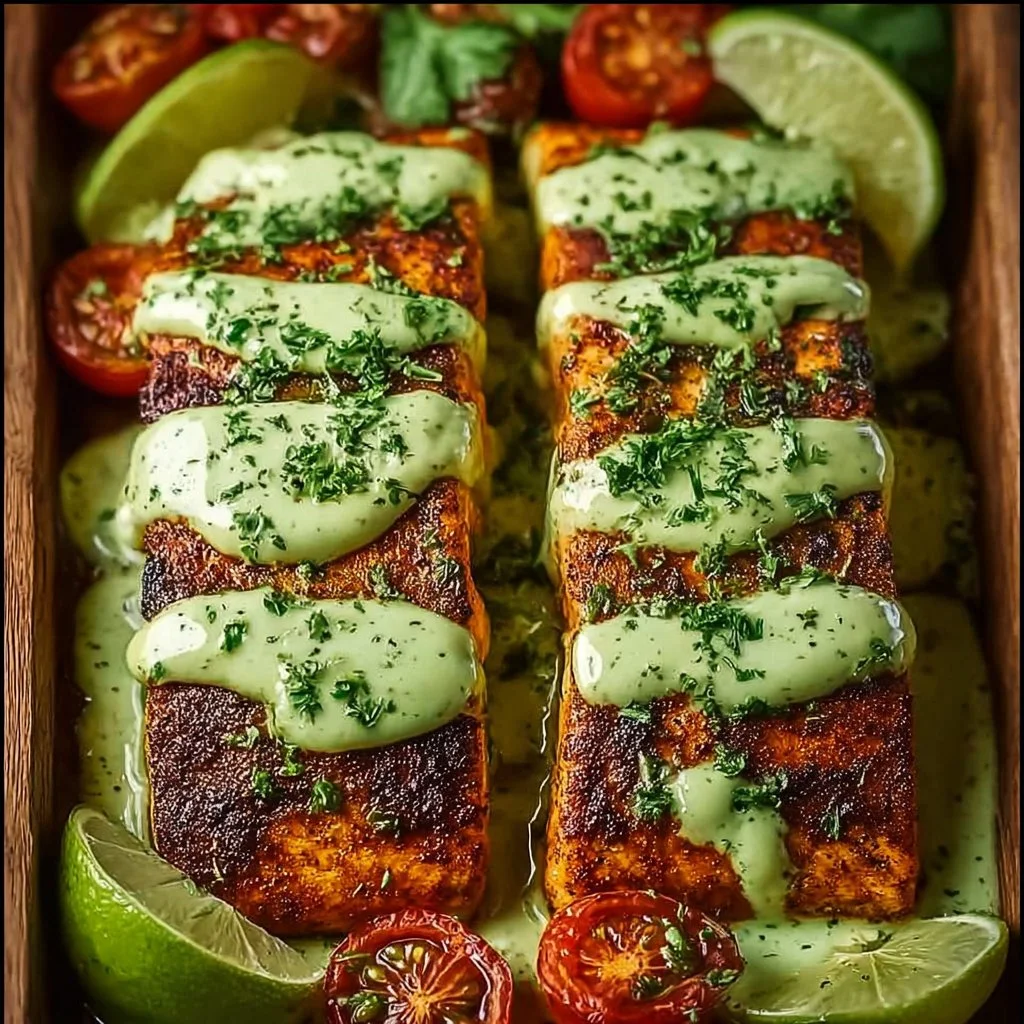
Baked Cajun Salmon with Creamy Avocado Lime Sauce is a vibrant, cozy dinner that brings bright citrus, smoky spice, and silky creaminess to your plate. This recipe highlights fresh salmon fillets dusted with Cajun seasoning, baked until just flaky, then finished with a luscious avocado-lime sauce that tastes indulgent without feeling heavy — perfect for spring and summer nights or any evening you want something comforting and fresh. The texture contrast between tender, flaky salmon and a silky, slightly tangy sauce is what makes this dish so satisfying. If you enjoy seasonal, from-scratch dinners, you might also love this baked pears with feta, honey, and cranberries for a sweet, elegant side or dessert.
Ingredients & Equipment
Ingredients
- 4 salmon fillets
- 2 tablespoons Cajun seasoning
- 1 tablespoon olive oil
- 1 ripe avocado
- 2 tablespoons lime juice
- 1/4 cup sour cream or Greek yogurt
- Salt and pepper to taste
- Fresh cilantro for garnish
Brief notes
- Salmon: Choose fillets about 6 ounces each, skin-on or skinless based on preference. Skin-on helps during baking and keeps the fish moist.
- Cajun seasoning: Use your favorite blend or make a quick mix (paprika, garlic powder, onion powder, cayenne, thyme, oregano, salt, pepper).
- Avocado: Ripe but firm avocados blend best for a smooth sauce; overripe avocados can become watery and bitter.
- Sour cream vs. Greek yogurt: Sour cream yields a slightly richer sauce; Greek yogurt keeps it tangier and a bit lighter.
Helpful tools / equipment
- Baking tray or rimmed baking sheet
- Parchment paper or a lightly oiled sheet
- Small blender, food processor, or immersion blender for the sauce
- Sharp knife and cutting board
- Fish spatula or wide turner (if cooking skin-on)
- Instant-read thermometer (recommended — salmon is perfectly cooked at 125–130°F for medium-rare, 135°F for medium)
- Fresh citrus juicer (optional but handy)
Step-by-Step Instructions (with tips)
Preheat your oven to 400°F (200°C).
- Tip: Position a rack in the middle of the oven for even heat. If your salmon fillets are thick, you might want to preheat a baking sheet for a crisper underside.
Rub the salmon fillets with olive oil and sprinkle Cajun seasoning on both sides.
- Tip: Pat fillets dry with paper towels first to help the oil and seasoning adhere. If you have skin-on fillets, rub the seasoning into the flesh and lightly season the skin side as well.
Place the seasoned salmon on a baking sheet lined with parchment paper.
- Tip: Leave space between fillets so air circulates and heat cooks evenly. For an extra layer of flavor, you can place lemon slices or a few sprigs of thyme under the fillets.
Bake for about 12–15 minutes or until the salmon is cooked through and flakes easily with a fork.
- Tip: Ovens vary — check at 10 minutes for thin fillets. Use an instant-read thermometer: 125–130°F for a slightly pink, tender center; 135°F if you prefer fully opaque. Remember carryover cooking will raise the temperature a few degrees after removing from the oven.
In a blender, combine the avocado, lime juice, sour cream (or yogurt), salt, and pepper. Blend until smooth and creamy.
- Tip: Add a splash of water, milk, or olive oil if you need to loosen the sauce. For a brighter flavor, add a small clove of garlic or a tablespoon of chopped cilantro. If you prefer a chunkier texture, mash the avocado by hand and fold in the sour cream.
Serve the baked salmon topped with the creamy avocado lime sauce and garnish with fresh cilantro. Enjoy!
- Tip: Spoon sauce over just before serving to preserve the avocado’s color and fresh flavor. If you make extra sauce, drizzle it sparingly — its richness is meant to complement, not overpower, the fish.
Variations and kitchen tips
- Broil finish: For a lightly charred top, broil the salmon for the last 1–2 minutes, watching carefully so it doesn’t burn.
- Pan-seared option: If you prefer a crisp crust, sear fillets flesh-side down in a hot skillet for 2–3 minutes, then transfer to a 400°F oven for 6–8 minutes to finish.
- Grill method: Grill skin-on fillets over medium-high heat, skin-side down, for about 6–8 minutes, then flip for 2–3 minutes. Grilling adds smoky complexity.
- Spice level: Adjust Cajun seasoning to taste — eliminate cayenne for milder heat, or add a pinch of smoked paprika for smoky depth.
- Sauce variations: Swap lime for lemon for a different citrus note, or add a handful of chopped fresh cilantro or jalapeño to the blender for a herby, spicy lift.
- If you’re pairing this salmon with a warm, chunky soup on colder nights, consider a hearty option like the comforting creamy bean soup with kielbasa.
Storage, Freezing & Make-Ahead Tips
Storing leftovers
- Refrigerate: Transfer leftover salmon and sauce to airtight containers. Store the cooked salmon for up to 2 days in the refrigerator; keep the avocado-lime sauce separately for up to 24–48 hours (the sauce can brown a bit but still be fine; press plastic wrap onto the surface to reduce oxidation).
- Reheating: Reheat salmon gently in a 300°F (150°C) oven for 8–12 minutes or until warmed through, or cover and microwave at 50% power in short bursts to avoid drying. Serve with fresh sauce (re-whisk or stir if separation occurs).
Freezing
- Salmon: Cooked salmon can be frozen, but texture may change; wrap fillets tightly in plastic wrap and foil or use vacuum seal bags. Freeze for up to 1 month for best quality. Thaw overnight in the refrigerator before reheating.
- Avocado sauce: Fresh avocado sauce doesn’t freeze well — it becomes watery and grainy when thawed. If you plan to freeze, omit the avocado: freeze a lime-sour cream base separately (without avocado) and mash fresh avocado into it after thawing.
Make-ahead strategies
- Prep the seasoning: Mix your Cajun rub in advance and store it in a jar for quick seasoning.
- Sauce base: Make the lime-sour cream base the day before and blend with avocado just before serving.
- Portioning: Portion individual fillets into meal-sized containers for easy weeknight reheats, and keep the sauce in separate small jars.
How to Use / Serve This Dish
Serving ideas and pairings
- Simple sides: Serve with cilantro-lime rice, roasted sweet potatoes, or steamed asparagus for a balanced plate.
- Fresh salads: A crisp green salad with cucumber, cherry tomatoes, and a lemon vinaigrette complements the richness of the sauce.
- Grain bowls: Build a bowl with quinoa or farro, roasted veggies, a salmon fillet, and a dollop of avocado-lime sauce for a nutritious lunch or dinner.
- Tacos: Flake the salmon and add it to warm tortillas topped with cabbage slaw, extra sauce, and a squeeze of lime for quick fish tacos.
- Appetizer twist: Chill small pieces of baked salmon and serve on crostini with a thin smear of the avocado sauce as a party appetizer.
Creative variations
- Southwestern bowl: Add black beans, corn, avocado slices, and pickled red onions for a Tex-Mex spin.
- Mediterranean riff: Substitute Cajun seasoning with smoked paprika, cumin, and oregano; swap cilantro garnish for fresh dill or parsley.
- Lighten it up: Use Greek yogurt exclusively and serve with a big citrusy salad to cut calories without losing flavor.
If you want another seafood handheld or light meal idea, try these flavorful shrimp wraps with chipotle yogurt sauce for a different spice profile and easy lunch option.
FAQ
Q: Can I use frozen salmon fillets for this recipe?
A: Yes. Thaw frozen salmon overnight in the refrigerator for best texture. Pat dry before seasoning and baking. If cooking from frozen, increase baking time and check doneness with a thermometer — it will take roughly 50% longer depending on thickness.
Q: What can I substitute for Cajun seasoning?
A: If you don’t have Cajun seasoning, use a blend of paprika, garlic powder, onion powder, oregano, thyme, and a pinch of cayenne or chili powder. For milder flavor, reduce the cayenne. Store-bought blackened seasoning or Creole spice mixes also work well.
Q: How long does the avocado lime sauce keep?
A: Fresh avocado-based sauces are best within 24–48 hours when refrigerated. To slow browning, store in an airtight container with the surface smooth and pressed with plastic wrap; adding extra lime juice helps preserve color and flavor.
Q: Is this recipe kid-friendly or allergy-friendly?
A: The recipe is naturally gluten-free if your Cajun seasoning is gluten-free. For younger kids, reduce or omit the cayenne in the seasoning and serve sauce on the side. If avoiding dairy, use plain dairy-free yogurt instead of sour cream or Greek yogurt.
Conclusion
Baked Cajun Salmon with Creamy Avocado Lime Sauce is a delightful balance of spice, creaminess, and bright citrus that fits perfectly into seasonal menus, weeknight dinners, and special occasions alike. Its simple prep, flexible variations, and crowd-pleasing flavors make it a recipe worth returning to all year long. If you want inspiration for similar creamy avocado-and-salmon combinations, check out this take on Salmon with Creamy Avocado Sauce – Kitchen Swagger, or explore a baked cilantro-lime version paired with avocado salsa at Baked Cilantro Lime Salmon with Avocado Salsa – Kalefornia Kravings. For a skillet-seared alternative with a creamy cilantro-lime twist, see this lovely recipe for Cilantro Lime Salmon (with Creamy Cilantro Sauce!) – Cooking Classy. Give it a try, then share your favorite tweaks, photos, or serving ideas — I’d love to hear how yours turns out!
Baked Cajun Salmon with Creamy Avocado Lime Sauce
Ingredients
Main Ingredients
- 4 fillets salmon fillets Choose fillets about 6 ounces each.
- 2 tablespoons Cajun seasoning Use your favorite blend or make a quick mix.
- 1 tablespoon olive oil For rubbing on the salmon.
- 1 ripe avocado ripe avocado Ripe but firm avocados blend best for smooth sauce.
- 2 tablespoons lime juice
- ¼ cup sour cream or Greek yogurt Sour cream yields a richer sauce; Greek yogurt keeps it lighter.
- to taste Salt and pepper For seasoning.
- to taste Fresh cilantro For garnish.
Instructions
Preparation
- Preheat your oven to 400°F (200°C).
- Rub the salmon fillets with olive oil and sprinkle Cajun seasoning on both sides.
- Place the seasoned salmon on a baking sheet lined with parchment paper.
Baking
- Bake for about 12–15 minutes or until the salmon is cooked through and flakes easily with a fork.
Making the Sauce
- In a blender, combine the avocado, lime juice, sour cream (or yogurt), salt, and pepper. Blend until smooth and creamy.
Serving
- Serve the baked salmon topped with the creamy avocado lime sauce and garnish with fresh cilantro.