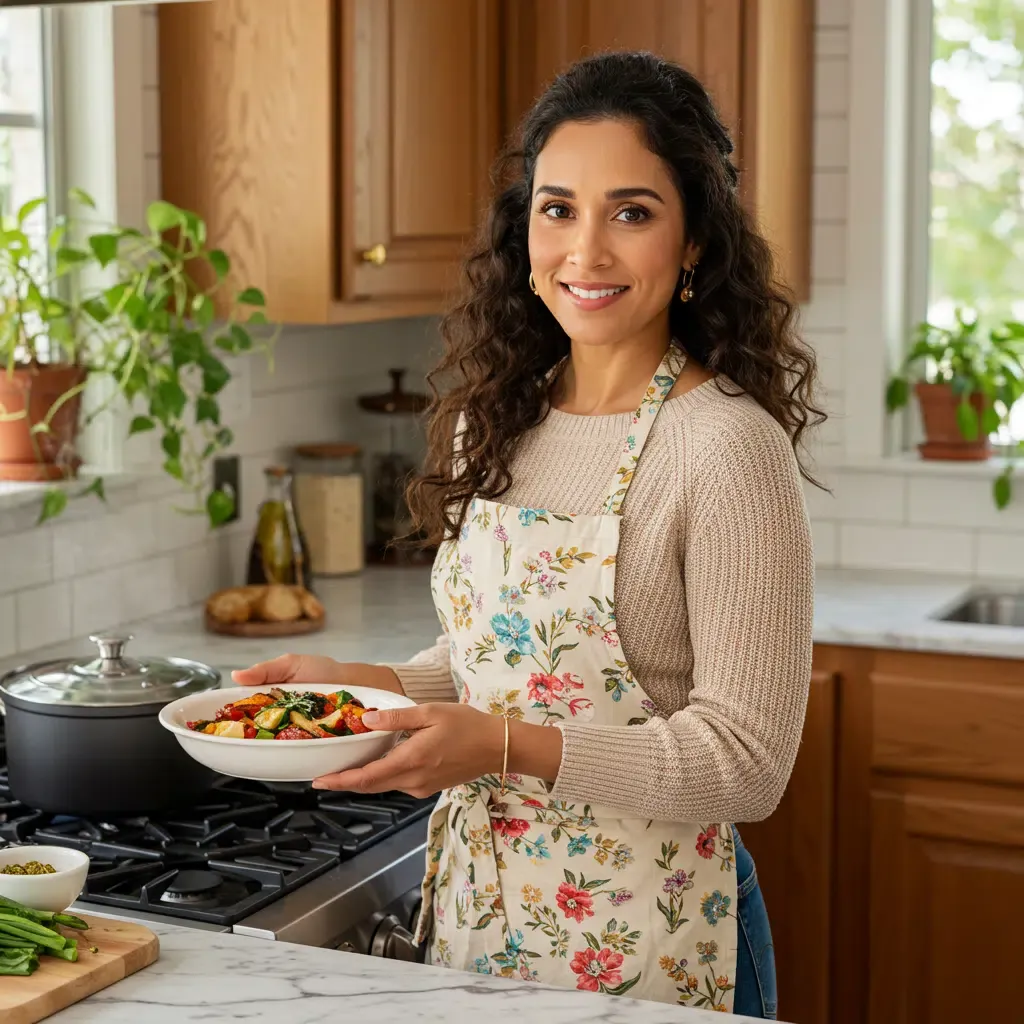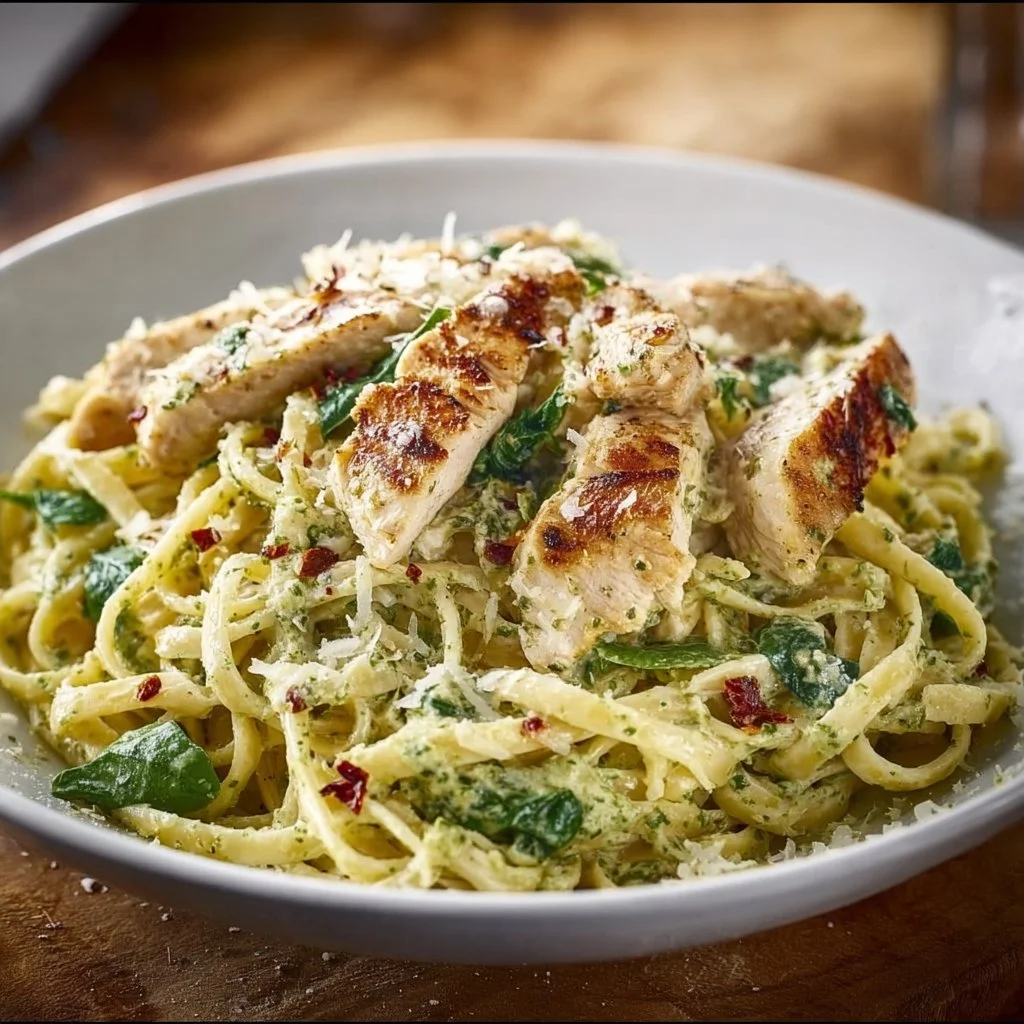
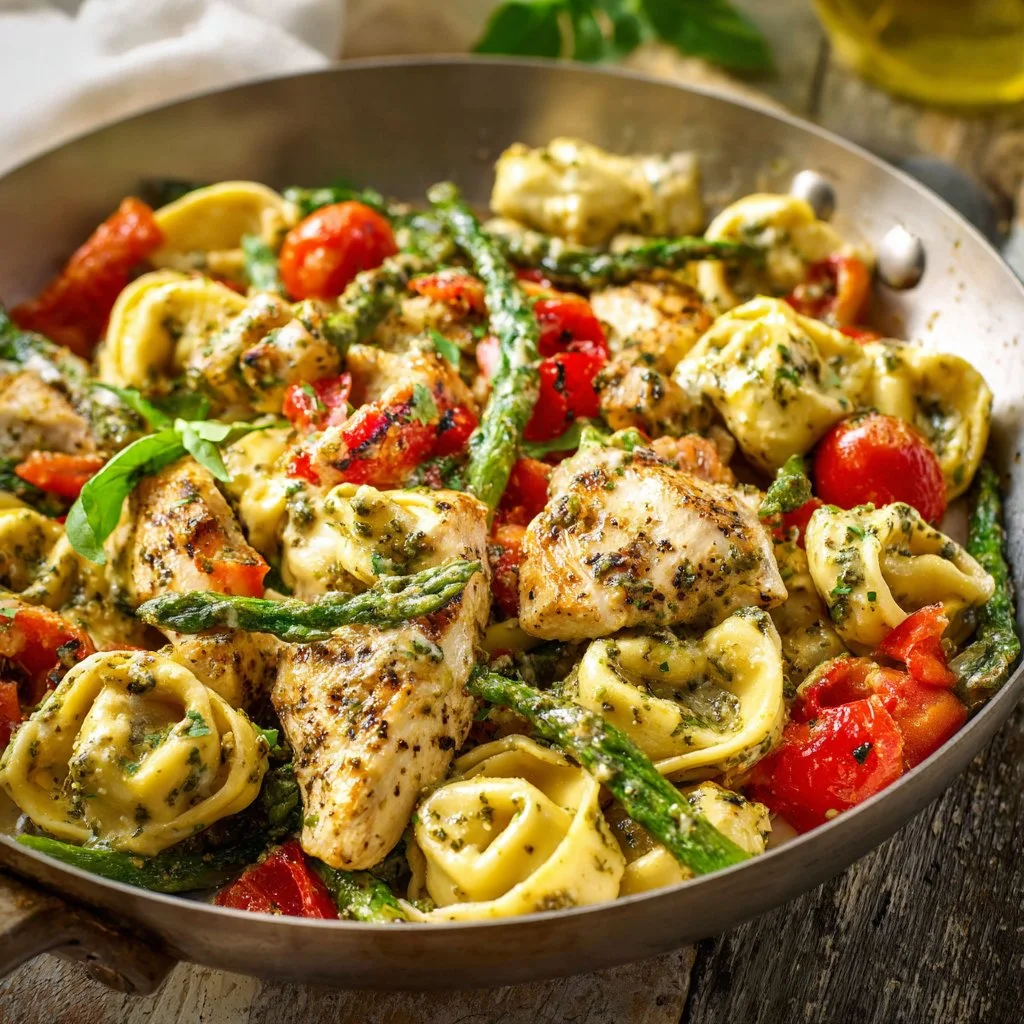
One-Pan Pesto Chicken, Tortellini, and Veggies is the kind of weeknight comfort that feels like a hug on a plate. This dish brings together tender chicken breasts, pillowy tortellini, and bright seasonal vegetables all coated in vibrant pesto — a one-pan dinner that’s fast, flavorful, and perfect for spring through early fall when asparagus and cherry tomatoes are at their best. The textures are lovely: a crisp sear on the chicken, springy pasta, and a gentle snap from the vegetables. If you love simple, from-scratch meals that don’t skimp on taste, this recipe is absolutely worth trying. For a light side, consider pairing it with a fresh salad from my favorite collection of seasonal ideas best salad recipes for healthy meals.
Ingredients & Equipment
Ingredients
- 2 chicken breasts
- 1 cup tortellini
- 1 cup asparagus, cut into pieces
- 1 cup cherry tomatoes, halved
- 1/4 cup pesto
- Olive oil
- Salt and pepper to taste
Notes:
- Use fresh or store-bought pesto. If using store-bought, check the ingredient list for vegetarian rennet or choose a vegan pesto if preferred.
- Tortellini can be fresh or dried—fresh cooks faster; adjust cooking time if using dried.
- If chicken breasts are large, consider halving them horizontally (butterflying) for more even cooking.
Helpful equipment
- Large skillet with a lid (10–12 inches recommended) or a deep sauté pan
- Tongs or spatula
- Cutting board and sharp knife
- Colander (if you need to drain cooked tortellini)
- Instant-read thermometer (recommended for perfectly cooked chicken)
- Optional: blender or food processor (for homemade pesto), baking tray (if roasting veggies instead of sautéing)
Step-by-Step Instructions (with tips)
Follow these clear steps to make your One-Pan Pesto Chicken, Tortellini, and Veggies. I’ve started with a simple pan-skillet method and added variations so you can adapt based on time, tools, and preferences.
Prep ingredients (5–10 minutes)
- Pat the chicken breasts dry and season both sides with salt and pepper. If the breasts are thick, pound them gently to an even thickness or butterfly them to shorten cooking time. Trim asparagus and halve the cherry tomatoes. If using fresh tortellini, have it ready; if using dried, check package instructions for cooking time.
Heat the pan (1–2 minutes)
- Heat 1–2 tablespoons of olive oil in a large pan over medium heat until shimmering but not smoking. A hot pan gives the chicken a nice golden sear.
Cook the chicken (12–15 minutes)
- Add the seasoned chicken breasts to the pan and cook until golden brown, about 6–7 minutes per side depending on thickness. Tip: don’t move the chicken too much — let it develop a crust for flavor. Use an instant-read thermometer; chicken is done at 165°F (74°C). When cooked, remove chicken from the pan and set aside on a plate, tented loosely with foil to rest.
Sauté vegetables (3–5 minutes)
- In the same pan, add another drizzle of olive oil if needed. Add the asparagus pieces and cherry tomatoes. Sauté, stirring occasionally, for about 3–4 minutes until vegetables are bright and tender-crisp. Tip: a splash of water or vegetable broth can help steam the asparagus quickly if your pan is very hot.
Cook the tortellini (package method or one-pan variation)
- Option A — Stovetop (recommended for a true one-pan meal): Push the veggies to the side, add the tortellini and enough water or low-sodium broth to just cover the pasta (usually 1 to 1 1/2 cups depending on fresh vs. dried). Bring to a simmer and cook according to package instructions, stirring occasionally, until the tortellini are tender and most liquid is absorbed. Drain any excess if needed.
- Option B — Separate pot (faster and foolproof): Cook tortellini in a separate pot of salted boiling water according to package instructions, then drain and return to the pan with veggies. This avoids adding extra liquid to the skillet.
Tip: Fresh tortellini typically takes 2–4 minutes; dried may take 8–10 minutes. If you’re short on time, use fresh or refrigerated tortellini.
Finish and combine (2–3 minutes)
- Reduce heat to low. Return the cooked chicken breasts to the pan (slice them first for faster reheating if you prefer). Add 1/4 cup pesto and gently toss everything to coat — the residual heat will warm the pesto without cooking away its fresh basil flavor. Taste and adjust seasoning with salt and pepper.
Serve warm
- Slice the chicken against the grain and serve spoonfuls of tortellini and veggies alongside. Garnish ideas: a squeeze of lemon, extra basil leaves, toasted pine nuts, or a sprinkle of grated cheese (choose a vegetarian-friendly cheese if rennet is a concern).
Variations and flavor suggestions
- Roasting vs. sautéing the veggies: Roast asparagus and cherry tomatoes at 425°F (220°C) on a baking sheet tossed with olive oil for 12–15 minutes for a caramelized boost of flavor. Add them to the pan with the cooked tortellini at the end.
- Protein swaps: Swap chicken for cubed turkey breast or firm tofu for a vegetarian option. If using tofu, press it first to remove moisture, then pan-fry until golden.
- Pesto swaps: Try a lemon-basil pesto, spinach-pesto, or a nut-free pesto if allergies are a concern.
- Add more greens: Stir in a few handfuls of baby spinach or arugula at the end until wilted for extra color and freshness.
- Creamy finish: For a creamier sauce, stir in a splash of low-fat cream, plain yogurt, or a bit of reserved pasta cooking water until silky (avoid overheating if using yogurt).
Kitchen tips
- Resting chicken keeps it juicy — tent it while you finish the pasta.
- If your tortellini absorbs too much liquid during one-pan cooking, stir in a little broth or reserved pasta water to loosen the sauce.
- Use an instant-read thermometer to eliminate guesswork.
Storage, Freezing & Make-Ahead Tips
Storing leftovers
- Fridge: Cool the dish to room temperature within two hours, then transfer to an airtight container. Store for up to 3–4 days. Keeping the chicken sliced helps it reheat evenly.
- Reheating: Reheat gently in a skillet over medium-low heat with a splash of water or broth to loosen the sauce, or microwave in short bursts, stirring between intervals.
Freezing
- Freezing pasta with cream-based sauces can change texture, but this pesto-based dish freezes well if sealed properly.
- To freeze: Cool completely, portion into freezer-friendly containers or bags, and remove excess air. Freeze for up to 2 months.
- Thawing & reheating: Thaw overnight in the refrigerator, then reheat in a skillet with a splash of broth or water. If texture of tortellini is slightly softer after freezing, consider serving as a warm pasta bowl rather than a plated entrée.
Make-ahead
- Pesto: Make homemade pesto ahead and keep it refrigerated for up to a week or freeze in ice cube trays for longer storage.
- Chicken: Cook and slice chicken ahead of time and store separately; warm briefly and toss with freshly heated tortellini and vegetables when ready to serve.
- Veg prep: Trim asparagus and halve tomatoes up to a day ahead and keep them covered in the fridge.
Portioning advice
- This recipe serves about 2 people as a main. Double or triple quantities easily for family meals or meal prep. When scaling, use a larger skillet or work in batches to avoid crowding the pan.
How to Use / Serve This Dish
Serving ideas
- Light and balanced: Pair with a crisp green salad and a lemon vinaigrette for brightness.
- Heartier family-style: Add a side of warm crusty bread or garlic flatbread to soak up any pesto sauce.
- Make it a bowl: Serve over a bed of mixed greens or cooked grains (like farro or quinoa) to change the texture and extend the meal.
- Garnish ideas: Fresh basil, a squeeze of lemon, toasted pine nuts, or a scattering of grated cheese (choose vegetarian-friendly options if desired).
Creative variations
- Mediterranean twist: Add olives and artichoke hearts for extra briny flavor.
- Nut-free pesto: Use sunflower seeds or pumpkin seeds instead of pine nuts in your pesto for allergy-friendly swaps.
- Low-carb option: Swap tortellini for zucchini ribbons or cauliflower gnocchi to reduce carbohydrates.
Frequently Asked Questions
Q: Can I use frozen tortellini?
A: Yes. Frozen fresh tortellini works well and often cooks in just a few minutes — follow package timing. If cooking in the skillet with added liquid, keep an eye on texture so it doesn’t overcook.
Q: What if my chicken is still pink in the middle after searing?
A: The safest approach is to check internal temperature with an instant-read thermometer — 165°F (74°C) is the target. If it hasn’t reached that, reduce heat and cover the pan for a few minutes to gently finish cooking, or transfer to a preheated oven at 350°F (175°C) for 5–8 minutes.
Q: Can I make this vegetarian or vegan?
A: Absolutely. Swap chicken for marinated and pan-fried tofu or large mushrooms (like portobello). Use a vegan tortellini or a filled pasta alternative, and choose a dairy-free pesto.
Q: How long will leftovers last in the fridge?
A: Stored in an airtight container, leftovers will keep for 3–4 days. Reheat thoroughly before eating.
Conclusion
One-Pan Pesto Chicken, Tortellini, and Veggies captures the ease and comfort of one-skillet cooking while celebrating seasonal produce and bright, herby flavor. It’s the kind of recipe that turns a busy night into a cozy, delicious meal without a lot of fuss, and it adapts beautifully to what’s fresh in your kitchen. If you want to compare technique or draw inspiration from similar recipes, check out this detailed version from Pesto Chicken Tortellini and Veggies – Julia’s Album, explore another flavorful take at Pesto Chicken Tortellini – Chelsea’s Messy Apron, or see a well-loved skillet variation at Chicken and Tortellini Pesto Skillet Recipe – Allrecipes. Give this one-pan dinner a try this week, and if you love it, please share a photo or note about any tweaks you made — I’d love to hear how you make it your own.