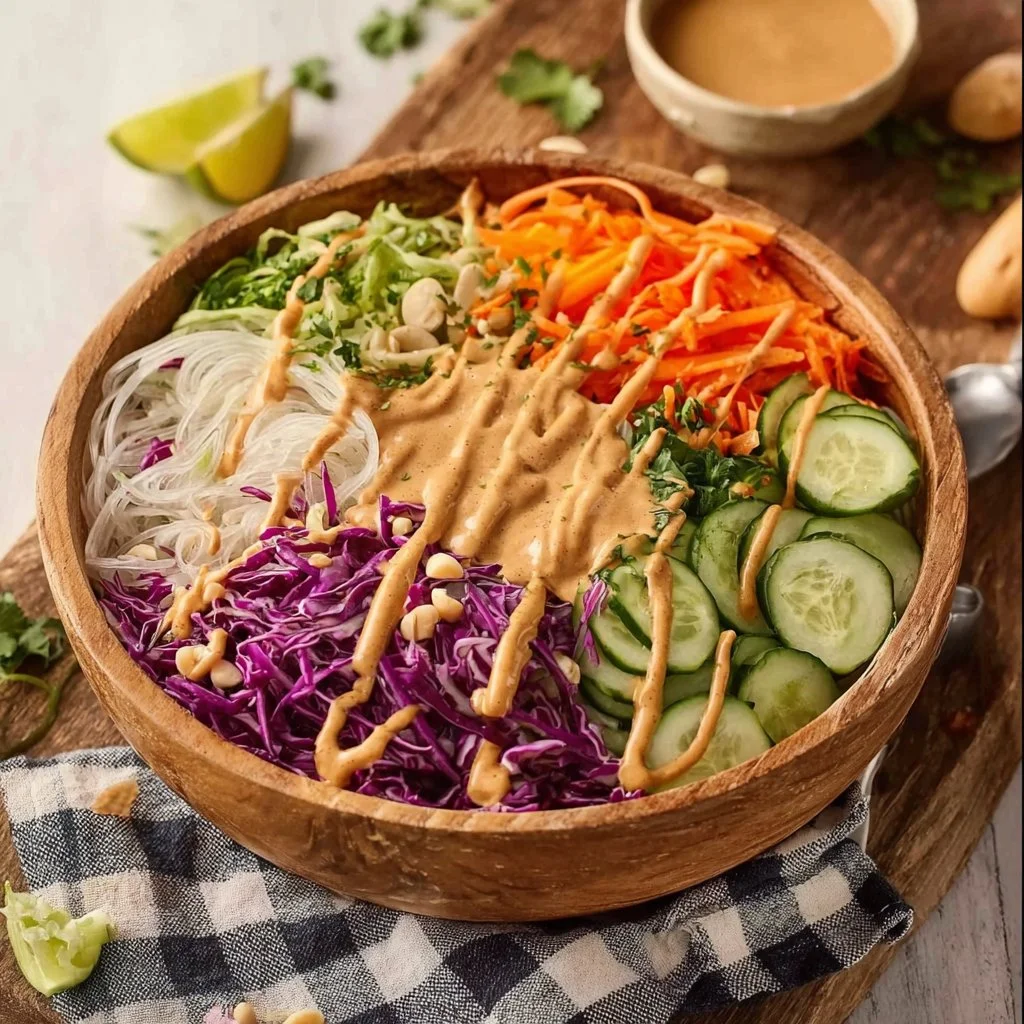
Spring Roll Salad is a bright, crunchy bowl that feels like a fresh breeze on a warm day — and it’s absolutely worth trying. This seasonal, halal-friendly dish celebrates rice noodles, crisp cucumber, colorful purple cabbage, sweet carrots, and fresh herbs for layers of texture and flavor that sing together. The peanut-hoisin dressing ties everything into a comforting, slightly tangy, savory finish that’s perfect for lunch, light dinners, or potlucks. If you love exploring salads that feel like something homemade and satisfying, this recipe sits comfortably between a refreshed classic and a weeknight hero. For more salad inspiration, I often look back at curated ideas like these best salad recipes for healthy and delicious meals to spark creativity.
Ingredients & Equipment
Ingredients
- Rice noodles (vermicelli or thin rice stick noodles) — 8 ounces
- Cucumber — 1 medium, thinly sliced or julienned
- Purple cabbage — 2 cups, finely shredded
- Carrot — 1 large, grated or julienned
- Bell pepper — 1 medium (red or yellow for color), thinly sliced
- Fresh herbs — about 1/2 cup combined, chopped (cilantro and mint recommended)
- Crunchy peanuts — 1/2 cup, coarsely chopped
- Peanut butter — 3 tablespoons (smooth or crunchy depending on preference)
- Lime juice — 2-3 tablespoons (freshly squeezed)
- Soy sauce — 2 tablespoons (use low-sodium if desired)
- Hoisin sauce — 1 tablespoon (for sweetness and depth)
Notes:
- All ingredients listed are halal-friendly. If someone has a peanut allergy, substitute sunflower seed butter or toasted sesame paste (tahini) and replace peanuts with toasted seeds.
- Adjust lime, soy, and hoisin to taste for balance between tang, salt, and sweetness.
Equipment & helpful tools
- Large mixing bowl
- Small mixing bowl or jar for dressing
- Sauce whisk or fork (or a blender for ultra-smooth dressing)
- Colander for noodles
- Vegetable peeler or mandoline for even slicing (optional)
- Knife and cutting board
- Measuring spoons and cups
- Optional: blender or small food processor (for a creamier dressing)
- Optional: baking tray (if you want to roast peppers or other vegetables for a variation)
Step-by-Step Instructions (with tips)
Cook the rice noodles according to package instructions. Drain and rinse with cold water.
- Tip: Rice noodles can go from perfectly tender to mushy quickly. Test them 1–2 minutes before the suggested time; they should be pliable but still have a slight bite. Immediately drain and rinse with cold water to stop cooking and keep them from sticking.
- Variation: For extra chew and flavor, soak rice noodles in warm water until just pliable instead of boiling, then rinse and drain.
In a large bowl, combine cooked rice noodles, sliced cucumber, shredded purple cabbage, grated carrot, sliced bell pepper, and chopped fresh herbs.
- Tip: Toss gently so the noodles don’t break. Use a light hand and cut vegetables into comparable sizes so every forkful feels balanced.
- Variation: Add thinly sliced firm tofu or cooked shredded chicken breast (halal) for extra protein; or include sliced mango for a sweeter, tropical profile.
In a separate bowl, whisk together peanut butter, lime juice, soy sauce, and hoisin sauce to create the dressing.
- Tip: If the dressing is too thick, add 1–2 tablespoons warm water, a teaspoon at a time, until pourable. For a smoother emulsion, use a blender or small food processor.
- Flavor suggestion: Add a pinch of toasted sesame oil for fragrance (use sparingly) or a small clove of grated garlic for more savory depth.
Pour the dressing over the salad and toss to combine.
- Tip: Add about three-quarters of the dressing first, toss, then taste. You may need less than you think — rice noodles absorb dressing, so you can always add more just before serving if needed.
Top with crunchy peanuts for added texture.
- Tip: Toast peanuts lightly in a dry skillet for a minute or two to enhance their crunch and flavor. If serving for kids or guests with nut allergies, swap for roasted chickpeas or pumpkin seeds.
Serve immediately or chill in the refrigerator before serving.
- Tip: Serve chilled on hot days for an especially refreshing meal. If chilling, hold back some peanuts and herbs and sprinkle them on just before serving to keep textures vibrant.
Additional kitchen tips and variations
- Roasting vs. raw: If you prefer a smoky sweetness, slice bell pepper and roast at 425°F (220°C) on a baking tray for 12–15 minutes until slightly charred, then cool and add to the salad. Roasted vegetables add depth but reduce the raw crunch.
- Make it heartier: Stir in edamame, thinly sliced grilled halal chicken, or crispy baked tofu for a more substantial main course.
- Spice it up: Add a finely chopped green chili or a drizzle of chili oil for warmth, or serve with crushed red pepper flakes on the side.
- Herb swaps: Thai basil or flat-leaf parsley work nicely if you want to change the herbal profile.
Storage, Freezing & Make-Ahead Tips
Storing leftovers
- Short-term: Store the salad (without dressing) in an airtight container in the refrigerator for up to 2 days. Keep the dressing separately to prevent the noodles from getting soggy.
- With dressing: If already dressed, it will keep for about 12–24 hours, but the noodles will absorb liquid and textures will soften. Eat within a day for the best experience.
Freezing guidance
- This salad is not ideal for freezing because rice noodles and fresh vegetables lose their texture when thawed. Avoid freezing the assembled salad.
- Freezable components: You can prepare and freeze roasted peppers or cooked proteins (halal chicken, tofu) separately. Store dressing in the refrigerator (short-term) or freeze dressing in ice cube trays for 1–2 months; thaw in the fridge before using.
Make-ahead strategy
- Night-before prep: Cook and cool noodles, chop vegetables, and prepare the dressing separately. Keep everything chilled in separate containers and toss a few minutes before serving.
- Meal prep bowls: Portion undressed salads into individual containers (no dressing) with a small container of dressing and a bag of peanuts. This keeps textures fresh and is portable for lunches.
Portioning advice
- For a main course: plan roughly 1–1.25 cups of prepared salad per person.
- For a side dish: aim for 1/2 to 3/4 cup per person.
- Scale the dressing proportionally; the listed amounts are enough for about 4 servings as a main or 6–8 as a side.
How to Use / Serve This Dish
Serving ideas
- Family-style bowl: Place the salad in a large bowl with extra peanuts, lime wedges, and herbs on the side so everyone can customize.
- Bento or lunchbox: Pack the salad undressed with dressing in a leak-proof container to avoid sogginess; add peanuts and lime wedge separately.
- Party platter: Heap the salad on a platter and surround with lettuce leaves or rice paper sheets for a DIY wrap station — guests can spoon the salad into leaves and roll or fold them.
Creative variations
- Cold spring roll bowls: Use baby bok choy or butter lettuce as a cup and spoon the salad mixture inside for a handheld bite.
- Noodle swap: Use soba or thin wheat noodles if you want a different texture; keep in mind the flavor of the dressing may interplay differently.
- Seasonal switches: In cooler months, swap fresh cucumber for lightly pickled cucumber or thinly roasted beets for color.
Pairing suggestions (halal-friendly)
- Light soups: A clear vegetable or miso-style soup pairs well without overwhelming the freshness of the salad.
- Grilled halal proteins: Grilled lemon-herb chicken or spiced tofu balance the soft noodles and crunchy veg.
FAQ
Q: Can I make this recipe nut-free?
A: Yes. Substitute peanut butter with sunflower seed butter or tahini (sesame paste) and replace chopped peanuts with toasted pumpkin seeds or roasted chickpeas. Adjust seasoning — tahini is less sweet than peanut butter, so you may want to add a touch more hoisin or a teaspoon of honey/syrup if you use it and it fits your diet.
Q: How long will the salad last in the fridge if dressed?
A: When already dressed, aim to eat it within 12–24 hours for the best texture and flavor. Rice noodles and cabbage will begin to soften as they absorb dressing. If you plan to keep leftovers, store the dressing and salad separately, assembling just before serving.
Q: Can I prepare this for a picnic?
A: Absolutely. Pack the salad undressed, with dressing in a sealed jar or bottle and peanuts/herbs in a separate small container. Keep chilled in a cooler until ready to eat and toss just before serving to maintain crunch.
Q: What’s the best way to reheat leftovers?
A: This salad is best served cold or at room temperature. If you’ve added cooked proteins that you want warm, lightly reheat the protein separately and serve it on top of the chilled salad so the noodles and vegetables stay crisp.
Conclusion
This Spring Roll Salad is a celebration of seasonal textures and simple, satisfying flavors — a comforting, from-scratch recipe you can easily make all year round. If you want to compare versions or get inspired by other takes on this crowd-pleasing bowl, check out this thoughtful Spring Roll Salad – Sammy Montgoms for a slightly different spin. For a look at a popular viral version and how it compares in home kitchens, this review from The Kitchn on the viral spring roll salad gives useful insights. And if you’re curious about a pasta-forward twist, explore the recipe ideas in this Thai Spring Roll Pasta Salad – Nourished by Nic for creative adaptation ideas. Give this salad a try, share it with friends or family, and let the fresh, nutty dressing bring a little seasonal comfort to your table.