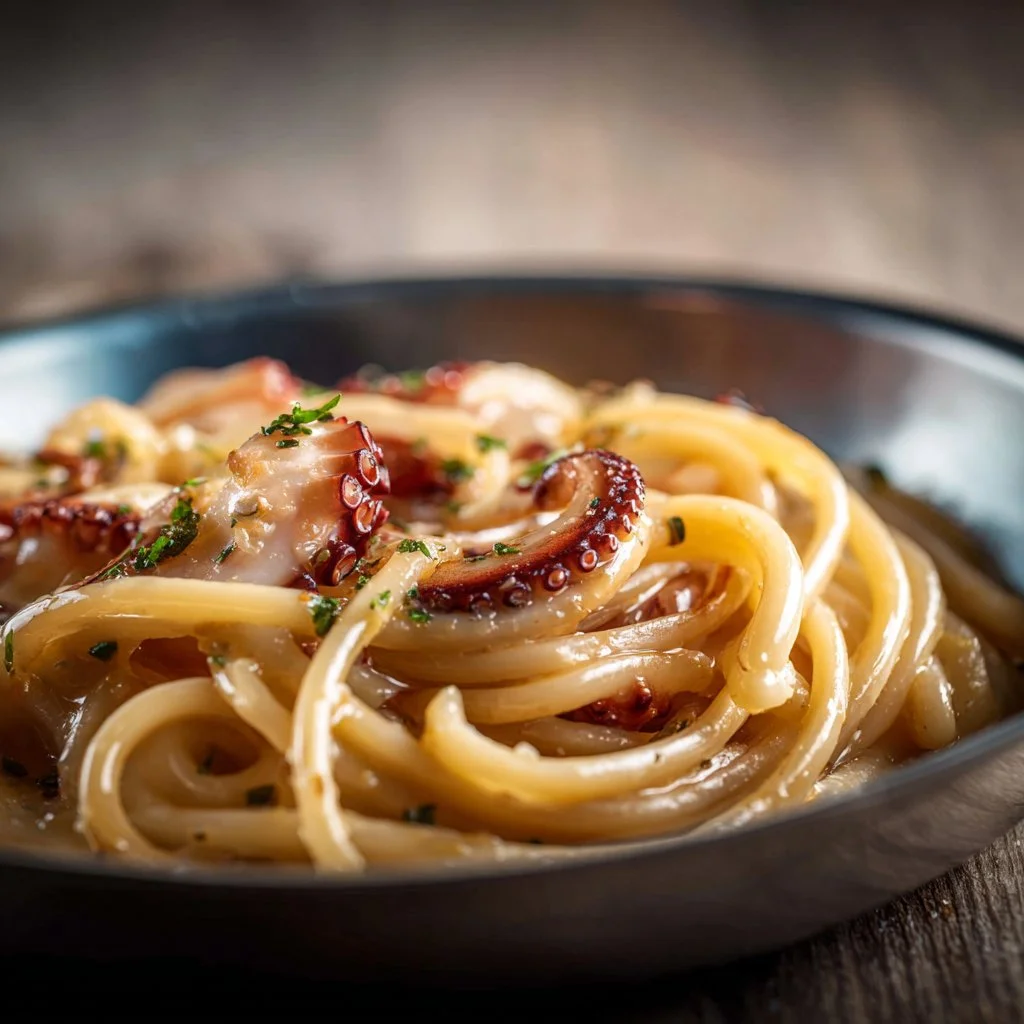
Tinned Octopus Pasta is a delightful, fuss-free dish that feels special enough for weekend gatherings yet simple for a cozy weeknight. This recipe brings together tender tinned octopus, al dente spaghetti or linguine, bright lemon, and fragrant garlic to create a comforting bowl with Mediterranean vibes. The texture of the octopus—soft with a little chew—pairs beautifully with a silky olive oil sauce, red pepper flakes for a gentle heat, and fresh parsley for brightness. If you enjoy creamy, comforting noodle dishes, you might also like the light flavors in this creamy pasta primavera, which complements the lighter seafood notes in this recipe.
Ingredients & Equipment
Ingredients
- 200g pasta (spaghetti or linguine)
- 1 can tinned octopus
- 2 tablespoons olive oil
- 2 cloves garlic, minced
- 1/2 teaspoon red pepper flakes
- Salt and pepper to taste
- Fresh parsley, chopped (for garnish)
- Lemon wedges (for serving)
Notes
- Use a good-quality tinned octopus in olive oil or its own juices for the most flavor. If your tin has a strong brine, taste before adding salt.
- Adjust red pepper flakes to your desired heat level, or omit for a mild version.
- Fresh lemon adds a bright finish; bottled lemon juice can work in a pinch but fresh is best.
Equipment
- Large pot for boiling pasta
- Large skillet or frying pan (non-stick or stainless steel)
- Colander to drain pasta
- Tongs or pasta fork for tossing
- Measuring spoons and cups
- Knife and chopping board
Helpful tools
- Microplane or zester (for extra lemon zest)
- Garlic press (for finely minced garlic)
- Small bowl for reserving pasta cooking water
- Optional: a blender or immersion blender if you prefer a silky emulsified sauce (see variations)
If you like simple seafood pasta preparations, this dish is an easy cousin to many creamy or olive-oil based recipes like a classic creamy pasta salad that’s great for warm-weather days.
Step-by-Step Instructions (with tips)
-
Cook the pasta according to package instructions. Drain and set aside.
- Tip: Salt the pasta water generously—about 1 tablespoon per 4–5 liters of water—to season the pasta from the inside out.
- Tip: Reserve 1/2 cup of the starchy pasta cooking water before draining; it helps bind the sauce.
-
In a large skillet, heat olive oil over medium heat. Add minced garlic and red pepper flakes, sauté until fragrant.
- Tip: Watch the garlic closely; cook until just fragrant (about 30–45 seconds) to avoid bitterness.
- Variation: For a roasted-garlic flavor, roast whole garlic cloves in the oven until soft, then mash into the oil.
-
Add the tinned octopus (including its liquid) to the skillet and cook for about 3–4 minutes.
- Tip: The canned liquid can add depth; if it’s very briny, add a splash of the reserved pasta water to mellow it.
- Texture note: Tinned octopus is already tender; this short cook warms it through and lets flavors marry without overcooking.
-
Toss the cooked pasta into the skillet, stirring to combine. Season with salt and pepper to taste.
- Tip: Add a tablespoon of the reserved pasta water at a time to create a glossy sauce that clings to the noodles.
- Variation: If you prefer a more saucy finish, add an extra tablespoon of olive oil or a couple of tablespoons of cream or crème fraîche for a richer texture (both are halal-friendly).
-
Serve warm, garnished with fresh parsley and lemon wedges.
- Tip: A little lemon zest brightens the whole dish—zest before squeezing.
- Serving suggestion: Toss in a handful of baby spinach at the last minute to wilt it slightly for extra greens.
Additional variations and flavor ideas
- Roasting vs. Boiling: If you’re using fresh octopus (instead of tinned), you could roast or simmer it first until tender; with tinned octopus, the quick skillet method above preserves texture and convenience.
- Tomato touch: Add a handful of cherry tomatoes halved to the skillet in step 3 for a juicy, acidic counterpoint.
- Herb swap: Replace parsley with cilantro or basil for a different aromatic profile.
- Nuts and crunch: Toasted pine nuts or sliced almonds can add a pleasant contrast in texture.
- Umami boost: A spoonful of capers or a few chopped olives will deepen the savory notes (both are halal-friendly and optional).
Storage, Freezing & Make-Ahead Tips
Storing leftovers
- Refrigeration: Store leftovers in an airtight container in the refrigerator for up to 2 days. Seafood-based pasta is best eaten within 48 hours to maintain flavor and safety.
- Reheating: Gently reheat on the stove over low heat with a splash of water or olive oil to loosen the pasta. Microwaving is possible but can make the pasta a bit drier—stir halfway through reheating.
Freezing
- Freezing seafood pasta is generally not recommended because the texture of seafood and pasta can change after freezing and thawing. If you must freeze:
- Portion into meal-sized airtight containers and freeze for up to 1 month.
- Thaw overnight in the refrigerator and reheat gently on the stove. Expect slight changes in texture, especially for the octopus and pasta.
Make-ahead tips
- Prep ahead: Mince garlic, chop parsley, and zest lemon up to a day in advance and store separately in the refrigerator.
- Cook pasta al dente: If making this ahead for a gathering, undercook the pasta slightly (1–2 minutes less) so it can finish cooking when tossed with the sauce at serving time.
Portioning advice
- This recipe with 200g pasta serves about 2 people as a main or 3–4 as a light meal.
- Double the recipe for a family meal or small dinner party; use a larger skillet or transfer to a saucepan to combine everything evenly.
How to Use / Serve This Dish
Serving ideas
- Keep it simple: Serve Tinned Octopus Pasta with lemon wedges and an extra drizzle of olive oil. A crisp green salad dressed with lemon and olive oil makes a refreshing side.
- Bread option: A warm crusty loaf or flatbread is perfect for mopping up any lingering sauce—no extra spreads needed.
- Vegetables: Roasted seasonal vegetables (like bell peppers, zucchini, or eggplant) complement the dish nicely and add color.
- Light starters: Begin the meal with a simple mezze plate of marinated olives, sliced cucumbers, and tomatoes for a Mediterranean vibe.
Creative variations
- Cold pasta salad: Toss cooled pasta with the octopus, olive oil, chopped parsley, lemon, and a few capers for a refreshing cold pasta salad—think picnic-ready.
- Citrus-herb twist: Add orange zest along with lemon for a fragrant citrus lift, particularly nice in spring and summer.
- Spicy-sweet contrast: A drizzle of honey and a pinch of chili can create a sweet-spicy balance—use sparingly.
If you enjoy shrimp-forward dishes with a similar comforting texture, try adapting flavors from a restaurant-style creamy shrimp pasta to craft richer versions of this recipe.
FAQ
Q: Can I use other kinds of tinned seafood for this recipe?
A: Yes. Tinned calamari, mussels, or sardines can be used similarly, though each has a distinct flavor and texture. Adjust cooking time and salt to taste—sardines are often oilier and more intensely flavored, so you may want to reduce added oil.
Q: Is tinned octopus halal?
A: Yes, tinned octopus is halal-friendly. This recipe avoids any prohibited ingredients and uses simple, permissible pantry staples.
Q: What if my tinned octopus is packed in oil vs. brine—any difference?
A: If packed in oil, you’ll have a richer base and can reduce added olive oil slightly. If it’s in brine, taste before salting; you might need to dilute by adding a splash of pasta water or additional olive oil for silkiness.
Q: Can I make this gluten-free?
A: Absolutely. Substitute the regular pasta with your favorite gluten-free spaghetti or linguine and follow the same process. Cook times may differ—follow package directions for al dente texture.
Q: How do I prevent the octopus from becoming rubbery?
A: With tinned octopus, overcooking is less of a concern since it’s already tenderized in the canning process. Heat it just long enough to warm through—about 3–4 minutes in the skillet—to maintain a pleasant texture.
Conclusion
Tinned Octopus Pasta is a comforting, flavorful dish that turns a humble pantry staple into a memorable meal—perfect for seasonal dinners when you want something simple but satisfying. For more inspiration on easy octopus and seafood pasta ideas, see this practical Bon Appétit weeknight octopus pasta recipe that highlights quick preparations. If you love cooking with pantry staples, this roundup on tinned fish and simple cupboard creations offers useful tips and creative uses. And for a deep-dive into the growing trend of tinned octopus, check out this thoughtful piece on why tinned octopus is winning hearts.
Give this recipe a try, and if you do, I’d love to hear how you made it your own—share your tweaks, photos, or favorite pairings so other home cooks can enjoy it too.
Tinned Octopus Pasta
Ingredients
Pasta and Octopus
- 200 g pasta (spaghetti or linguine) Use your favorite type of pasta.
- 1 can tinned octopus Choose a good-quality option in olive oil or its own juices.
Sauce Ingredients
- 2 tablespoons olive oil Extra virgin olive oil adds more flavor.
- 2 cloves garlic, minced Fresh garlic for the best taste.
- ½ teaspoon red pepper flakes Adjust to your desired heat level.
- to taste none salt and pepper Season to your preference.
For Garnish
- ¼ cup fresh parsley, chopped Adds brightness to the dish.
- 1 none lemon wedges For serving.
Instructions
Cooking the Pasta
- Cook the pasta according to package instructions. Drain and set aside.
- Tip: Salt the pasta water generously—about 1 tablespoon per 4–5 liters of water—to season the pasta from the inside out.
- Tip: Reserve 1/2 cup of the starchy pasta cooking water before draining; it helps bind the sauce.
Making the Sauce
- In a large skillet, heat olive oil over medium heat. Add minced garlic and red pepper flakes, sauté until fragrant.
- Tip: Watch the garlic closely; cook until just fragrant (about 30–45 seconds) to avoid bitterness.
- Add the tinned octopus (including its liquid) to the skillet and cook for about 3–4 minutes.
- Tip: The canned liquid can add depth; if it’s very briny, add a splash of the reserved pasta water to mellow it.
Combining
- Toss the cooked pasta into the skillet, stirring to combine. Season with salt and pepper to taste.
- Tip: Add a tablespoon of the reserved pasta water at a time to create a glossy sauce that clings to the noodles.
- Serve warm, garnished with fresh parsley and lemon wedges.