Salmon Bowl: a seasonal, comforting recipe you’ll make again and again
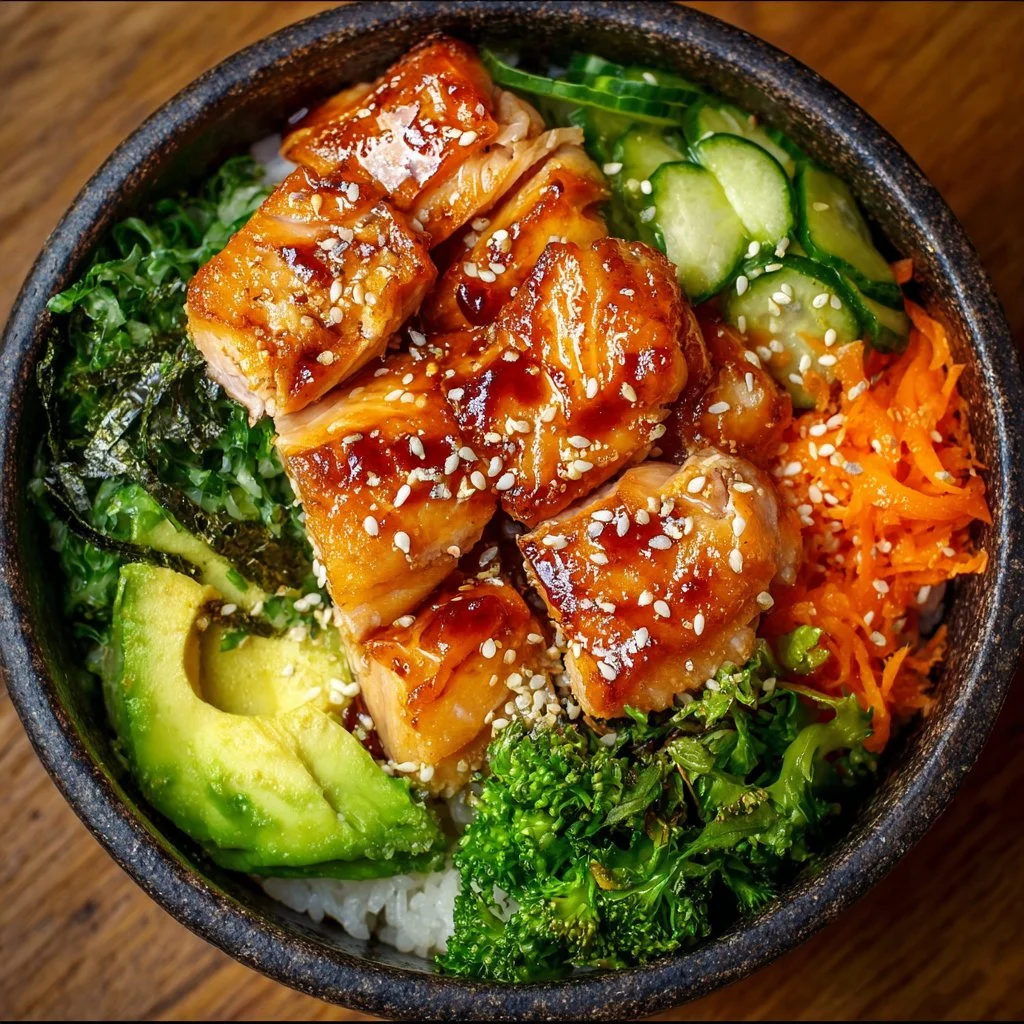
Salmon Bowl is a bright, satisfying dish that brings together flaky, marinated salmon, crisp seasonal vegetables, and a cozy bed of rice or quinoa — all in one colorful bowl. This recipe is worth trying because it balances silky textures and bright, savory flavors while being quick enough for weeknights and special enough for weekend meals. The main ingredient — fresh salmon — offers rich, tender bites that pair beautifully with the tangy-sweet marinade, crunchy cucumber and carrot, creamy avocado, and spring-ready edamame. If you love wholesome bowls, you might also enjoy a different bowl flavor profile like the Bang Bang Chicken Bowl, which brings a spicy, creamy kick to the same nourishing format.
Why this Salmon Bowl works (and why it’s seasonal)
This Salmon Bowl is ideal for spring and summer, when cucumbers and tender baby vegetables are at their peak and lighter meals are especially welcome. The short marinating time lets the salmon remain tender rather than becoming overly firm, while the honey and rice vinegar in the sauce add a gentle sweetness and brightness that complements the natural richness of the fish. The contrasting textures — soft rice, creamy avocado, juicy salmon, and crisp veg — make every bite interesting, and the recipe is easily adapted to what’s fresh in your market.
Ingredients & Equipment
Ingredients
- 12 oz (340 g) salmon fillets (skin removed)
- 2 tablespoons soy sauce (low sodium preferred)
- 2 teaspoons honey (for sweetness)
- 1 teaspoon rice vinegar (adds tang)
- ½ teaspoon toasted sesame oil (for flavor)
- 1 garlic clove (minced)
- Small piece of fresh ginger (grated; about 1 teaspoon)
- 1 cup cooked white rice or quinoa (choose your preferred base)
- 1 medium cucumber (sliced)
- 1 medium carrot (shredded)
- ½ cup frozen edamame beans (defrosted)
- ½ avocado (diced)
- Optional garnishes: spicy mayo (sriracha aioli), sesame seeds, green onions
Equipment & helpful tools
- Cutting board and sharp knife
- Mixing bowls
- Measuring spoons and cups
- Whisk or fork
- Skillet (nonstick or stainless steel) or air fryer
- Spatula or tongs
- Baking tray and parchment paper (if you choose to roast)
- Rice cooker or saucepan for rice/quinoa
- Small grater for ginger
- Thermometer (optional, for precise salmon doneness)
- Colander (to defrost edamame)
Notes
- If your salmon has skin, you can ask the fishmonger to remove it or remove it at home with a sharp knife.
- For a vegetarian variation, substitute firm tofu or tempeh for the salmon.
- Low-sodium soy sauce helps control the saltiness when combined with the honey and sesame oil.
Step-by-step Instructions (with tips)
Preparation
- Slice the salmon into cubes (around 1-inch in size) and remove the skin and bones. Pat the cubes dry with paper towels — this helps them sear rather than steam.
- Combine the marinade ingredients: soy sauce, honey, rice vinegar, sesame oil, minced garlic, and grated ginger in a bowl. Stir to mix well.
- Tip: Taste a tiny bit before adding to the fish to make sure you like the balance; adjust honey or rice vinegar slightly to make it sweeter or tangier.
- Optional: Prepare a double batch of the marinade to serve as sauce later. Reserve half in a clean container and do not use it to marinate raw fish unless you set some aside before adding the salmon.
- Add the salmon cubes to the marinade, ensuring they are fully coated. Let it marinate for 10 minutes (or up to a few hours in the refrigerator if you have time).
- Tip: Keep marinating times short when cubing salmon to avoid the fish getting overly firm from the acid in the vinegar.
Vegetables and base
5. While the salmon marinates, prepare the vegetables: slice the cucumber, shred the carrot, and dice the avocado. Defrost the edamame beans by running cold water over them in a colander, then drain well.
6. Cook the rice or quinoa according to package instructions and keep it warm. Fluff with a fork and add a tiny drizzle of sesame oil for extra fragrance if you like.
Cooking methods (choose one)
Pan-fry method (quick and caramelized)
7. For the pan-fry method: Heat a skillet over medium-high heat and lightly coat it with neutral oil or a little sesame oil. Place the salmon cubes in a single layer, making sure they do not touch each other. Cook for 5–7 minutes, flipping halfway through so each side gets a nice sear.
8. Pour any leftover marinade over the salmon during cooking to glaze the pieces and deepen the flavor. Watch closely so the sugars don’t burn.
- Tip: Don’t overcrowd the pan — work in batches if necessary. A hot pan creates a golden crust that adds wonderful texture.
Air fryer method (crispy exterior, tender inside)
9. For the air fryer method: Preheat the air fryer to 390°F (200°C) and spray the basket with a light coating of olive oil. Place the salmon cubes in a single layer, ensuring the pieces don’t touch. Air fry for 5–8 minutes, flipping halfway through. Brush the salmon with leftover marinade before serving.
- Tip: Check at the 5-minute mark if your pieces are small; cooking times vary by air fryer model.
Oven-roast method (hands-off, gentle)
10. Preheat oven to 400°F (200°C). Line a baking tray with parchment paper and arrange the marinated salmon cubes with space between them. Roast for 8–12 minutes depending on size until cooked through and slightly caramelized at edges. Optionally broil for the last 1–2 minutes for more color.
– Tip: Use a thermometer to check for 125–130°F (52–54°C) for medium-rare to medium salmon; carry-over heat will raise the temperature slightly after resting.
Assemble the bowls
11. Start with the rice or quinoa as the base. Arrange the cucumber slices, shredded carrot, avocado, and edamame beans around the rice in sections or in an artful scatter.
12. Top with the cooked salmon pieces and add any optional garnishes like a drizzle of spicy mayo (sriracha aioli), a sprinkle of sesame seeds, or chopped green onions.
– Tip: If you reserved extra marinade as sauce, drizzle a bit over the finished bowl for an extra punch of flavor. Be sure that any leftover sauce used as a topping was set aside before it touched raw salmon.
Variations and flavor suggestions
- Citrus twist: Add a teaspoon of lime or lemon zest to the marinade for fresh brightness.
- Herb-forward: Fold in chopped cilantro or basil for an herbal lift.
- Spicy: Add a pinch of red pepper flakes or a dash of chili garlic sauce to the marinade.
- Grain swap: Use farro or brown rice for a nuttier chew and extra fiber.
- Veg swaps: Swap cucumber for sliced radish, or add quick-pickled onions for a tangy contrast.
Storage, Freezing & Make-Ahead Tips
Storing leftovers
- Refrigerate: Store leftover salmon and components separately in airtight containers. Cooked salmon and rice/quinoa will keep in the refrigerator for up to 2 days for best texture and safety.
- Reheating: Gently reheat salmon in a skillet over low-medium heat with a splash of oil or in a 300°F (150°C) oven until warmed through. Microwave briefly in short bursts to avoid overcooking.
- Note: Avocado and some vegetables (like cucumber) are best prepped fresh to keep the bowl crisp; if planning ahead, store them separately and assemble just before serving.
Freezing guidance
- Cooked salmon freezing: You can freeze cooked salmon for up to 2 months, but texture may change once thawed. To freeze, cool completely, wrap tightly in plastic wrap and foil, or store in a freezer-safe airtight container.
- Best practice: For meal prep, freeze only the cooked salmon and grains; store fresh vegetables and avocado in the fridge and add when ready to eat for the best texture.
Make-ahead tips
- Marinade & grains: Make the marinade and cook the rice or quinoa 1–2 days ahead. Store grains in the fridge and gently reheat before assembly.
- Vegetables: Shred carrots and slice cucumbers one day ahead; store them in airtight containers to preserve crunch. Dice avocado right before serving to prevent browning.
- Batch cooking: If you’d like multiple meals, cook extra salmon and divide into meal-sized portions. For weekly bowls, assemble each morning for the freshest result.
For inspiration on other comforting bowl-style meals to rotate into your meal planning, consider the hearty Chicken Burrito Bowl, which uses similar assembly ideas but brings Mexican-inspired flavors.
How to Use / Serve This Dish
Serving ideas
- Lunch or dinner: Serve the Salmon Bowl as a complete meal on its own; its mix of protein, grains, and vegetables makes it filling and balanced.
- Meal prep: Portion into containers for weekday lunches; add avocado fresh before eating.
- Entertaining: Make a “build-your-own bowl” spread with separate bowls of rice, salmon, veggies, and garnishes so guests can customize.
Creative variations
- Salad bowl: Skip the rice and serve the salmon and veggies over a big bed of mixed greens with a light sesame dressing for a lower-carb option.
- Warm bowl: For chillier days, slightly warm the cucumber and carrot in a skillet for 1–2 minutes with a splash of sesame oil to create a comforting warm bowl.
- Bento-style: Pack the salmon, rice, and veg in compartments for a portable, balanced meal.
Pairings (halal-friendly)
- Refreshing iced tea (unsweetened or lightly sweetened) or a sparkling citrus beverage.
- A simple cucumber salad dressed with rice vinegar, a pinch of sugar, and sesame oil to echo the bowl’s flavors.
- Warm miso soup or a light vegetable broth to begin the meal.
For a cozy bowl-forward soup alternative on a chillier day, try a comforting option like the Chicken Pot Pie Soup — a cozy embrace in a bowl, which shares that same homey spirit in a different format.
Frequently Asked Questions (FAQ)
Q: Can I substitute the salmon with another protein?
A: Yes — firm tofu, tempeh, or cooked chicken breast make great substitutes. For tofu, press and cube it, then marinate and pan-fry or bake until golden. Adjust cooking times for your chosen protein.
Q: How long can I marinate the salmon?
A: Because the marinade contains acidic rice vinegar, keep marinating to a few hours at most for best texture. Ten to thirty minutes is perfect for cubed salmon; up to 2 hours is okay if you plan ahead.
Q: Can I use gluten-free soy sauce?
A: Absolutely. Tamari or a certified gluten-free soy sauce works well and keeps this recipe gluten-free while preserving the soy flavor.
Q: What if I don’t have an air fryer or skillet?
A: The oven-roast method is a great alternative: roast at 400°F (200°C) until just cooked through. You can also gently poach salmon cubes in a shallow, flavored broth for a very tender result, though you’ll miss the caramelized exterior.
Conclusion
This Salmon Bowl is a simple, seasonally friendly recipe that brings warmth, comfort, and lots of bright flavor to your table. The balanced textures and easy assembly make it a kitchen favorite whether you’re cooking for one, prepping lunches, or sharing a relaxed meal with family. I hope you’ll try this bowl soon — and if you do, I’d love to hear how you customized it. Share your variations, tag a friend, or make it part of your weekly rotation and enjoy every mindful, delicious bite.
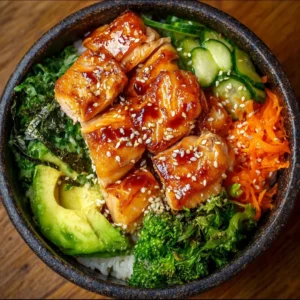
Salmon Bowl
Ingredients
For the salmon marinade
- 12 oz salmon fillets (skin removed)
- 2 tablespoons soy sauce (low sodium preferred)
- 2 teaspoons honey for sweetness
- 1 teaspoon rice vinegar adds tang
- ½ teaspoon toasted sesame oil for flavor
- 1 clove garlic (minced)
- 1 small piece fresh ginger (grated) about 1 teaspoon
For the bowl assembly
- 1 cup cooked white rice or quinoa choose your preferred base
- 1 medium cucumber (sliced)
- 1 medium carrot (shredded)
- ½ cup frozen edamame beans (defrosted)
- to taste optional garnishes: spicy mayo (sriracha aioli), sesame seeds, green onions
Instructions
Preparation
- Slice the salmon into cubes (around 1-inch in size) and remove the skin and bones. Pat the cubes dry with paper towels.
- Combine the marinade ingredients in a bowl and stir to mix well. Taste and adjust sweetness or tanginess if necessary.
- Add the salmon cubes to the marinade and let it marinate for 10 minutes.
- While the salmon marinates, prepare the vegetables: slice the cucumber, shred the carrot, and dice the avocado.
- Cook the rice or quinoa according to package instructions.
Cooking methods
- For the pan-fry method: Heat a skillet over medium-high heat, lightly coat with oil, and cook salmon cubes for 5–7 minutes.
- For the air fryer method: Preheat the air fryer to 390°F (200°C) and cook salmon cubes for 5–8 minutes.
- For the oven-roast method: Preheat oven to 400°F (200°C) and roast salmon cubes for 8–12 minutes.
Assembly
- Start with the rice or quinoa as the base, then arrange the cucumber slices, carrot, avocado, and edamame around the base.
- Top with the cooked salmon pieces and add any optional garnishes like spicy mayo, sesame seeds, or green onions.