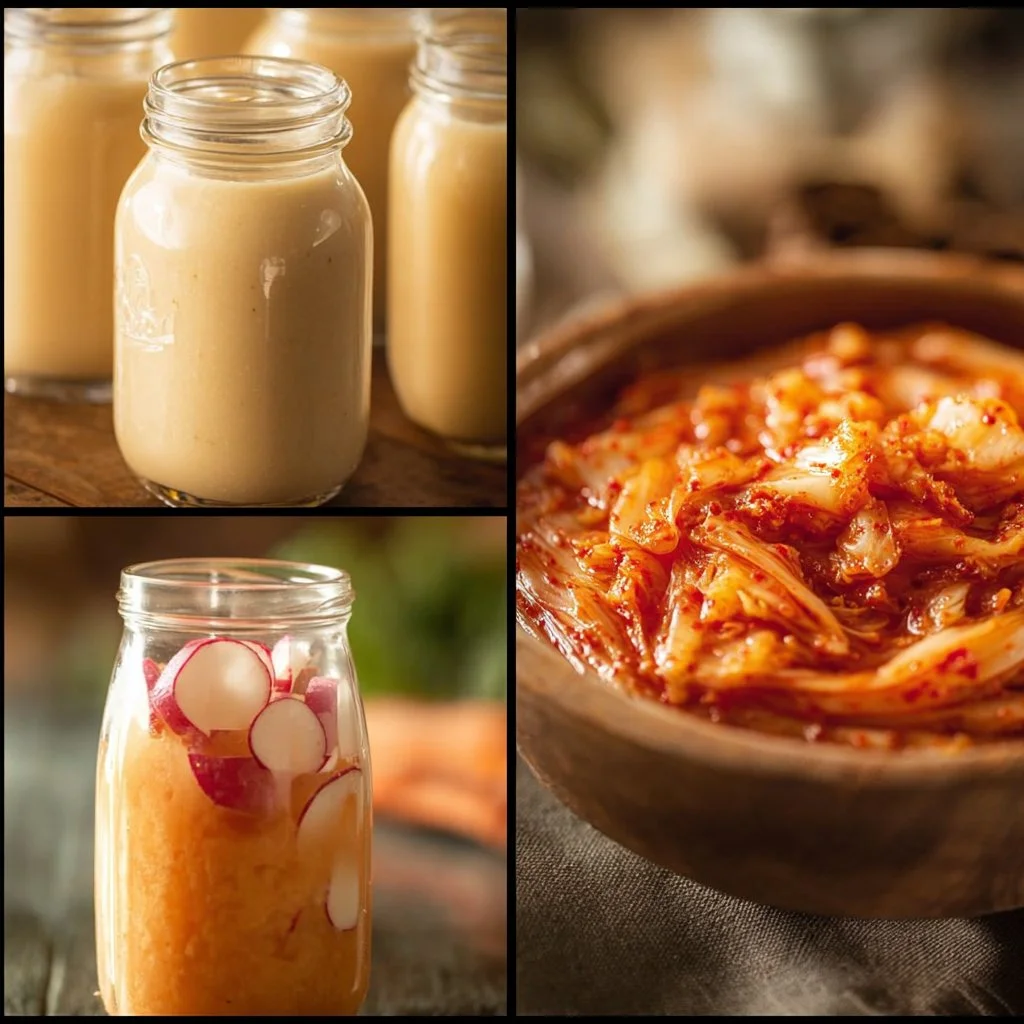
25 Fermented Food Recipes for a Healthy Gut — there’s something deeply comforting about taking fresh seasonal produce and turning it into bright, tangy jars that nourish your body and calm your kitchen soul. If you’re curious about improving digestion, building flavor, and stretching a harvest into weeks of goodness, these homemade ferments are worth trying. From crisp dill pickles and classic sauerkraut to creamy yogurts and savory miso-glazed vegetables, the main ingredients are simple — cabbage, radish, carrots, cucumbers, dairy or soy for cultured options — with textures ranging from crunchy to silky and flavors from mellow to sharply umami. If you love cozy meals, you might also enjoy this collection of best hearty soup recipes to serve alongside your ferments.
Why Fermented Foods for Gut Health?
Fermented foods are living, probiotic-rich foods created through controlled microbial activity. They can introduce beneficial bacteria to the gut, add depth to meals, and help preserve seasonal produce without fancy equipment. These recipes are intentionally halal-friendly and focus on plant-forward, dairy, and soy-based ferments you can make at home. Whether you’re new to fermentation or already have a starter jar going, this post walks you through 25 approachable ferments, plus a detailed, easy base recipe so you can get started with confidence.
25 Fermented Food Recipes — Quick Guide
Here are 25 approachable recipes you can try across the seasons. Each entry includes a one-line idea to inspire your batch-making.
- Classic Sauerkraut — shredded cabbage, salt, and patience for a crisp, tangy kraut.
- Quick Red Cabbage Slaw — pickled-style ferment for salads and tacos.
- Classic Kimchi — napa cabbage, radish, garlic, ginger, and a spicy pepper paste (use halal-approved chili paste).
- Mild Napa Kimchi — lower heat, great for first-timers and kids.
- Carrot & Ginger Sticks — crunchy spears with a zesty bite.
- Dill Pickles — cucumbers, dill, garlic, and a crisp brine.
- Spiced Green Tomato Pickles — great for late-summer harvests.
- Beet Kvass-style Ferment (non-alcoholic) — earthy, vibrant beet ferment for sipping or mixing into dressings.
- Lacto-Fermented Salsa — tomatoes, onion, chiles, and lime.
- Fermented Hot Sauce — age your own halal-friendly chili sauce.
- Fermented Garlic Confit (lacto-fermented) — mellow, sweet garlic for spreads.
- Pickled Red Onions — quick and versatile condiment.
- Fermented Cucumbers with Herbs — crunchy, herb-scented fridge pickles.
- Miso (fermentation starter method) — begin with koji ferment to make homemade miso over months.
- Quick Fermented Miso Spread — blend store-bought miso with fermented veggies for a fast option.
- Soy Tempeh — for plant-based protein with nutty flavor.
- Natto-style Fermented Soybeans — an acquired taste, rich in texture and enzymes.
- Yogurt — thick, creamy, probiotic dairy for breakfasts and sauces.
- Labneh / Strained Yogurt — tangy spreadable cheese from yogurt.
- Kefir-style Cultured Milk — tart and drinkable cultured milk (use halal-certified milk).
- Fermented Apple Butter — slow-cooked apples finished with a short ferment for depth.
- Fermented Fruit Chutney — mango or apricot for sweet-savory preserves.
- Fermented Carrot-Apple Slaw — seasonal, slightly sweet with a gentle tang.
- Rejuvelac-like Wheat Ferment — grain-based ferment used as a starter for other ferments (use whole grains and proper sanitation).
- Fermented Bean Paste (broad bean or chickpea) — savory paste to boost stews and sauces.
Many of these can be adapted seasonally — for instance, swap beets for carrots, green tomatoes for cucumbers, or pears for apples when late-season fruit arrives.
Ingredients & Equipment
For the base recipe below (Basic Lacto-Fermented Vegetable Jar), gather these staples:
Ingredients:
- 1 medium head of cabbage (or 1½–2 lbs mixed seasonal veggies like carrots, radish, cucumber)
- 1–2 tablespoons fine sea salt or kosher salt (non-iodized)
- 1–2 cups filtered or bottled water (if needed to make brine)
- Optional aromatics: garlic cloves, fresh dill, mustard seeds, black peppercorns, bay leaf, ginger, chili flakes (use halal-certified spices)
Equipment:
- 1 large bowl for massaging vegetables
- 1–2 wide-mouth glass jars (1–2 quart size) with lids or fermentation weights
- A non-reactive mixing spoon (wood or silicone)
- A clean cutting board and chef’s knife
- A small jar or fermentation weight to press vegetables down (or a commercial fermenting weight)
- Funnel (optional)
Helpful tools: mandoline or box grater for consistent shred, scale for precise salt ratios, pH strips or thermometer if you like to monitor conditions.
Note: Avoid reactive metal containers; glass is safest. If you want to explore fermented dairy like yogurt or labneh, a yogurt maker or insulated cooler helps maintain consistent temperatures.
Try these salad ideas to pair with your ferments for bright, seasonal meals.
Step-by-Step Instructions (Basic Lacto-Fermented Vegetable Jar) — with tips and variations
This step-by-step teaches a flexible method you can apply to most vegetable ferments.
Prepare your vegetables.
- Wash, core, and slice the cabbage or other vegetables. For sauerkraut, thinly shred cabbage; for pickles, slice into spears or rounds.
- Tip: Uniform cuts help pack evenly and ferment at the same rate.
Salt and massage.
- Measure about 1–1.5 tablespoons of salt per 1.5–2 lbs of vegetables (rough guideline: 1–2% salt by weight; use a scale for precision).
- Place the shredded veggies in a large bowl, sprinkle the salt, and massage firmly for 5–10 minutes until they release liquid. This creates the natural brine.
- Variation: For a quick brine, dissolve salt in water (about 1 tablespoon salt per cup water) and pour over packed vegetables.
Add flavorings.
- Stir in garlic, ginger, dill, or spices. Layer aromatics evenly.
- Tip: If adding chili flakes, remember heat intensifies with time.
Pack into jar.
- Using a funnel or clean hands, pack the vegetables tightly into the jar so they sit snugly and are submerged by their brine. Leave 1–2 inches headspace to allow gases to escape.
- Use a weight or small jar to keep the vegetables beneath the brine surface.
Seal and ferment.
- Cover with a loose lid, fermentation lid, or cloth secured with a band to allow gases to escape. If using a screw-top jar, slightly loosen the lid daily to release pressure.
- Place the jar in a cool, dark spot (60–72°F / 15–22°C is ideal) for 3 days to 3 weeks depending on taste preference.
- Tip: Warmer temperatures speed fermentation and produce tangier results faster; cooler temperatures slow it down.
Monitor and taste.
- Check daily to ensure vegetables remain submerged and to skim any foam or scum (this is normal surface yeast—remove it).
- Begin tasting after 3–5 days. When it reaches a flavor you enjoy, transfer to the refrigerator.
Cold storage.
- Refrigeration slows fermentation and stabilizes flavor. Your ferment will continue to evolve slowly in the fridge.
Variations and cooking tips:
- Roasting vs. Boiling: For items like fermented beets or pumpkin-based ferments, you can roast or steam before fermenting to soften textures and concentrate sweetness. Roasting adds depth; steaming or boiling preserves a cleaner vegetable flavor.
- Texture control: For crunchier results, keep vegetables cold and ferment for shorter time. For softer, more mellow ferments, ferment longer.
- Salt levels: Reduce salt slightly for softer texture, increase for firmer crunch and longer preservation. Always use safe, non-iodized salt.
- Spice swaps: Use coriander, fennel, turmeric, or bay leaf to match seasonal produce.
Serve your ferments alongside simple proteins or appetizers to add a bright counterpoint to richer bites.
Storage, Freezing & Make-Ahead Tips
- Refrigeration: Most lacto-fermented vegetables keep well in the refrigerator for 3–6 months. Flavor becomes tangier over time. Keep them submerged in brine and use clean utensils to avoid contamination.
- Freezing: Generally, freezing is not recommended for raw fermented vegetables because ice crystals will change the texture when thawed. However, cooked or pureed ferments (like fermented apple butter or miso-infused spreads) can be frozen in airtight containers for up to 3 months.
- Portioning: Store in smaller jars if you’ll be opening jars frequently; this reduces air exposure to the remaining ferment. Consider single-serve jars for lunches or snacks.
- Make-ahead: Prepare larger batches during peak season, then refrigerate. Many ferments improve with a few weeks of resting, so make ahead before holiday meals or large gatherings.
- Safety: If an off odor, slimy texture, or visible mold (colored and fuzzy growth) appears beyond typical surface yeast, discard the batch. White kahm yeast may form on the surface; skim it off and ensure the ferment below smells pleasantly tangy.
How to Use / Serve These Fermented Dishes
Ferments are versatile — here are friendly serving ideas:
- Breakfast: Dollop labneh or strained yogurt on toasted flatbread with olive oil and za’atar, or mix yogurt into oats for tart contrast.
- Salads: Toss sauerkraut or fermented slaw into green salads for crunch and acidity.
- Sandwiches & Wraps: Add pickled red onions or dill pickles for texture and brightness.
- Bowls & Grain Dishes: Top cooked grains with a spoonful of fermented vegetables and a drizzle of tahini for richness.
- Soups & Stews: Stir a small spoonful of miso or fermented bean paste at the end of cooking to boost umami.
- Snack Boards: Serve a variety of small jars — pickles, labneh, fermented garlic — with fresh bread and olives for a communal spread.
- Dressings & Sauces: Blend brine or fermented vegetables into vinaigrettes for an instant probiotic boost and complex flavor.
Avoid heating very high-temperature when adding probiotic-rich ferments meant to deliver live cultures; add them at the end of cooking or use them raw as condiments.
FAQ
Q: How long do homemade ferments last in the fridge?
A: Most vegetable ferments remain good for 3–6 months refrigerated, though flavor will continue to develop. Yogurt and labneh are best within 1–3 weeks for peak texture and tang.
Q: Can I use iodized table salt?
A: Non-iodized salts are preferred because iodized salt can affect fermentation flavor and color. If you must use table salt, use slightly less and taste often; coarse sea salt or kosher salt works well.
Q: I don’t like strong flavors — can I make milder ferments?
A: Yes. Ferment at cooler temperatures and taste earlier (3–5 days) for a milder tang. Use sweeter vegetables (carrots, apples) to balance acidity and reduce hot spices.
Q: What if my ferment gets fuzzy mold?
A: White, flat kahm yeast on the surface can be skimmed off, and the ferment below may still be fine. Colored, fuzzy mold (green, black) is unsafe — discard the batch, clean jars thoroughly, and try again with fresh ingredients and utensils.
Conclusion
Fermentation is a wonderful, seasonal way to deepen flavor, preserve the harvest, and support a healthy gut through naturally cultured foods. Whether you start with a simple jar of sauerkraut, slow-cooked miso pastes, or creamy yogurt, each batch is a small kitchen project that repays patience with tangy, comforting results. For further reading on the science and benefits of these foods, consider this review on Fermented Foods, Health and the Gut Microbiome – PMC. If you’re looking for more recipe inspiration beyond this list, check out this curated round-up of 25 Fermented Food Recipes for Gut Health – Calm Eats and this practical collection of 30 Essential Fermented Food Recipes (Easy and Delicious!). Try one recipe this week, and then share a jar with a friend — fermentation is both nourishing and wonderfully communal.

Basic Lacto-Fermented Vegetable Jar
Ingredients
Base Ingredients
- 1 medium head cabbage (or 1½–2 lbs mixed seasonal veggies like carrots, radish, cucumber)
- 1-2 tablespoons fine sea salt or kosher salt (non-iodized)
- 1-2 cups filtered or bottled water (if needed to make brine) Use as needed for brine
Optional Aromatics
- garlic cloves
- fresh dill
- mustard seeds
- black peppercorns
- bay leaf
- ginger
- chili flakes (use halal-certified spices)
Instructions
Preparation
- Wash, core, and slice the cabbage or other vegetables.
- For sauerkraut, thinly shred cabbage; for pickles, slice into spears or rounds.
Salting and Massaging
- Measure about 1–1.5 tablespoons of salt per 1.5–2 lbs of vegetables.
- Place the shredded veggies in a large bowl, sprinkle the salt, and massage firmly for 5–10 minutes until they release liquid.
Flavoring
- Stir in garlic, ginger, dill, or spices to the vegetables.
Packing
- Pack the vegetables tightly into the jar to ensure they are submerged by their brine.
Fermenting
- Cover the jar loosely to allow gases to escape and place in a cool, dark spot for 3 days to 3 weeks.
Monitoring
- Check daily to ensure vegetables remain submerged and skim any foam or scum.
- Begin tasting after 3–5 days and transfer to the refrigerator when desired flavor is achieved.
Storage
- Refrigeration slows fermentation, allowing flavors to stabilize. Most lacto-fermented vegetables keep well for 3–6 months.